REVIEW · ROME
Golf Cart Private & Customizable tour of Rome & Colosseum (3/5h)
Book on Viator →Operated by Limousine Service in Italy · Bookable on Viator
Rome clicks into focus from a golf cart. This private, customizable ride is built for unobstructed views and quicker sightseeing without the usual crush, with the option to add a guide who hops off at stops. The main catch: entrance tickets are not included, and the time at each highlight is fairly short.
I like the way the tour starts easy: pickup and drop-off from your place inside the Aurelian Walls (plus Termini), so you spend your energy on Rome, not logistics. Also, you’ll need to follow the dress code for churches and select museums, or you may be turned away at the door.
In This Review
- Key highlights to know before you go
- Why this private Rome golf cart tour is such a smart format
- Pickup inside the Aurelian Walls: the hidden value
- Colosseum first: quick context, then ticket reality
- Pantheon time: best-preserved, still active, and tickets are separate
- Trevi Fountain and Spanish Steps: classic views with manageable footwork
- St. Peter’s Square and Piazza Navona: big art energy, less wandering
- Piazza Venezia, Campidoglio, and the view over the Roman Forum area
- Circus of Maxentius and Piazza del Popolo: Rome’s quieter history stops
- How long will you really spend at each place?
- Price and value: what $276.06 per person buys you
- Private guide hop-offs: when it’s worth upgrading
- Practical tips so you don’t waste time in Rome
- Who this tour is best for
- Should you book it?
- FAQ
- How long is the golf cart tour of Rome and the Colosseum?
- Is this tour private?
- Are entrance tickets included for the Colosseum and Pantheon?
- What is the Pantheon ticket cost?
- Do I get a licensed tour guide?
- What dress code is required?
- Where does pickup and drop-off happen?
- What’s the cancellation policy?
- Is there a mobile ticket?
Key highlights to know before you go
- Hotel-area pickup inside the Aurelian Walls keeps the first hour from getting messy
- Private golf cart routing means you can pace the day around what you care about
- Colosseum and Pantheon are guided from the outside/in-short visits, with tickets handled separately
- Photo-friendly time blocks at Trevi Fountain and the Spanish Steps without marathon walking
- Vatican-area sights in the same loop as the central piazzas (St. Peter’s Square and more)
- Dress code rules are real: cover knees and shoulders for worship sites
Why this private Rome golf cart tour is such a smart format
A private golf cart in Rome sounds cute until you try it. Then you get why it works: you’re elevated enough to see over heads, you’re not stuck in slow foot traffic, and you can stop quickly for photos without dragging a whole day behind you.
This one is private and customizable, so the driver-guide can shape the route to your timing and interests instead of forcing a rigid “everyone do this at 9:00” day. And because you get hotel (Aurelian Walls) or Termini pickup, you avoid the hassle of crossing town just to meet a tour.
The trade-off is pacing. Each stop is measured, not leisurely. You’re there long enough to orient yourself, grab key views, and take photos, but not long enough to fully wander every corner. If you want a slow, museum-style day, you’ll still need to add time on your own later.
You can also read our reviews of more tours and experiences in Rome.

Pickup inside the Aurelian Walls: the hidden value
In Rome, transportation is half the vacation. The tour’s biggest practical win is that they pick you up and drop you off at your hotel/Airbnb inside the Aurelian Walls (and also Termini). That matters because Rome’s center is where most sights are, but also where finding taxis or parking can turn into a mini project.
You’ll also get an English-speaking driver guide, which helps a lot when you’re hopping between very different neighborhoods. If you prefer a fully licensed guide at certain stops, the tour notes that a licensed tour guide is available on request—so if that’s important to you, ask ahead.
One more “small” detail that’s worth your attention: the tour requires a dress code for churches and selected museums. No shorts or sleeveless tops; knees and shoulders must be covered. Plan your outfit like you’re stepping into a church that day, not like you’re on vacation in a beach town. It can be the difference between walking in and getting refused entry.
Colosseum first: quick context, then ticket reality
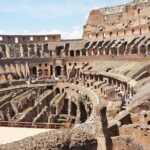
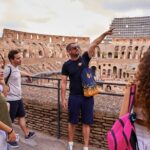
Starting at the Colosseum is a great move. From a golf cart, you get the monument framed in a way that’s hard to replicate from street level—especially if you’re trying to get your bearings fast. Your guide gives the key information from the outside, so you understand what you’re looking at before you decide what you want to do next.
You’ll spend about 20 minutes here. That’s enough to absorb the big story and get the photos you came for. It’s not enough to do a full interior visit on this stop alone.
Important: entrance fees are not included, and the tour also states it doesn’t provide skip-the-line access for the attractions. So if you want to go inside the Colosseum (or if you think you’ll regret not going), buy your official tickets in advance and plan your day around that. The tour can still be worth it even if you’re only doing the outside orientation, because the cart positioning helps you appreciate the site instantly.
Pantheon time: best-preserved, still active, and tickets are separate
Next comes the Pantheon, and it’s one of those Rome stops that benefits from understanding first. Even in a short visit window, you can see why it’s famous: it’s considered the best-preserved of the ancient Roman buildings, it has stayed in use through history, and since the 7th century it’s been a church dedicated to St. Mary and the Martyrs.
Your stop is about 15 minutes, with tickets not included. The information provided also states that Pantheon tickets are €7 cash per person. Since ticket systems can change, I’d still confirm the current method when you buy—but the key point for your planning is this: don’t assume entry is covered.
This is also where that dress code matters most. The Pantheon is an active religious site, and the requirement to cover shoulders and knees is not optional. If your outfit is borderline, fix it before you arrive. It’ll save you from losing time at the door.
Trevi Fountain and Spanish Steps: classic views with manageable footwork
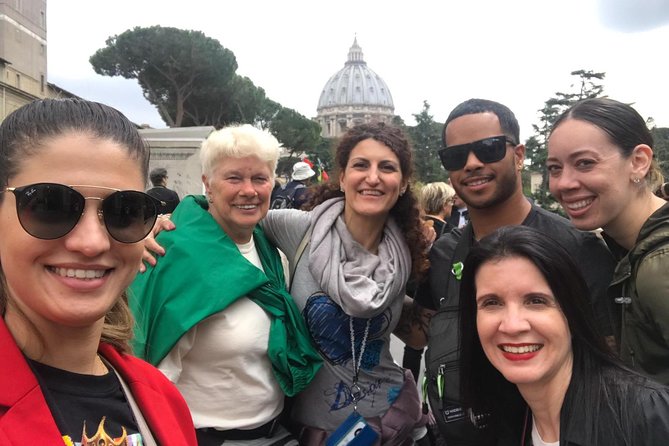
Trevi Fountain is famous for a reason. From this loop, you’re positioned for easy sightseeing and photo stops without spending your day zigzagging through crowds on foot. Your time here is about 15 minutes, and entry is free.
What I like about a short, focused stop: you’re less likely to waste time waiting, and more likely to get a handful of great angles. The fountain itself is the main event, so even a brief window can work well if you arrive with a plan for where you want your photos.
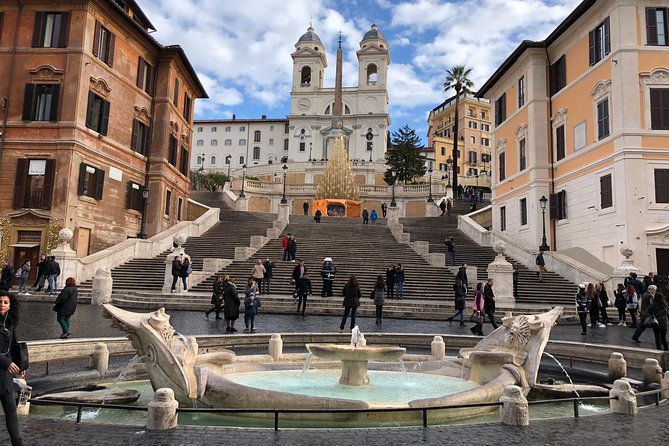
Then you hit the Spanish Steps area, another iconic “Rome must-do.” The stairway has a long backstory tied to French patronage and the Bourbon Spanish Embassy zone, and it links up with the Trinità dei Monti church. Your visit is about 15 minutes, and it’s also free.
A practical tip: for these two stops, wear shoes you can stand in without suffering. You may not walk a marathon, but you’ll still spend time on foot for photos and to get close enough to enjoy the scene.


St. Peter’s Square and Piazza Navona: big art energy, less wandering
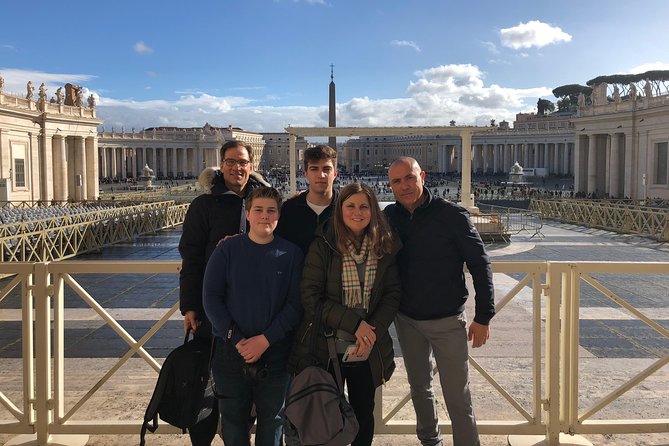
The route then shifts into the Vatican neighborhood with a stop at St. Peter’s Square. The design work by Gian Lorenzo Bernini is the highlight here: the colonnades were planned to help crowds see the Pope, and the space is shaped to create awe at scale. Even if you’re not doing a full Vatican visit on this tour, this is a powerful orientation point.
Your time is about 15 minutes, and there’s no admission ticket mentioned for this specific stop. The main “rule” is still your clothing: knees and shoulders must be covered.
After that, you move to Piazza Navona, built on the site of an ancient Roman stadium. It’s a classic example of how Rome stacks eras on top of each other—ancient foundations turned into a Baroque stage. Again, you get around 15 minutes, with free admission.
Why I like pairing St. Peter’s Square with Piazza Navona on the same day: it keeps you moving through distinct Rome moods—grand religious space first, then an outdoor artsy piazza—without backtracking.
Piazza Venezia, Campidoglio, and the view over the Roman Forum area

As the tour continues, you’ll pass through Piazza Venezia, described as a central hub where major streets intersect. It takes its name from Palazzo Venezia and connects you to the wider street network that funnels people through the center. Even if you don’t go inside, this is useful because it helps you understand Rome’s layout.
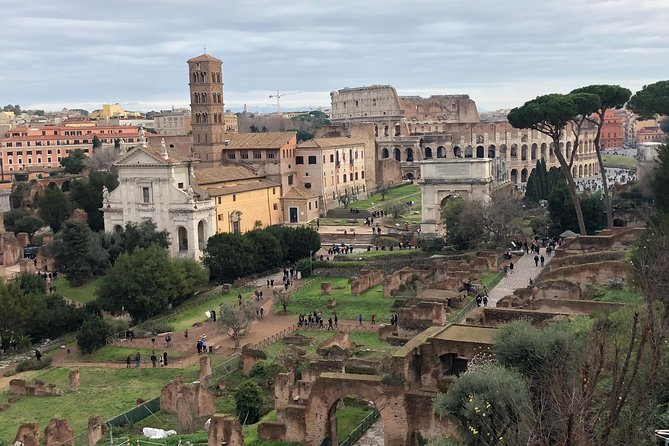
Then you’ll reach Piazza del Campidoglio. Your time here is about 15 minutes. The big value is the perspective: Michelangelo designed the square for Pope Paul III, and from up here you can admire the Roman forum area—temples and basilicas spread out below.
This is the kind of stop that makes the golf cart format pay off. You get to a viewpoint quickly, you absorb the scale, and then you can decide later if you want a deeper forum day.
Circus of Maxentius and Piazza del Popolo: Rome’s quieter history stops
Two shorter stops round out the loop, and they’re the ones that can surprise you in a good way.
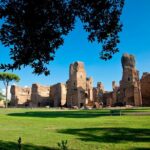
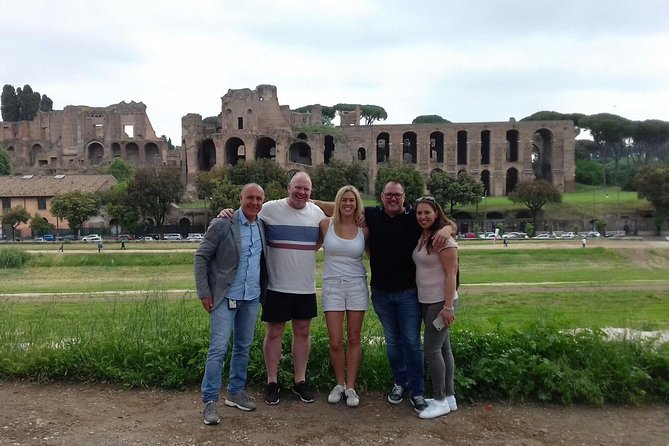
First, the Circus of Maxentius (often called the Circus Maximus in general terms, but here it’s framed as Maxentius). You’ll get about 10 minutes. It’s an ancient chariot-racing venue and mass entertainment site, located in a valley between hills in central Rome. Even if you’ve heard the name, it’s one of those places that clicks better when you see it in person.
Then you arrive at Piazza del Popolo, also about 10 minutes. The name literally points to “People’s Square,” and historically it connects to the poplars (pioppo) and the church of Santa Maria del Popolo. It also sits inside the northern Aurelian Walls gate and ties to the Porta del Popolo—once the starting point of the Via Flaminia.
If you’re the type who loves when a tour ends not with one more famous crowd magnet but with a place that helps you understand how Rome channels movement, this last stretch is a strong finish.
How long will you really spend at each place?
The tour is sold as 3 to 5 hours, and the itinerary lists time per stop (for example: Colosseum ~20 minutes, Pantheon ~15, Trevi ~15, Spanish Steps ~15, St. Peter’s Square ~15, Piazza Navona ~15, Campidoglio ~15, Circus of Maxentius ~10, Piazza del Popolo ~10).
In a shorter version, expect less time at the later stops, or more “see-and-move” pacing. In a longer version, you’re more likely to linger for better photos or to ask extra questions at viewpoints.
One travel reality: Rome is Rome. Even when you’re on a cart, you’ll still spend time repositioning, walking a few steps for angles, and dealing with how crowds flow around the major sights. This tour’s structure is built for that reality—quick, efficient, and flexible.
Price and value: what $276.06 per person buys you
At $276.06 per person for roughly 3 to 5 hours, this isn’t a budget play. What justifies the cost is the combination of:
- Private routing (no mixed group schedule)
- Door-to-door pickup and drop-off in the Aurelian Walls area
- A vehicle built for fast sightseeing without constant walking between far-apart sights
- English-speaking guidance to turn views into understanding
The catch is what’s not included: entrance fees (and no skip-the-line). So your final cost depends on how many entries you plan to do. The Pantheon is listed as €7 cash, and the Colosseum ticket is separate.
If you’re comparing prices, don’t just compare the sticker number. Compare the value of not spending your day crossing town, not figuring out meeting points, and getting a route that hits the Rome essentials in a tight loop.
Private guide hop-offs: when it’s worth upgrading
The tour offers an upgrade to include a private guide who can hop off with you at stops. That can be worth it if you want more than quick orientation—especially at places where small details change how you see the whole monument.
Even without the upgrade, you’ll still get an English-speaking driver guide who shares information. Some assignments may be more “drive-and-explain,” while others may be more “talk-at-the-stop.” If you care about deeper explanations, use that upgrade as your lever.
Also: if you want a licensed professional guide for museums or formal sites, the tour specifically notes that a licensed tour guide is available on request. That’s the cleanest way to get what you want without guessing.
Practical tips so you don’t waste time in Rome
A few things I’d plan for ahead of time:
- Buy official tickets yourself for the Colosseum and Pantheon since they’re not included and there’s no skip-the-line stated.
- Bring a covered-shoulder, covered-knee outfit if you’re doing St. Peter’s Square and church-adjacent stops.
- Charge your phone and rely on the mobile ticket method if that’s your preferred way to keep things organized.
- Keep expectations realistic: you’re seeing a lot, but you’re not doing a slow, exhaustive tour of everything.
If the weather turns, you might not be in a fully open cart. One experience in the provided information notes switching to an enclosed Mercedes van during rain, and that kind of flexibility can help when Rome gives you surprise weather.
Who this tour is best for
This is a strong choice if:
- You want first-time Rome orientation that covers the big hits fast
- Your group includes someone who wants to minimize walking but still see key sights
- You like photo-friendly pacing with short, focused time at each stop
- You’re staying central and want pickup that saves time
It’s less ideal if you want extended museum time, long guided interiors at multiple sites, or a deeply slow-and-linger itinerary without ticket planning.
Should you book it?
I’d book this tour if you want Rome’s essentials—Colosseum, Pantheon, Trevi, Spanish Steps, Vatican-area grandeur, and major piazzas—wrapped into a private, easy-to-manage outing. The big win is the way the cart format reduces friction and makes the day feel efficient without turning it into a blur.
Just go in with the two keys to success: tickets are on you (so plan ahead), and dress code is real (so plan your outfit). If you handle those, this is a very practical way to see a lot of Rome without losing the day to crowd stress or transit headaches.
FAQ
How long is the golf cart tour of Rome and the Colosseum?
It runs for about 3 to 5 hours, with set time blocks at major stops (for example, around 20 minutes at the Colosseum and about 15 minutes at places like the Pantheon, Trevi Fountain, Spanish Steps, St. Peter’s Square, and Piazza Navona).
Is this tour private?
Yes. It’s a private tour, and it does not combine groups. Only your group participates.
Are entrance tickets included for the Colosseum and Pantheon?
No. The tour price does not include admission fees, and it also does not include skip-the-line entry for the attractions visited.
What is the Pantheon ticket cost?
The provided information states the Pantheon tickets are €7, cash per person.
Do I get a licensed tour guide?
A licensed tour guide is available on request. Otherwise, you’ll have an English-speaking driver-guide.
What dress code is required?
You need to cover knees and shoulders for places of worship and selected museums. No shorts or sleeveless tops, and entry may be refused if you don’t comply.
Where does pickup and drop-off happen?
Pickup and drop-off are offered from hotels or Airbnbs inside the Aurelian Walls, and also from Termini train station. Your hotel must be inside the Aurelian Walls.
What’s the cancellation policy?
Free cancellation is available up to 24 hours in advance for a full refund, based on the local start time.
Is there a mobile ticket?
Yes, a mobile ticket is included.