REVIEW · BAYEUX
Normandy Battlefields D-Day Private Trip with VIP Services from Paris
Book on Viator →Operated by Parismatic Tour · Bookable on Viator
D-Day hits different when it’s done on your own schedule. This private Normandy battlefields trip from Paris focuses on World War II history with an emphasis on the American units that fought on D-Day, in a full-day plan built around major sites and real-world context. It’s also a lot less stressful because you’re not figuring out transfers and timing on public transport.
I love two things about this setup. First, the door-to-door Paris pickup means you start the day already seated, already moving, and not hunting down a station at 6:30am. Second, your guide can tailor the day to your interests and keeps the stops paced so you actually have time to look, not just pose for photos.
One possible drawback: it’s a long day. Even when everything runs smoothly, you’ll spend a big chunk of the day driving, and Normandy weather can turn on you (one of the common comments was cold rain in shoulder season), so plan for layers and bring what you need to stay comfortable.
In This Review
- Key highlights worth planning for
- From your Paris door to Normandy without the transport headache
- The private-van pacing that makes the sites feel human
- Plages du Débarquement: starting with the American story on the beaches
- Pointe du Hoc: cliffs, Rangers, and the reality of damage
- Omaha Beach: where numbers meet memory
- Colleville-sur-Mer American Cemetery: order, names, and the Wall of the Missing
- Arromanches and Mulberry Harbor: the engineering that kept the invasion supplied
- Lunch, rest stops, and how to plan your energy
- Guide quality: why names like Herve and Rayan show up often
- Price and value: what you’re paying for (and what you still need to fund)
- Timing, weather, and what to pack for Normandy in real life
- Should you book this Normandy D-Day private trip from Paris?
- FAQ
- FAQ
- What time does the tour start from Paris?
- Where does pickup happen in Paris?
- Is this tour private or shared?
- What language is the tour offered in?
- Are the site admission tickets included?
- Is lunch included?
- What if the weather is bad?
- Can I cancel for a full refund?
Key highlights worth planning for
- VIP hotel pickup across Paris so you don’t wrestle with bus and train transfers
- A full day focused on key American D-Day sites rather than a rushed checklist
- Pointe du Hoc’s cliff line with craters and German fortifications in view
- Omaha Beach walking time to reflect on the landing and the beachhead struggle
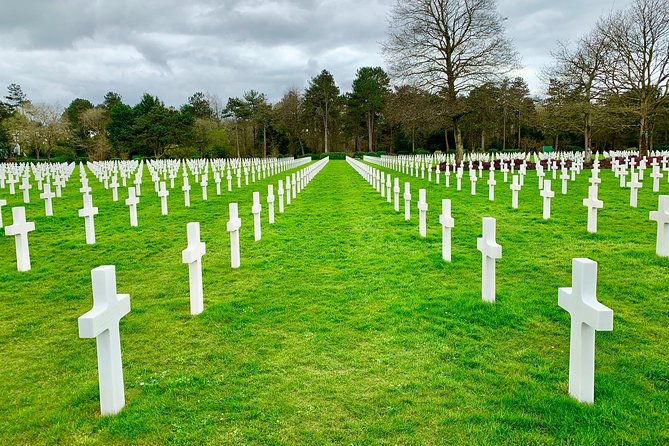
- Colleville-sur-Mer American Cemetery with the Memorial, Wall of the Missing, and chapel
- Arromanches and Mulberry Harbor remains so you see how engineering helped make the invasion stick
From your Paris door to Normandy without the transport headache
The best part of this tour isn’t a dramatic-sounding feature. It’s the boring logistics done for you. You’re picked up from hotels and private residences inside Paris at 7:00am, and you ride in an air-conditioned minivan all the way to Normandy.
That matters because public transport to the D-Day area can be doable but time-consuming, and the connections aren’t built for a history-intensive day. With a private van, you also have the practical luxury of stopping when it makes sense—bathroom breaks, short refresh stops, and regrouping without holding up a schedule for a crowd.
Your day also ends back at the same meeting point. In plain terms: you get the time in Normandy, and you don’t lose it on the back-and-forth.
You can also read our reviews of more tours and experiences in Bayeux.
The private-van pacing that makes the sites feel human
A day with several major WWII stops can easily become a blur. What I like about this format is that it’s private, so your guide can manage the group rhythm—slower if you want more time to absorb, faster if you’re trying to fit in extra context.
Some guides are especially good at weaving explanations into the drive so you’re not only learning when you’re standing still. You also get a proper “setup” moment at the start of the D-Day beach area, then the day builds from there: cliffs, then the beach itself, then the cemetery, and finally the engineering at Arromanches.
One thing to keep in mind: this is still a 12–13 hour day. You’ll be glad there’s a comfortable vehicle, but you should still treat it like a full-day commitment.
Plages du Débarquement: starting with the American story on the beaches
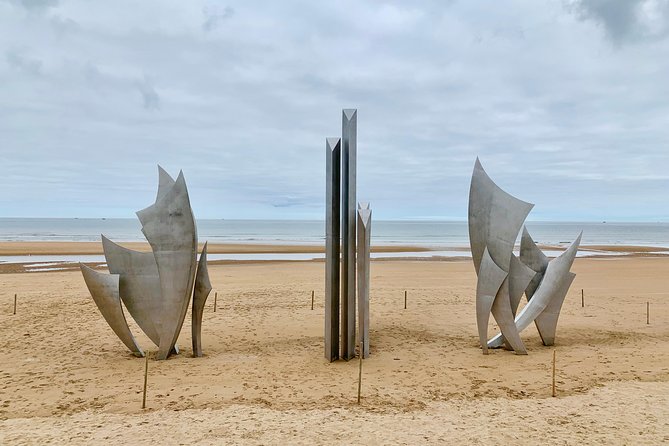
You begin at the D-Day Beaches area (Plages du Débarquement de la Bataille de Normandie). The focus here is the lived wartime reality of the invasion, with special attention on the American soldiers who fought to protect the Allies and their people.
This first stop is about getting your bearings. The guide’s job is to turn a set of locations into a coherent story, so when you later walk Pointe du Hoc and Omaha Beach, you understand what you’re seeing and why it mattered.
Expect around 2 hours here. The advantage of starting with context is that it reduces the “I’m standing here but I’m not sure what I’m looking at” feeling. You can still be quiet and reflect, but you’ll understand the larger picture as you move forward.
Pointe du Hoc: cliffs, Rangers, and the reality of damage
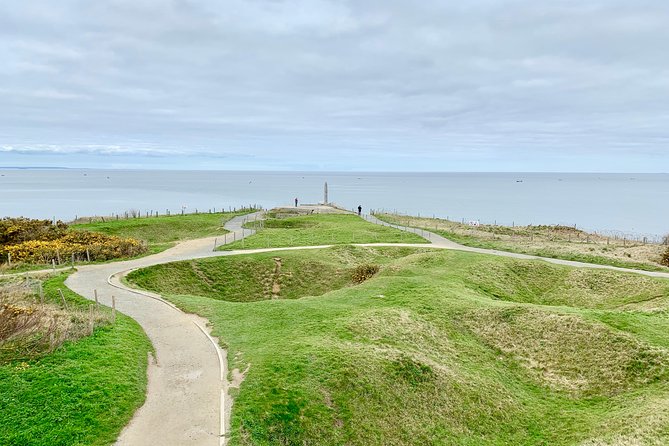
Next comes Pointe du Hoc, one of the most dramatic sites of the Normandy landings. It’s perched on a high cliff above the English Channel, and your walk is timed to the story of a mission carried out under heavy fire: U.S. Army Rangers scaling the cliff and pushing into a brutal landscape.
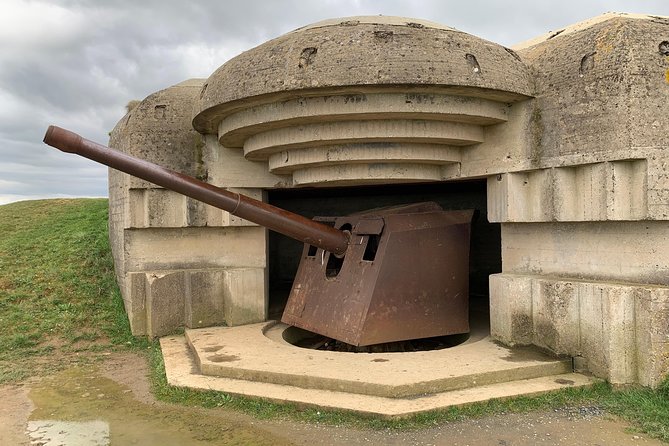
The visit includes the bomb craters and remnants of German bunkers. This is the kind of place where the ground itself tells part of the story—what looks like “ruins” is actually battle geography you can trace with your eyes.
Plan for about 1 hour. It’s long enough to see the main views and read the key points your guide highlights, but short enough that you won’t freeze in place if the weather turns.
Omaha Beach: where numbers meet memory
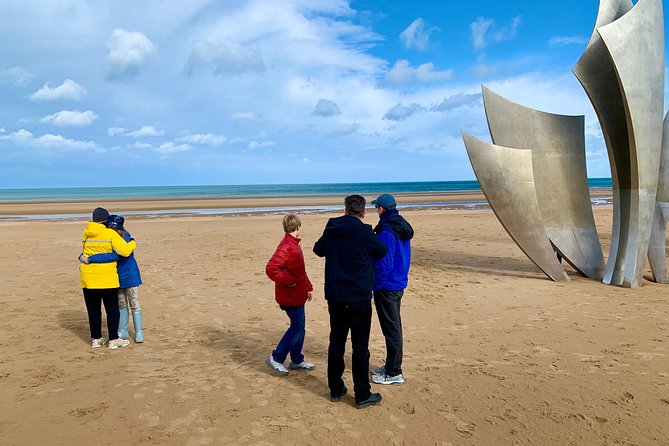
From Pointe du Hoc, you head to Omaha Beach, scene of one of the most pivotal events of World War II. This is where the day usually turns emotional fast, because you stand on the sand with the context of what happened there.
Your guide frames it with the hard facts: about 2,400 American soldiers lost their lives on D-Day in the fight to secure a beachhead stretching roughly 5 miles (from Port-en-Bessin to the Vire River). You then get time to reflect and pay tribute, including the guide’s explanation of the action tied to the German 352nd Infantry Division.
You’ll spend about 2 hours here. One drawback of famous places is that they can become photo stops. The private pacing helps you avoid that trap—you’re not just passing through, and you’re not sharing the moment with a bus tour’s worth of people flooding the same spots.
Colleville-sur-Mer American Cemetery: order, names, and the Wall of the Missing
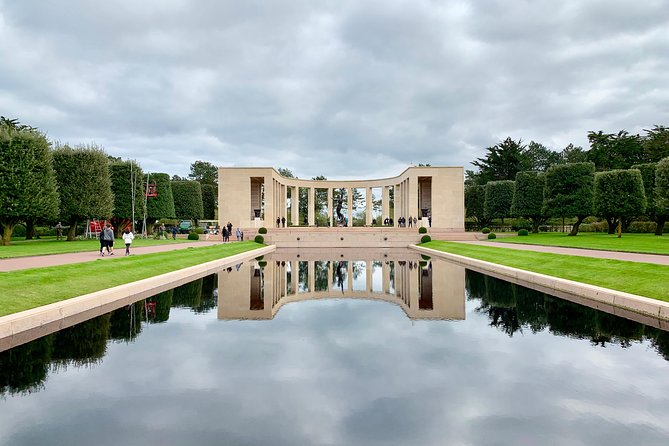
After Omaha, you go to the Normandy American Cemetery in Colleville-sur-Mer, the resting place of nearly 9,400 U.S. soldiers. This is a quieter kind of powerful. The white crosses line up in neat rows, and the Memorial, the Wall of the Missing, and the chapel pull your attention in different directions—loss, remembrance, and the incomplete nature of war.
You’ll have about 1 hour. That’s enough time to walk slowly and still take in the main features without feeling rushed.
If you’re traveling with teens or family members who need a “why this matters” anchor, this is often where questions happen. It’s not just history on a page—it’s a place designed for respect, and your guide’s tone matters here.
Arromanches and Mulberry Harbor: the engineering that kept the invasion supplied
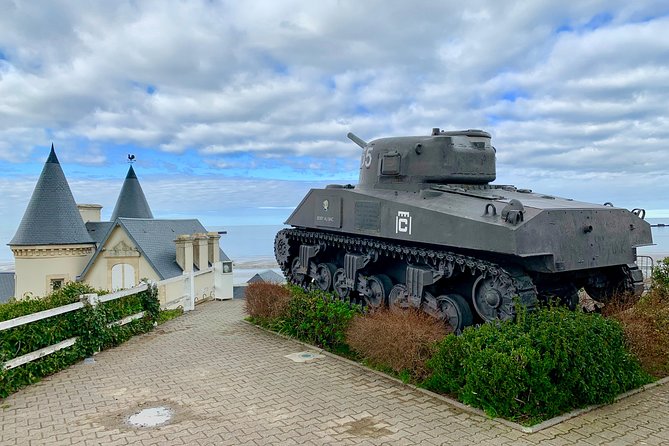
Finally, you head to Arromanches-les-Bains to see the remains of the artificial harbor—Mulberry Bridge—and understand why it mattered. This stop shifts the emotion slightly. You’re still dealing with war, but you’re seeing the problem-solving side: engineering that helped make the landing sustainable.
You’ll spend about 1 hour. The best way to enjoy this part is to listen to your guide’s explanation of the harbor’s role, then look at what’s left and imagine the scale.
This ending works well because it gives closure. You started with the beaches and the fight. You end with the infrastructure that helped the Allies keep moving.
Lunch, rest stops, and how to plan your energy
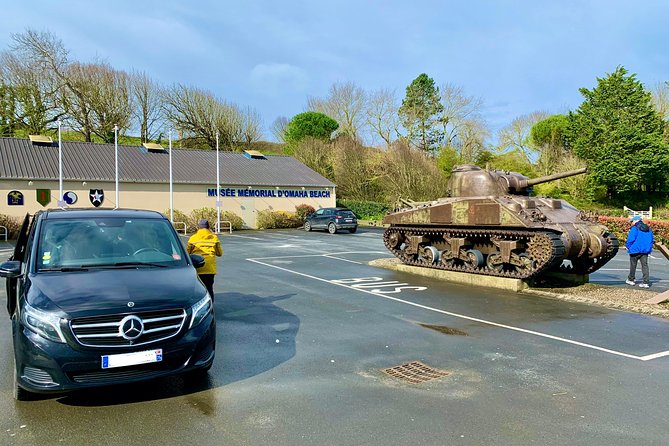
Lunch isn’t included, and that’s important for budgeting. Most guides build in time for a meal stop, and some have arrangements at local spots in Normandy towns. A few people also reported a lunch reservation in a village and even favorites like fresh seafood.
On the refresh side, there’s typically a planned stop where you can buy refreshments. Still, I recommend you pack a backup plan for yourself: a small snack, a refillable bottle, and something warm for the car.
Water can be a mixed story. Some groups reported a van stocked with water, and another complaint noted no water or snacks in the vehicle. Don’t gamble on it. Bring what you’ll want to drink, especially if you’re doing this in cooler or wetter months.
Guide quality: why names like Herve and Rayan show up often
This experience lives or dies on the guide. The difference between a drive-by narration and a truly helpful explanation is huge on WWII sites, where distances and geography can confuse even motivated visitors.
In the feedback provided, certain guides come up repeatedly—Herve, Rayan, Fabrice, Fred, and Marius. Across those reports, the consistent pattern is practical storytelling: connecting what you see at each stop to the broader invasion timeline, and keeping the day moving without making it feel like a race.
Another plus is flexibility. Your guide can adjust the itinerary to suit your interests and your group’s pace. If your crew is more “battlefield details” or more “human stories,” you’ll get a better match.
And yes, some guides bring humor alongside the seriousness. That balance matters, because D-Day is heavy. A guide who can lighten the mood for a minute helps you carry the weight without shutting down.
Price and value: what you’re paying for (and what you still need to fund)
At $967.87 per person, this isn’t a budget excursion. The value comes from what’s included: private transportation, an air-conditioned vehicle, and all fees and taxes. You’re also getting admission tickets marked as free for the listed stops, which helps keep the day from turning into a surprise-cost routine.
The money part also buys time. The drive from Paris takes hours each way, and the private format protects your schedule so you still get a full day of stops rather than a “half day with gaps” feeling.
What’s not included is lunch and gratuities (optional). So you should add a realistic meal budget and a tip amount you feel good about.
If you’re traveling with a small group, private pricing can start to feel more fair because the per-person cost drops compared to booking one spot. If you’re solo, it’s still a premium experience, and you should book it because you really want the private logistics.
Timing, weather, and what to pack for Normandy in real life
Normandy weather can ruin a plan faster than history can. The experience is said to require good weather, and the reality is that rain and cold can show up even when you expect a mild day.
My practical advice:
- Wear comfortable walking shoes for uneven ground around beach areas and memorial spaces.
- Bring layers. Even in mild seasons, mornings can feel chilly early.
- If rain is possible, carry a light rain jacket. Umbrellas can be awkward at windy viewpoints.
- Pack your own water and a small snack.
The tour duration is long, and you’ll appreciate being prepared even if everything is well organized.
Should you book this Normandy D-Day private trip from Paris?
I’d book this if you want the D-Day sites without the stress of transport and crowd wrangling. The private van, the door-to-door pickup, and the guided pacing make it a smart choice for couples, families, and small groups who want a full, coherent day of WWII education and reflection.
I’d think twice if you’re expecting a short, casual outing. This is a committed day, and it’s emotionally intense in places like the American Cemetery. Also, since water and snacks weren’t consistent in feedback, don’t assume you’ll be fully stocked.
If your goal is to understand the story behind Pointe du Hoc, walk Omaha Beach with context, and end with the engineering at Arromanches, this private format is one of the most practical ways to do it.
FAQ
FAQ
What time does the tour start from Paris?
Pickup is listed for 7:00am, with the experience running approximately 12 to 13 hours total.
Where does pickup happen in Paris?
You’re picked up from all hotels and private residences inside Paris.
Is this tour private or shared?
This is a private tour/activity. Only your group will participate.
What language is the tour offered in?
The tour is offered in English.
Are the site admission tickets included?
The itinerary lists admission tickets as free for the stops mentioned.
Is lunch included?
Lunch is not included. You’ll need to plan for a meal during the day.
What if the weather is bad?
The experience requires good weather. If it’s canceled due to poor weather, you’ll be offered a different date or a full refund.
Can I cancel for a full refund?
Yes. You can cancel up to 24 hours in advance for a full refund. If you cancel less than 24 hours before the start time, the amount paid will not be refunded.