REVIEW · ROCHESTER UK
Rochester: Bespoke After Hours Tour with a Costumed Guide
Book on GetYourGuide →Operated by Medway Arts Tours · Bookable on GetYourGuide
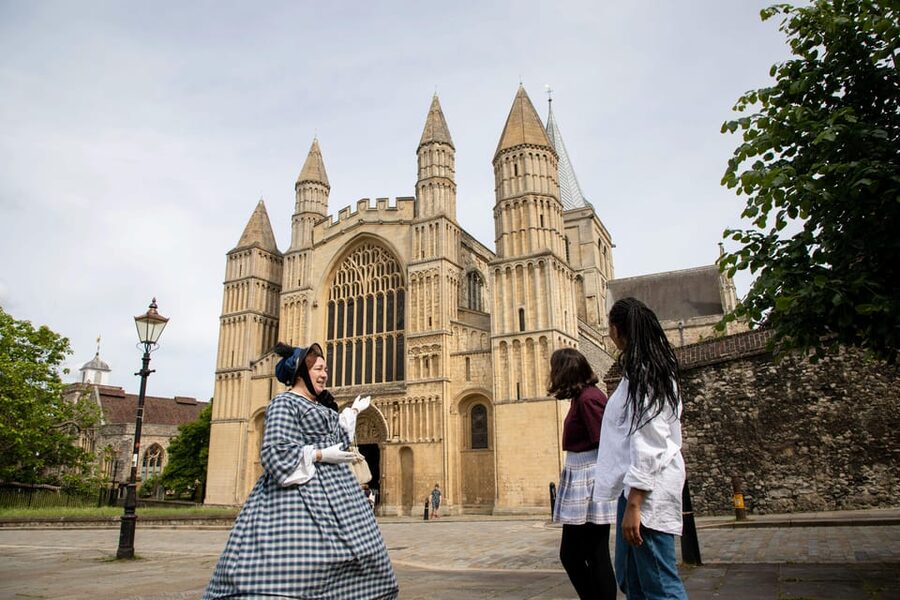
Rochester at night feels like a time machine. This bespoke after-hours walking tour turns the city that inspired Charles Dickens into a story you can actually walk through, with a guide in costume leading the way.
I especially love the character choice. You can pick a period persona such as Mrs Dickens or a Napoleonic officer, then follow their version of Rochester through the streets. I also like how close the route gets to the cathedral and castle area, so you’re not just hearing names—you’re seeing how the city’s layout shapes the tales.
One thing to consider: after-hours access to the castle, cathedral, or museums isn’t guaranteed. If you want to go in, you’ll need to negotiate entry with the team.
In This Review
- Key things I’d plan around
- Rochester After Hours With a Costumed Guide: What the 90 Minutes Really Feels Like
- Choosing Your Character: Mrs Dickens, Napoleonic Officer, and the Power of a Point of View
- From Corporation Street to the French Hospital Entrance: Getting Oriented Fast
- The City That Inspired Dickens: Cathedral City Wealth, River Power, and Chatham Dockyard
- Gates, Dean’s Gate and Jasper’s Gate: Why the Old Entrances Still Matter
- Close-Up Stops: Almshouses, St Nicholas, Two Post Alley, and the Vaults
- Civic Buildings and Street Characters: Guildhall, Bull Hotel, Royal Crown, and Bridge Trust
- Castle Gardens to Rochester Castle: Watching the Landscape of Power at Twilight
- Beyond the Main Landmarks: Baker’s Walk, Satis House, Longley House, and Boley Hill
- Minor Canons Row, The Vines, Restoration House, and the Dickens Footprint
- Eastgate House, Swiss Chalet, and Six Poor Travellers: The Ending That Adds Meaning
- Price and Worth: Is $20 a Good Deal for a Costumed Private Evening?
- Who Should Book This Rochester After Hours Tour (and Who Should Skip It)
- Should You Book? My Practical Take
- FAQ
- How long is the Rochester bespoke after-hours walking tour?
- Where do we meet for the tour?
- Can I choose the character who guides the tour?
- Is this tour a private group or shared group?
- What is included in the price?
- Are meals and drinks included?
- Do we get after-hours access to Rochester Castle or Rochester Cathedral?
- Is the tour wheelchair accessible?
- Who can join the tour?
- Is smoking allowed during the tour?
Key things I’d plan around
- Pick your era character for a different storytelling angle of the same streets
- Twilight tales of Medway’s famous and infamous, told in costume
- A route that covers 22 sites and 4 city gates with close-up views
- The walk links Rochester’s river and dockyard wealth to what you see today
- You can start or end at a bar/restaurant you choose (send the name in advance)
Rochester After Hours With a Costumed Guide: What the 90 Minutes Really Feels Like
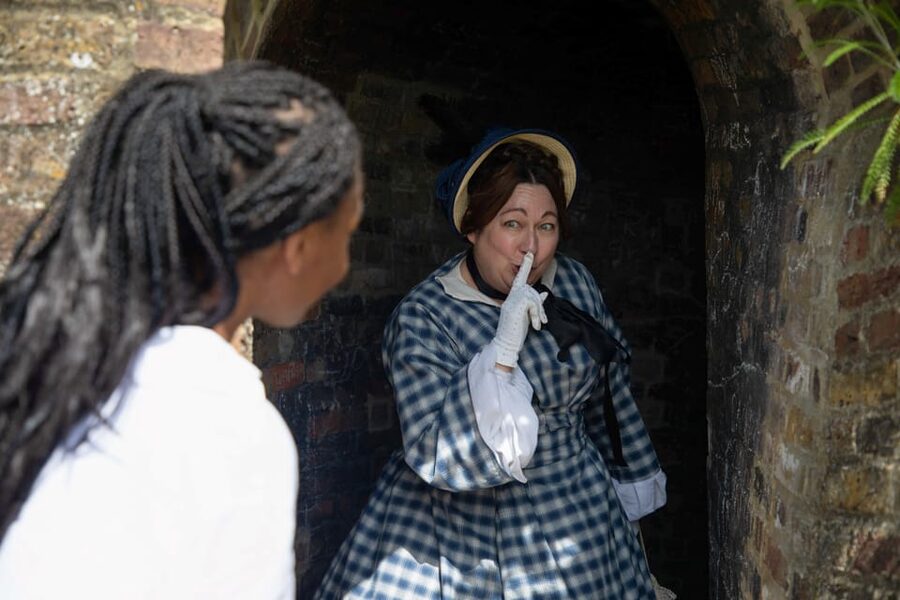
A 1.5-hour walking tour sounds simple on paper. In practice, this one feels like a compact evening show where you control the entry point—literally. You meet the costumed guide near Rochester’s station area, and you’re off on a storyline that moves at walking speed, not museum speed.
What makes it work is the tone. The guide doesn’t just point. They act. And the best part is that the acting stays grounded in real places—Corporation Street, High Street, the cathedral precinct, and Rochester Castle Gardens—so you’re connecting the city’s stones to the era you’ve chosen.
You’ll also get a sense of why Rochester is more than a Dickens footnote. The tour frames Rochester as a place shaped by movement: pilgrims, refugees, soldiers, sailors, agitators, and prisoners passing through, looking for release and sanctuary. That focus gives the evening a human edge, not just a “pretty buildings” vibe.
Choosing Your Character: Mrs Dickens, Napoleonic Officer, and the Power of a Point of View
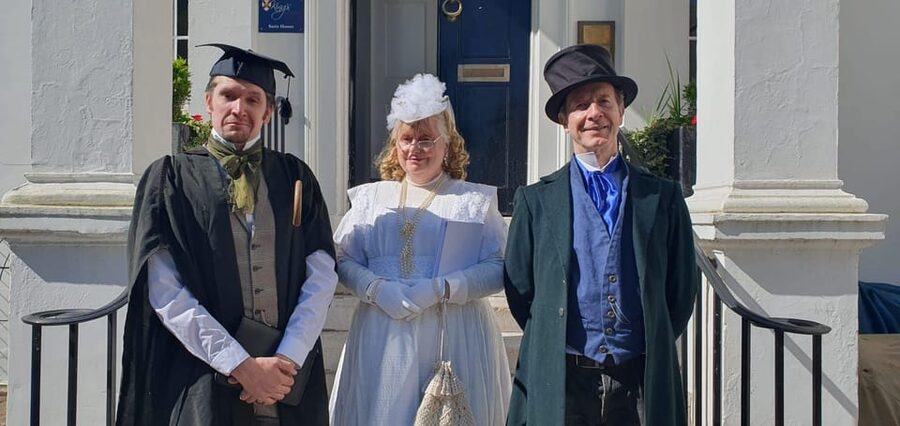
This tour is built around one smart idea: the same streets can tell different stories depending on who’s narrating. That’s why I like the character selection so much. If you pick Mrs Dickens, you’re leaning into the personal side of Dickens’s life and the emotional weight of what Rochester meant to him. If you choose a Napoleonic officer, you get a different sort of tension—authority, war, discipline, and the ripple effects of global events showing up in a port city.
The tour promises multiple characters, and the exact lineup can vary. Still, the structure stays the same: the guide uses their persona to point out visible and invisible remains of that era in modern Medway.
A small but important perk: the guide stays in character through the walk. In at least one recent experience, the guide used a new microphone system, which made it easier to hear every word even in the evening air. That matters on a 90-minute walk, because you don’t want to spend the whole time straining to catch key details.
From Corporation Street to the French Hospital Entrance: Getting Oriented Fast
You start near Rochester station, on Corporation Street opposite the main exit, by the coach bays. It’s a practical start point. You can arrive on foot from the station area and get into the route without hunting around.
Then the walk does something clever: it uses a discreet entrance via the French Hospital to reach High Street. The point isn’t just “we found a side route.” The point is orientation. Rochester has tight lanes and old passageways, so starting with a hidden-feeling entry helps you understand the city’s medieval-to-modern layers.
As you move into High Street, the guide starts building the evening’s theme: Rochester as a city where different people arrived, displaced people sought refuge, and the local streets absorbed the shock waves of wider events. That’s when the character-driven storytelling really clicks. The person narrating isn’t only talking about dates. They’re talking about what it would feel like to be there.
The City That Inspired Dickens: Cathedral City Wealth, River Power, and Chatham Dockyard
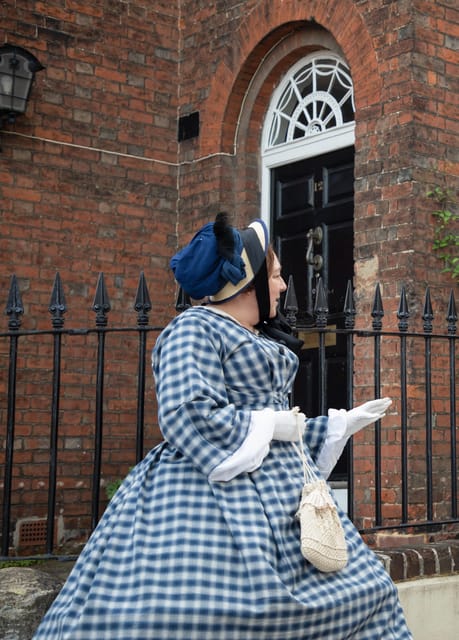
Rochester’s skyline and street plan can look deceptively calm today. The tour gives that calm context.
You’ll learn how Rochester grew as a cathedral city with wealth tied to the river and the nearby dockyard at Chatham. That connection helps you interpret what you see as you go: why certain institutions sit where they do, why major routes funnel toward the cathedral zone, and why the city’s “center” isn’t just one landmark but a network of gates, alleys, and civic buildings.
The tour’s storytelling link to Dickens is also one of its strongest threads. The city isn’t framed as a background for a famous author; it’s framed as an engine that fed stories—stories about class, law, punishment, and the people moving through the port economy.
And there’s a specific moment of closure later: a memorial to the last known sighting of Dickens. It turns the Dickens link from an abstract idea into something you can stand near, at walking distance from the rest of the route.
Gates, Dean’s Gate and Jasper’s Gate: Why the Old Entrances Still Matter
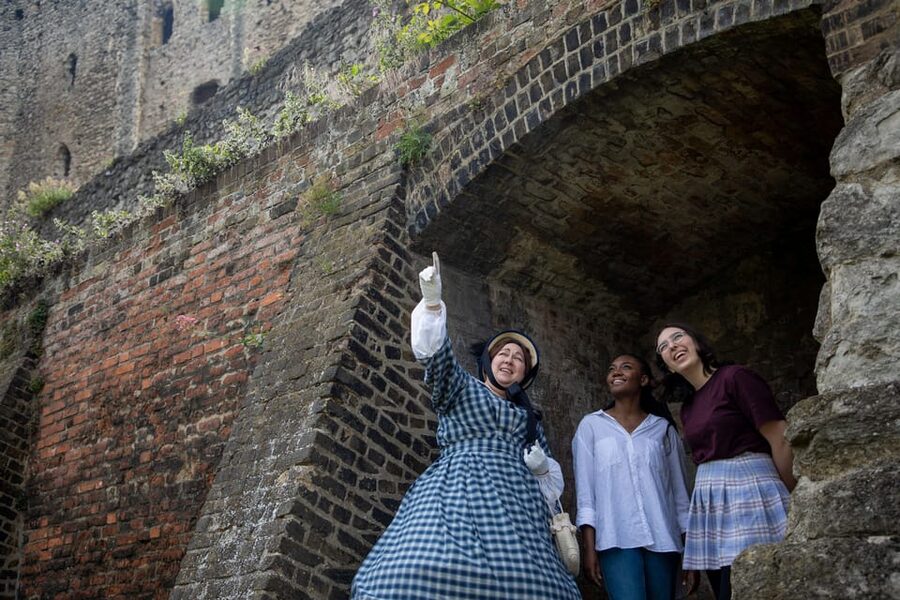
A big promise here is 4 city gates and close-up views of key landmark zones. Even if you’re not a history fanatic, gates matter because they explain movement.
As the route leads you past gate areas like Dean’s Gate and Jasper’s Gate, you get an instant lesson in how cities regulated flow. Gates weren’t only defensive. They were chokepoints for commerce, travel, and control. Standing near them during twilight helps you feel the contrast between then and now—because the “edges” of the old city are often still readable even when the streets have changed.
This is one reason the tour works better at night than during the day. During daylight, you might notice buildings and miss the city plan. After dark, the streets feel tighter, and that makes the gate-and-lane structure stand out more.
Close-Up Stops: Almshouses, St Nicholas, Two Post Alley, and the Vaults
The route includes a long list of sites, but it doesn’t treat them like a checklist. It treats them like chapters.
You’ll pass almshouses, which offer a quick window into how communities handled need—especially the kinds of need created by economic shifts and displacement. Then you’ll visit Rochester Cathedral and also the church of St. Nicholas, which helps you understand how religious and civic life braided together in a city like this.
Next come the smaller-scale spaces where stories often live: Two Post Alley and the George Vaults. These are the places where you can picture people pausing, waiting, bargaining, hiding, or passing along news. Vault-like spaces, in particular, tend to bring out the “in-between” feeling of a medieval port town: not quite street life, not quite private life, but something closer to layered survival.
If you like architecture, you’ll enjoy these stops. If you’re more story-first, you’ll still enjoy them because the tour uses them to show how everyday life worked.
Civic Buildings and Street Characters: Guildhall, Bull Hotel, Royal Crown, and Bridge Trust
Mid-route, you start seeing the city as a system, not just a set of attractions.
You’ll pass the Guildhall, which grounds the evening in governance and public decision-making. Then you’ll move through the orbit of older hospitality and business addresses like the Bull Hotel and the Royal Crown, which the tour frames through the lens of travelers, work, and the constant movement in and out of Rochester.
Then there’s Rochester Bridge Trust. Bridges are more than crossings in places like this. They control connections—who can move, where pressure points sit, and how trade and authority flow across the river.
The tour’s tone stays consistent: the guide links these civic and commercial sites to the “famous and infamous” characters of Medway. Even if you don’t know those stories already, you’ll leave with a sense of how a port city collects drama.
Castle Gardens to Rochester Castle: Watching the Landscape of Power at Twilight
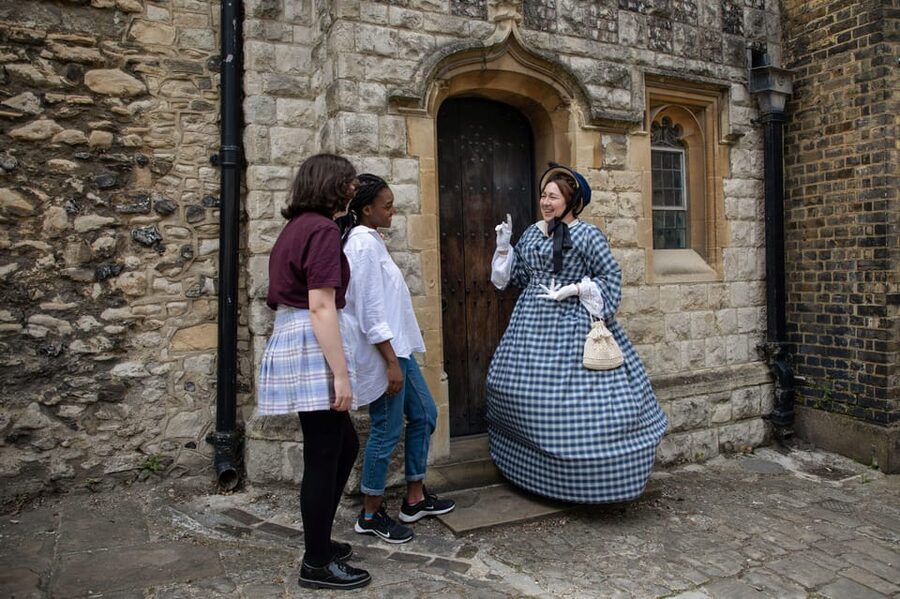
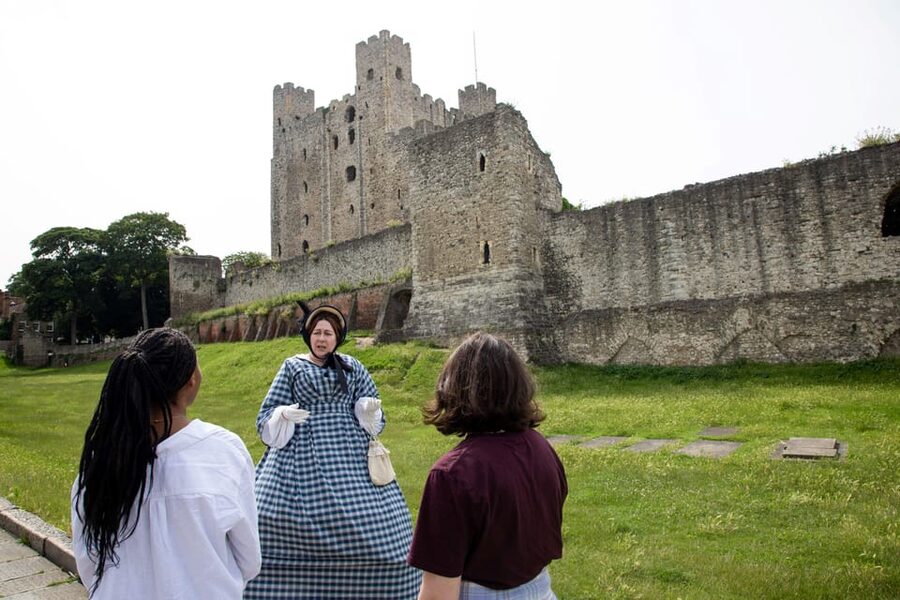
One of the best parts of any after-hours walk is that landmarks stop being “backdrops” and become “actors.” Here, the route brings you to Castle Gardens and then to Rochester Castle itself.
Because this is a walking tour with after-hours timing, you get a different feel than you would with full-day sightseeing. The castle zone reads as a strong statement of power—especially when the guide talks about how Rochester handled threats, control, and order while still acting as a place where people arrived from far away.
A practical note: the tour does say after-hours entry to the castle (and other attractions) can be negotiated rather than guaranteed. So if your dream includes walking inside after dark, be ready to plan with that flexibility.
Either way, even outside views are worth it. The point is to connect the city’s story to its defensive and administrative spine—then compare that to what you see later in the softer domestic streets.
Beyond the Main Landmarks: Baker’s Walk, Satis House, Longley House, and Boley Hill
The route continues into areas that feel more residential and less “tour poster,” which is exactly where I think the tour earns its keep.
You’ll move along Baker’s Walk, then toward Satis House and Longley House, and out near Boley Hill. These stops help you see that Rochester’s story isn’t only about courts, churches, and military power. It’s also about wealth, planning, and the everyday people who lived inside the city’s economic orbit.
There’s also a subtle storytelling technique here: the guide points out both what you can clearly see and what’s less obvious. That’s how the evening stays interesting even if you’ve already looked up one or two Dickens facts.
Minor Canons Row, The Vines, Restoration House, and the Dickens Footprint
When the route reaches Minor Canons Row and The Vines, you start to feel the cathedral precinct’s influence. The city becomes more intimate again—smaller streets, quieter corners, and a sense that Rochester’s “big story” is written in small places.
Then come Restoration House and other historic addresses that the guide uses to explain change over time: what was preserved, what was adapted, and what remained invisible until someone pointed it out.
And yes, you do get that Dickens anchor point: the tour includes a memorial to the last known sighting of Dickens. That’s a clever moment because it asks you to compare the myth (famous author) with the geography (where his connection was actually felt). It turns the walking route into a kind of literary wayfinding.
Eastgate House, Swiss Chalet, and Six Poor Travellers: The Ending That Adds Meaning
The last stretch brings you back toward street-level human stories.
You’ll pass Eastgate House, then the Swiss Chalet, and finish at or near The Six Poor Travellers. These names sound like they belong to guidebooks, but the tour treats them like living evidence of how Rochester cared for people and how it repurposed older spaces over time.
The “Six Poor Travellers” stop is especially fitting for the tour’s theme. Earlier, you’re hearing about pilgrims, refugees, prisoners, and people searching for sanctuary. Ending with a place tied to care for the poor closes the loop: Rochester isn’t just a setting for drama. It’s a place that had to figure out how to keep people afloat.
Price and Worth: Is $20 a Good Deal for a Costumed Private Evening?
At $20 per person for a 90-minute guided walking tour, this is strong value—especially if you want something more personal than a standard group walk.
You’re paying for three things that cost money in real life:
- A live guide in historical costume (the character performance isn’t free)
- A route with lots of specific stops rather than a generic city overview
- A flexible start/end arrangement where the guide can connect your walk to your own evening plans at a bar or restaurant
Also, the private group format changes the experience. You’re not competing with a crowd for the guide’s attention. That’s part of why the storytelling lands.
The main “cost” isn’t money. It’s expectations. If you assume this is a guaranteed after-hours ticket into every major building, you might feel snagged later. But if you treat it as a walking theatre that uses landmark exteriors and street-level context, it’s a great use of one evening.
Who Should Book This Rochester After Hours Tour (and Who Should Skip It)
This tour fits best if you like stories told through real places. If you enjoy Dickens, you’ll get the city context that turns his name into something you can picture.
It also fits if you like a guided experience that’s a bit different. A costumed narrator isn’t for everyone, but when the guide stays in character and uses the right tools—like that microphone setup mentioned in one recent experience—it can be a genuinely fun way to learn.
I’d skip it if you want a kid-friendly daytime stroll. It’s not suitable for children under 16 and it’s also not designed for babies.
If you want guaranteed indoor access to the castle or cathedral after hours, you may want to confirm entry arrangements first. The tour clearly frames entry as something you negotiate.
For mobility: it is wheelchair accessible, and the route can be amended for mobility issues. If you have specific needs, it’s worth messaging the team in advance so they can adapt the plan.
Should You Book? My Practical Take
Book this if you want a smart, story-driven night walk that connects Rochester’s street plan to Dickens and to the real human movement of a port city. It’s short enough to stay fun, structured enough to feel worth it, and character-led enough to make even familiar landmarks feel new.
You should hesitate only if you’re set on after-hours entry to major attractions without any negotiation. Also, make sure you’re comfortable with an evening walking pace and the fact that meals and drinks aren’t included—you’ll pair the tour with your own plan.
If you’re aiming for one evening that feels different from a normal sightseeing day, this Rochester after-hours experience is a solid choice.
FAQ
How long is the Rochester bespoke after-hours walking tour?
The tour lasts 1.5 hours.
Where do we meet for the tour?
It starts on Corporation Street opposite the Rochester station main exit, by the coach bays. If you don’t choose a bar or restaurant for the guide to start or end at, you meet outside Store 104 on Rochester High Street.
Can I choose the character who guides the tour?
Yes. You can pick from different characters, including Charles Dickens estranged wife and a Napoleonic officer.
Is this tour a private group or shared group?
It’s a private group experience.
What is included in the price?
You get a 90-minute live guided walking tour, a character introduction, and twilight tales of the famous and infamous in Medway.
Are meals and drinks included?
No. Meals and drinks must be booked and paid for separately.
Do we get after-hours access to Rochester Castle or Rochester Cathedral?
After-hours entry to the castle, cathedral, museum, or other attractions isn’t included as a guarantee. Entry must be negotiated with the team.
Is the tour wheelchair accessible?
Yes. The tour is wheelchair accessible, and the route can be amended for mobility issues.
Who can join the tour?
It is not suitable for children under 16 years old or babies under 1 year.
Is smoking allowed during the tour?
No, smoking is not allowed.