REVIEW · MAUI
VIP (12 Guests ONLY) Ultimate Whale Watch
Book on Viator →Operated by Ultimate Whale Watch & Snorkel · Bookable on Viator
Whales, but make it personal. This VIP whale watch in Maui is built for close encounters, with 12 guests only on low-to-the-water raft-style boats plus an onboard marine naturalist. I especially like how every seat feels like a front-row view, and how the hydrophone turns whale sightings into a learn-and-listen experience. The one thing to think about is that a raft ride can be a bit bumpy and you may get wet, so if you’re sensitive to motion, plan accordingly.
You’ll meet at 1229 Front St, Lahaina and head out from Lahaina Harbor for about 2 hours. The tour is offered in English, uses a mobile ticket, and runs as a tight group so you’re not stuck watching through bodies or railings.
Best of all, humpback sightings are guaranteed December–April. If you don’t see whales in that window, you can go again for free. One practical consideration: the experience requires good weather, so expect the crew to make smart calls if conditions are rough.
In This Review
- Key points to know before you go
- Entering whale territory from Lahaina Harbor (1229 Front St)
- Why the low raft matters more than you think
- The onboard naturalist and hydrophone: what you’ll actually learn
- How whale searching turns into close encounters
- Getting the most out of your camera time
- What to wear and bring for a 2-hour raft ride
- December–April whale guarantee: when this VIP matters most
- Price and value: is $125 worth it?
- Who should book this VIP whale watch (and who should reconsider)
- Should you book Ultimate Whale Watch VIP?
- FAQ
- How many people are on the VIP whale watch?
- How long is the whale watch?
- Where do we meet for the tour?
- Does the tour include listening to whale songs?
- Are whales guaranteed?
- What should I know about cancellations and weather?
Key points to know before you go
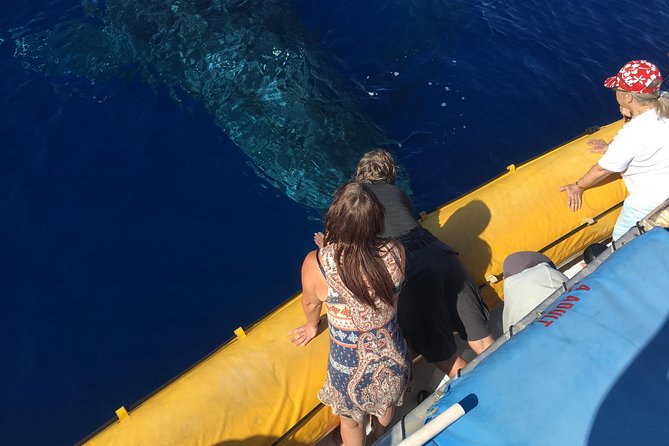
- 12-guest VIP limit keeps the boat feeling calm and uncrowded
- Raft-style, low-to-the-water design helps you get closer with fewer sightline blocks
- Marine naturalist education on board means you’re not just spotting—you’re understanding
- Hydrophone whale-song listening adds a whole extra layer to the experience
- December–April whale sightings guarantee with a free go-again option
- Lahaina Harbor setup is straightforward and easy to reach from the downtown area
Entering whale territory from Lahaina Harbor (1229 Front St)
This tour’s starting point is right where you want to be—1229 Front St, Lahaina, with the activity ending back at the same meeting spot. That matters because whale watching on Maui can be time-sensitive: you don’t want a long commute after the crew finds the right activity offshore.
Check in with your mobile ticket and plan to be ready before you think you need to be. Since this is a small-group VIP format, the crew’s time management is part of the quality. Also, the tour notes that it’s near public transportation, which is useful if you’d rather not drive the last stretch through town.
If you like having a little structure to your day, this schedule is clean: about two hours on the water, then you’re back where you started. It’s a solid choice when you want the highlight experience without burning your whole afternoon.
You can also read our reviews of more tours and experiences in Maui.


Why the low raft matters more than you think
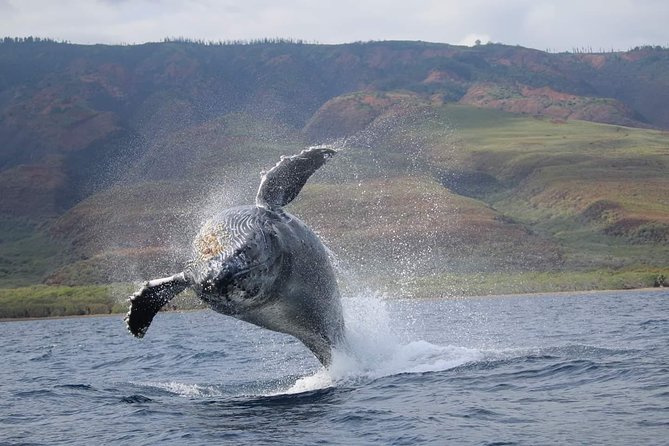
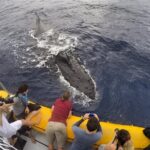
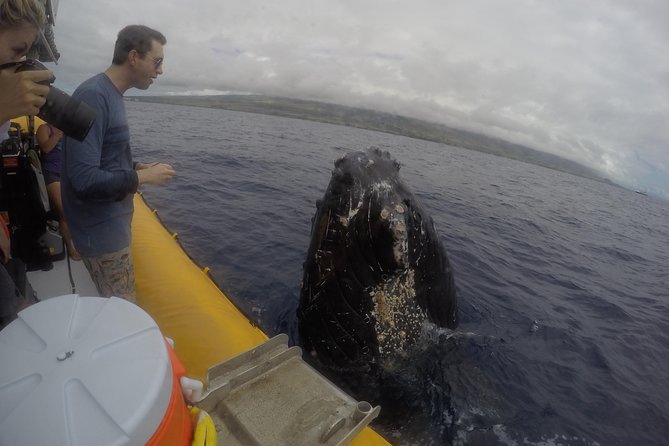
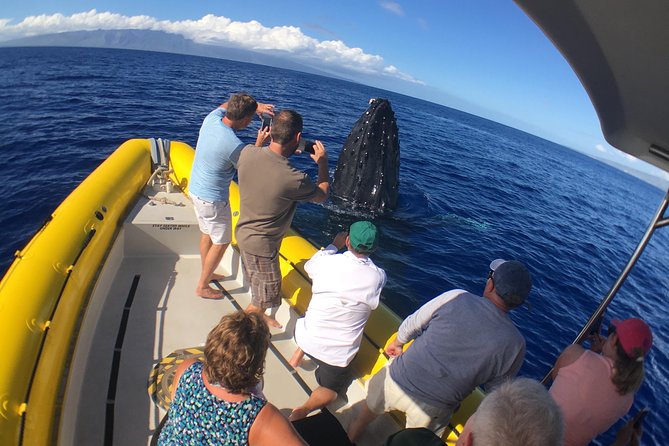
A lot of whale watches use big boats, high rails, and lots of people. This one runs with coast guard–style rafts, which are designed to sit low in the water. The payoff is simple: you get a clearer view of what’s happening at the surface, and you’re more likely to catch those “heads up” moments for photos.
Low boats also change the feel of the outing. When you’re close to the water, a whale coming up feels immediate—like it’s happening in your space, not across a wide gap. Multiple guides are praised for positioning the raft to watch whale behavior without constant repositioning, which keeps the experience smoother.
There is a tradeoff. Several guests note the raft can be bumpy and that you can get wet at times. If you’re prone to seasickness, this is the one point where you should think twice and maybe consider a different style of boat.
The onboard naturalist and hydrophone: what you’ll actually learn
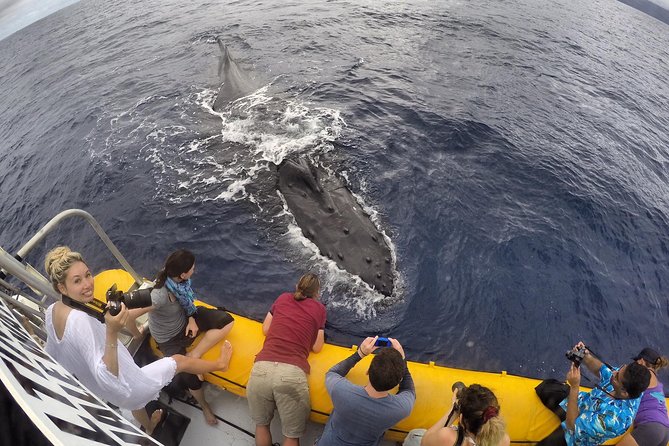
This isn’t just a spot-and-go tour. You’ll have educational talks from an onboard marine naturalist, and the experience includes time to listen to whales using a hydrophone. That’s a big deal because humpback calls don’t always match what you see at the surface. With the hydrophone, you get the sound layer that makes the whole thing feel more real.
What I like about this setup is that it helps you connect behavior to context. When the crew talks about what to look for—breaches, fin slaps, mother-and-calf interactions, or males competing—it turns random chaos out there into a story you can follow.
The human touch matters too. Guests specifically call out guide/crew members by name—like John and Casie, plus crews including Emma, Pat, Jeremiah and Sarah, Christina, Kari/Carrie and Lisa, and Lacey and Emma. Names vary by departure, but the pattern stays the same: people consistently mention guides who keep questions moving and explain what’s happening in plain language.
How whale searching turns into close encounters
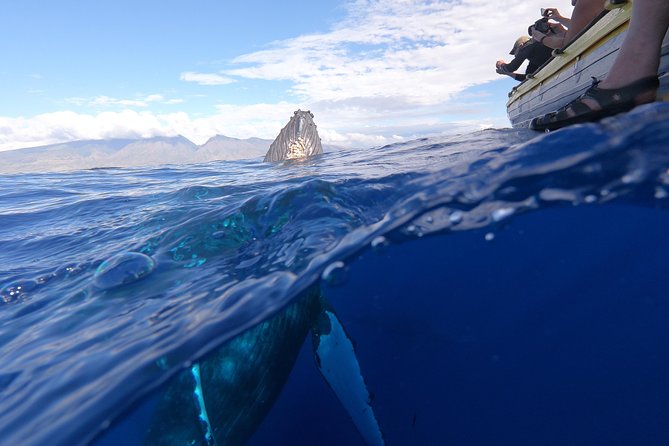
The core of the experience is the search—finding whale activity, then settling into a watch that lets you see more than one quick blow. On recent outings, people describe multiple whale groups and a lot of active surface behavior, including breaches and close interaction moments.
A recurring theme in the comments is that the crew doesn’t treat whale sightings like a checklist. They look for where whales are behaving, then they put you in position to watch. Some guests even describe the feeling of being surrounded by whales—what one person calls whale “jail,” when the rules mean the boat stays put so you don’t interfere with the activity.
You should also expect a mix of behaviors. The best moments often aren’t the loud ones; they’re the sustained ones—watching a mother and calf for a stretch, or seeing males compete nearby for long enough to notice patterns. People talk about whales rolling or surfacing close enough for dramatic photos, including reports of whales coming up very near the raft.
One more detail that helps: because the raft is low and small-group, it’s easier to track movement. Big boats can make you feel like you’re constantly craning around. Here, you tend to keep your eyes on the action with fewer visual obstacles.
Getting the most out of your camera time
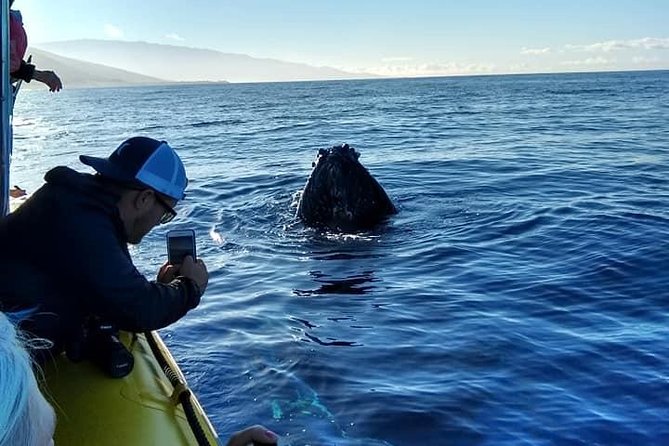
You’ll want a camera, and not just for the classic breach shot. The tour highlights that you’ll have a chance for epic photos of humpback whales, and that’s realistic with this boat style. When you’re closer to the water, the gap between whale and viewer is smaller, so you can frame heads-up moments and body angles that are harder to catch from larger craft.
Practical tip: secure your camera setup. A raft can be bumpy, and water splashes happen. Consider a strap you can keep over your shoulder and keep gear covered if you’re using anything that doesn’t like spray.
Also think about timing. The most photogenic behavior tends to be bursty, so listen to the crew’s cues. When the naturalist points out a likely moment, you’ll be ready instead of scrambling for focus.




What to wear and bring for a 2-hour raft ride
This is an outdoor experience, and the water portion is long enough that comfort matters. Since guests report getting wet at times, I’d pack with the assumption you’ll catch some spray.
What helps most:
- A light waterproof jacket or windbreaker (especially if it’s breezy on your departure)
- A hat with a secure strap or something you won’t lose in gusts
- Water shoes or grippy footwear you can stand in
- A small dry bag for your phone if you’re relying on it as your ticket
If you run cold easily, bring layers. Maui can feel warm at the start, then cool off as wind picks up. And if you’re even mildly prone to motion sickness, this is the part where you should plan ahead—because the raft ride can be lively.
December–April whale guarantee: when this VIP matters most
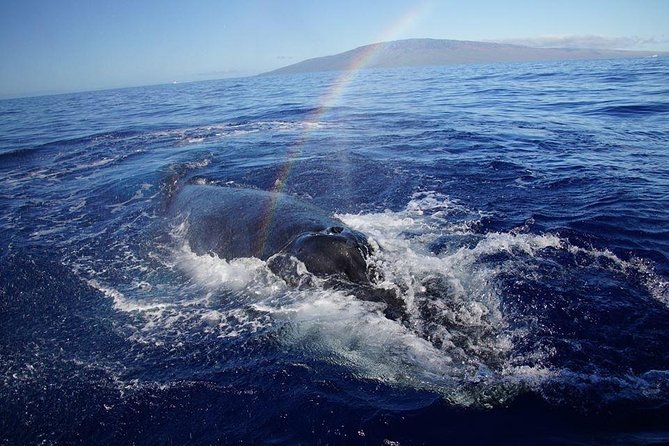
The whale sighting guarantee is what makes this feel like more than just a fun boat outing. During December–April, whale sightings are guaranteed—and if you don’t see whales in that window, you can go again for free.
This changes how I’d think about risk. Outside that season, whale watching is always a gamble. Here, at least in the stated months, the operator is putting skin in the game. If you’re visiting in winter or early spring and want maximum odds of humpback time, this guarantee is a strong reason to choose this style of tour.
Also, the small-group format means you’re not trying to squeeze joy out of a single quick sighting. When the crew finds active whales, you’re set up to watch behavior longer—and that’s where the memories get made.
Price and value: is $125 worth it?
At $125 per person for about 2 hours, you’re paying for two things: access and experience design. The access part is the 12-guest limit plus a boat that’s built to keep you close. The experience part is the naturalist education and hydrophone listening, which makes sightings more meaningful.
If you’ve ever been on a big boat where you spend half the time blocked by shoulders or struggling to find a clear angle, you already know why this format costs more. Here, you’re paying to reduce the common frustrations.
And there’s another value layer: the free go-again policy during December–April. Even if you never need it, it improves your odds and makes the purchase feel less like a gamble.
So I’d treat it like a “buy the best seat you can afford” choice. You’re not just buying time on water—you’re buying a better chance at sustained whale behavior and a calmer, more focused outing.
Who should book this VIP whale watch (and who should reconsider)
This tour fits best if you want:
- Small-group whale watching where you can actually see what the crew sees
- Close-up viewing from a low boat
- Education during the watch, not a silent cruise
It’s also friendly for many people: the notes say most travelers can participate, and service animals are allowed. The tour is in English, and it uses a mobile ticket, which is convenient.
But there are clear limits you should respect:
- No children under age 3
- Not for pregnant guests
- The experience requires good weather, so expect the crew to adjust if conditions aren’t right
If you’re seasick-prone, I’d make your decision carefully. Multiple comments point out that the raft can be bumpy. If you know you get sick on water, consider another boat style—or talk to a doctor about prevention options before you go.
Should you book Ultimate Whale Watch VIP?
I’d book this if your Maui trip lines up with December–April and you want a whale watch that feels tight, close, and educational. The 12-guest VIP cap, the low raft design, and the hydrophone + naturalist format are a great combo for people who care about more than a quick sighting.
I’d reconsider if you’re very sensitive to motion or you’re hoping for a “smooth glass boat” feel. A raft can be lively, and you may get wet.
If your goal is simple—see humpbacks up close, learn what you’re seeing, and do it without crowds—this one is a very strong pick.
FAQ
How many people are on the VIP whale watch?
The tour is limited to a maximum of 12 travelers, making it a true small-group experience.
How long is the whale watch?
It lasts about 2 hours.
Where do we meet for the tour?
You meet at 1229 Front St, Lahaina, HI 96761, USA, and the tour ends back at the same meeting point.
Does the tour include listening to whale songs?
Yes. The experience includes listening to whales using a hydrophone.
Are whales guaranteed?
Yes, whale sightings are guaranteed during December–April. If you don’t see whales in that period, you can go again for free.
What should I know about cancellations and weather?
The experience requires good weather. If it’s canceled due to poor weather, you’ll be offered a different date or a full refund. You can also cancel for a full refund up to 24 hours in advance.