REVIEW · SPLIT
Best of Split & Trogir: Private VIP Tour with Local Guide
Book on Viator →Operated by Discovery tours · Bookable on Viator
Two cities, one smooth guided loop through time. I like the private VIP feel and the way a local guide turns big monuments into clear, human stories you can actually follow. You get a focused sweep through Diocletian’s Palace and then into Trogir’s UNESCO old town, with standout moments like the toe-worn Gregory of Nin statue and the Roman-Spanish vibe of Trogir’s squares.
The main thing to watch is pacing: it’s a long day, and most stops are timed for a quick look (so you won’t have hours to linger inside every site). Also, some key interiors are listed as tickets not included, like the cellars and a few Trogir monuments—so you’ll want to budget a bit extra.
In This Review
- Key things to know before you go
- How Split and Trogir fit together in one great 6-hour loop
- Private VIP style: what you get (and why it helps)
- Stop 1: The Peristyle of Diocletian’s Palace (the palace heart)
- Stop 1 (next): Cathedral of Saint Domnius, still in use
- Stop 2: Grgur Ninski statue and the luck of the toe
- Stop 2 (nearby): Temple of Jupiter in the palace walls
- Stop 3: Diocletian Palace substructures (cellars/basement halls)
- Stop 4: Central Square in Trogir (John Paul II Square)
- Stop 5: Saint Lawrence’s Cathedral in Trogir
- Stop 6: Kula Karmelengo (Kamerlengo Fortress) and sea views
- Stop 7: Town Loggia and civic life
- Stop 8: Palace Cipiko (Čipiko) and Trogir’s noble power
- The guides: Kristina and Andrea set a friendly, readable tone
- Price and value: is $228.78 per person a fair deal?
- Who should book this Split and Trogir VIP tour?
- Should you book this Private VIP tour?
- FAQ
- How long is the Split and Trogir private VIP tour?
- What is the price per person?
- Is pickup offered?
- Is the tour private?
- Are admission tickets included for all stops?
- What is the cancellation policy?
Key things to know before you go
- Private VIP, only your group: no wandering with strangers; your guide can set the rhythm.
- Short, high-impact stops: the route moves fast, with many ~15-minute sights.
- Croatian and Roman highlights in one run: Diocletian’s world plus Trogir’s Venetian-era architecture.
- UNESCO old town time in Trogir: central squares, loggias, and major churches.
- Some paid-entry monuments: cellars, St Lawrence’s Cathedral, Kamerlengo Fortress, and Cipiko Palace are listed as not included.
How Split and Trogir fit together in one great 6-hour loop
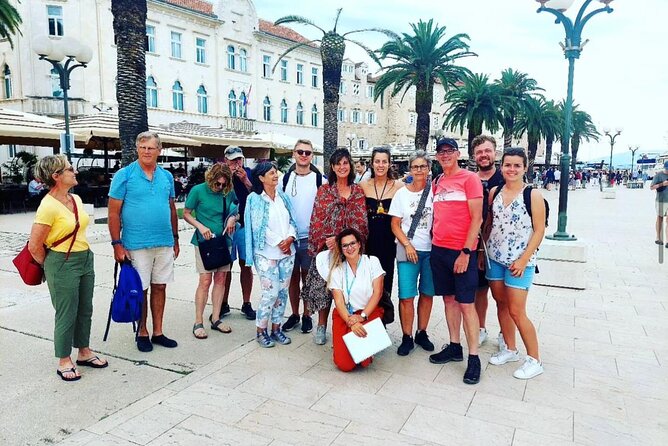
Split and Trogir are close enough that they feel like a two-chapter story. Split shows you how power and empire were built into stone, while Trogir shows how a smaller coastal town used trade and shipping wealth to shape its streets, churches, and palaces.
This tour works because it doesn’t try to make you an expert in everything. Instead, it gives you the right sequence: palace core first, then the big religious landmark, then the Roman layers beneath, and finally Trogir’s civic center and viewpoints. I like that you finish with a sense of place, not just a checklist.
Also, the private setup matters here. When you’re moving through Diocletian’s Palace and the old town lanes in Trogir, you want someone who helps you keep your bearings fast and not lose time to bottlenecks.
You can also read our reviews of more tours and experiences in Split.
Private VIP style: what you get (and why it helps)
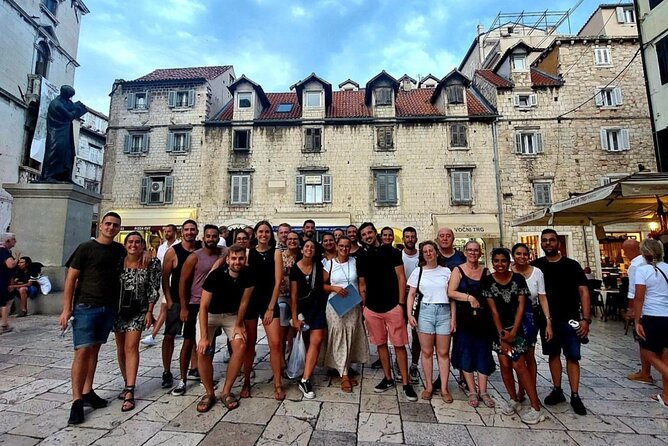
This is a private tour/activity, meaning it’s just your group with the guide. That changes the experience in practical ways: you can ask questions on the spot, you’re not stuck behind a large crowd line, and the guide can tailor the pace to your comfort level.
You also have pickup offered and the tour is in English. Add in a mobile ticket, and the day starts with less friction. With Split’s busy historic center, “less friction” is more than a luxury. It’s what keeps the tour from turning into a sprint.
One small note from guide experience: Andrea’s tour route has been done with Trogir first on at least one day. That’s a reminder to expect some flexibility depending on time and foot traffic, even if the main sights are the same.
Stop 1: The Peristyle of Diocletian’s Palace (the palace heart)
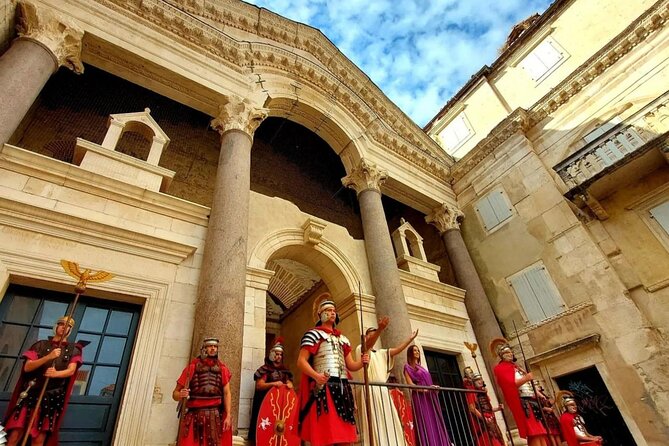
You start at the Peristyle, a rectangular open court that sits where two main roads of Diocletian’s Palace cross. It’s designed like a stage set for daily life—open space, columns, and a layout that immediately helps you understand the palace complex as a city within the city.
The Peristyle is listed as ticket-free here, and that’s a real advantage early on. You get to look, orient yourself, and settle into the palace vibe without paying another entry fee before you even get your footing.
This is also the kind of stop where a good guide earns their fee. The guide’s job isn’t to recite dates. It’s to help you see why the space matters: the Peristyle is the “center of gravity” for the whole imperial arrangement.
Stop 1 (next): Cathedral of Saint Domnius, still in use
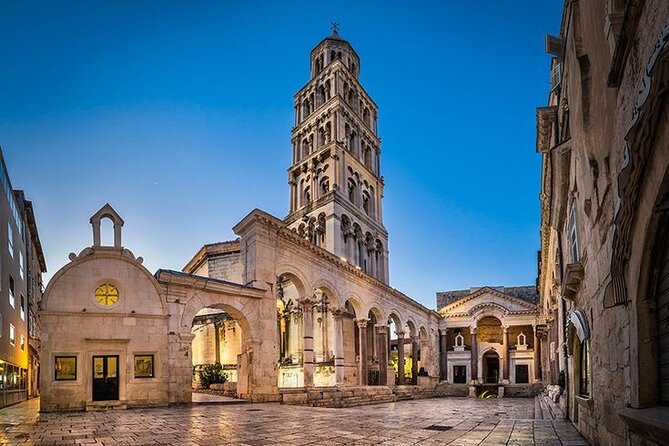
From the Peristyle, the route moves to the Cathedral of Saint Domnius. It’s consecrated at the turn of the 7th century and is widely regarded as one of the oldest Catholic cathedrals in the world that remains in original structure and still used. The bell tower is from the 12th century, which gives you that rare feeling of time layers sitting side by side.
Two practical benefits to visiting this on your guided route:
- You learn what to notice without needing a guidebook glossary.
- You see the cathedral as a living place, not just a photo spot.
If you like architecture you can read with your eyes—Roman layout, later additions—you’ll enjoy the way this stop anchors the day. It’s also a calm counterweight after the open court.
Stop 2: Grgur Ninski statue and the luck of the toe
Next up is the Grgur Ninski Statue, the tall Gregory of Nin statue by Ivan Meštrović. The fame is partly artistic, partly playful: people rub the statue’s toe for good luck, and that toe is worn shiny from years of touching.
This stop is short, but it’s one of those moments where you feel the living culture of the place. A guide can point out where to stand so you actually see the statue’s scale and details, not just the toe everyone crowds around.
If you’re traveling with kids or you just like small traditions, this is a smart mid-tour break. It’s easy, memorable, and it doesn’t require extra tickets.
Stop 2 (nearby): Temple of Jupiter in the palace walls
Then the tour heads to the Temple of Jupiter (Jupiterov hram), located in the western part of Diocletian’s Palace near the Peristyle. It’s dedicated to the Ancient Roman god Jupiter and was built between 295 and 305, during the palace construction.
Here’s the value of including this: it turns Diocletian’s Palace from a single “big palace ruin” into a functioning religious landscape with different worship spaces and timelines. You’ll walk away with a clearer picture of how the palace served more than one purpose.
Timing-wise, expect a quick orientation rather than a long deep-reading session. If you want more time inside multiple interiors, this isn’t the kind of tour that slows down forever. Still, you’ll get the essentials you’d otherwise miss if you walked it on your own.
Stop 3: Diocletian Palace substructures (cellars/basement halls)
The day’s “wow, that’s preserved” moment comes at Diocletian Palace Substructures, often called the cellars or basement halls. These are substructures at the southern end of the palace, and they once supported Diocletian’s private apartments—now among the best preserved ancient complexes of their kind.
This stop is listed with admission ticket not included. So plan for that cost. It’s a good trade, though: the substructures feel different from the open palace areas. You’re dealing with stone, structure, and how the building was engineered to last.
Because this is a timed visit, what you should do is focus. Pay attention to walls, arches, and the way the space holds sound and light. A guide can also help you connect what you see here to what you just learned about the palace overall.
Stop 4: Central Square in Trogir (John Paul II Square)
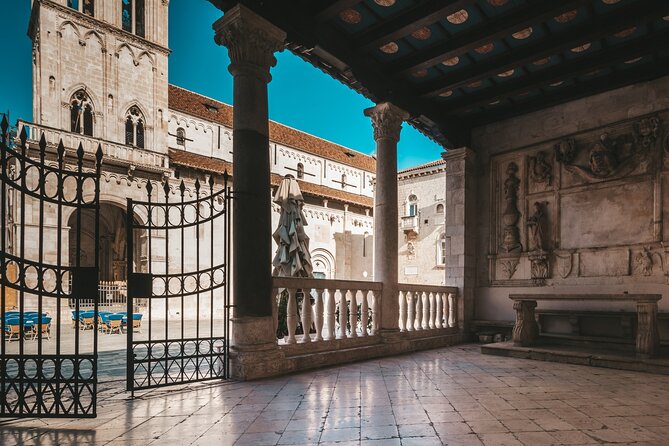
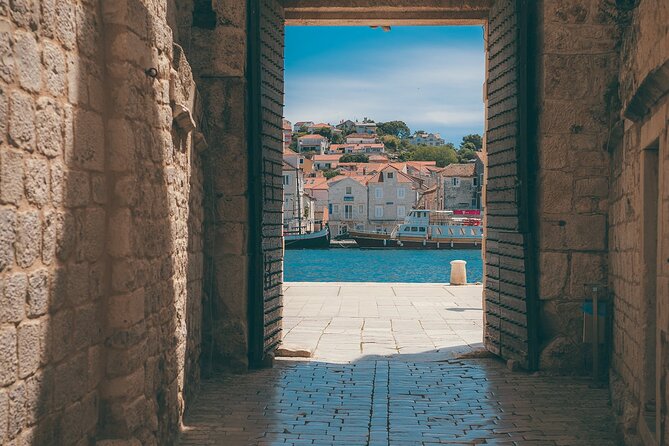
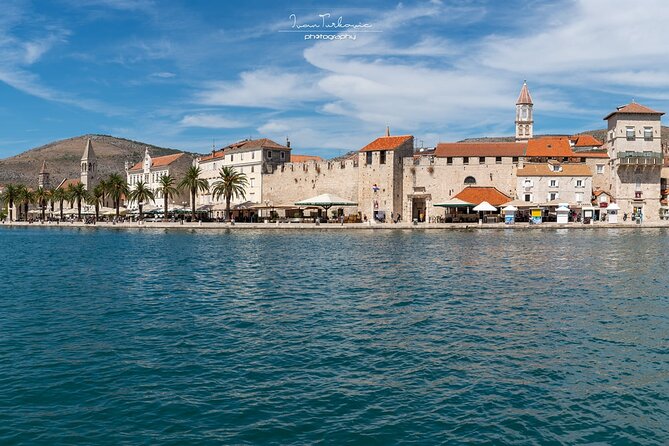
After Split, the tour moves into Trogir, and you start in the Central Square (John Paul II Square). Trogir’s old town is recognized by UNESCO, and this square helps you see why. It’s compact, walkable, and shaped by layers of European influence.
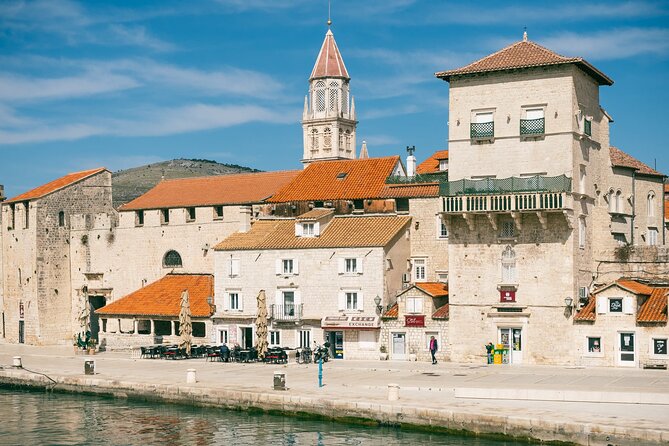
The route highlights key buildings around the square, including the Loggia and the Clock Tower area. The Loggia is notable for its six pillars and carved reliefs. One practical heads-up: in summer, the pillars can be hard to see clearly because there’s a coffee bar nearby blocking your line of sight. You can still learn about the structure and look for what you can actually frame in your photos.
This is the kind of stop where you can feel the town’s identity without needing a long museum session. It’s also a smart pivot point before the bigger church and fortress parts of the day.
Stop 5: Saint Lawrence’s Cathedral in Trogir
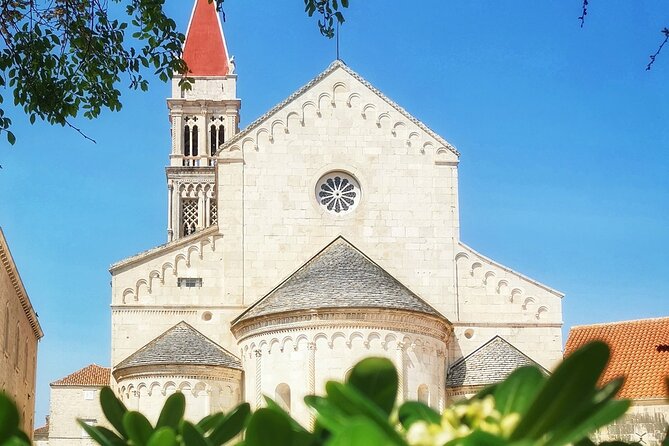
Next comes Saint Lawrence’s Cathedral (Katedrala Sv. Lovre), a triple-naved basilica built in a Romanesque-Gothic style. Construction lasted for centuries, so the building shows the shifts between styles that happened in Dalmatia over time.
This stop is listed as admission ticket not included. Still, it’s worth treating as more than a quick glance, because the cathedral’s long build span is exactly why it tells a story. If you’re the type who likes to spot changes in architecture, this is a good match.
Even on a short schedule, a guide can point out what changes you should look for so you don’t leave thinking it’s just “a big pretty church.”
Stop 6: Kula Karmelengo (Kamerlengo Fortress) and sea views
Then you move to Kula Karmelengo, the Kamerlengo Fortress. It was built in the 15th century during Venetian rule to protect Trogir from naval attacks.
You’ll come here for views: over the old town, the marina, and nearby islands. Fortress points are one of the best uses of a guided tour because you usually get better vantage planning. Your guide can also help you read what you’re seeing—where the town’s maritime power shows up in the layout.
This stop is also listed with admission ticket not included, so again, budget. But this is often the part of the day where the photos make sense: from the fortress, the old town’s shape becomes clear.
Stop 7: Town Loggia and civic life
The tour continues to the Town Loggia, described as the public meeting place for medieval Trogir. This is where announcements were made and legal matters discussed. It’s civic history, not royal history—and that distinction matters.
The Town Loggia stop is listed as ticket-free. That makes it an efficient use of time. You can get a real sense of how self-governance played out in daily life, then move on without feeling like you’ve paid for every single stop.
If you enjoy the human scale of how cities work, this will land well.
Stop 8: Palace Cipiko (Čipiko) and Trogir’s noble power
To finish, you visit Čipiko (Cipiko) Palace, noted as the largest residential palace in Trogir. It’s a Gothic-Renaissance example tied to the influential Čipiko family.
This stop is listed as admission ticket not included. So your best move is to treat it as a “look and learn from the outside/inside as allowed” stop and focus on architecture rather than expecting a full museum-style experience.
It’s also a fitting ending: after the church, the fortress, and the civic loggia, this palace reminds you that wealth and influence were carved into the city. You end the day feeling like you understand what different buildings were for.
The guides: Kristina and Andrea set a friendly, readable tone
Two guide names come up in strong feedback: Kristina and Andrea. Kristina is described as easy to understand, sweet, and native with personal stories that add a human layer to the facts. Andrea is praised for helping people navigate crowds with ease.
That matters because Split’s palace and Trogir’s old town can feel like you’re walking through a photo set. A guide’s value is turning that mess into a path: where to look first, when to step aside, and what to notice so the day feels smooth.
If you care about explanations you can actually follow while you’re standing in the street, look for that kind of guiding style when you book.
Price and value: is $228.78 per person a fair deal?
At $228.78 per person for a 6-hour private VIP tour, the value depends on what you’re trying to buy: time, clarity, and a stress-free route.
Here’s what helps the price make sense:
- You get a private guide for the whole loop through Split and into Trogir.
- You have pickup offered and a mobile ticket, so you spend less time sorting out logistics.
- Multiple major sights are ticket-free on the route (Peristyle, Grgur Ninski statue area, Central Square, Town Loggia are listed as free).
- The paid-entry parts are concentrated in a few bigger monuments (Diocletian substructures, St Lawrence’s Cathedral, Kamerlengo Fortress, Cipiko Palace).
Where to be realistic: you’re paying for guidance and efficiency, not for unlimited entrance fees. Because several sites are listed as ticket not included, you’ll likely add a bit more on top. If you’re the type who wants to slowly wander and sit down often, this schedule may feel a bit brisk.
Still, if you want an organized day that gets you the main stories in both cities, private access here is often worth it—especially when the alternative is trying to stitch together multiple stops across two towns while crowds and narrow streets slow you down.
One more practical note: this tour books up. It’s listed as booked about 172 days in advance on average, which usually means good availability sells early for peak summer dates.
Who should book this Split and Trogir VIP tour?
This tour is a strong match if you:
- Want a guided path through Diocletian’s Palace without getting lost in the palace’s many lanes.
- Prefer a schedule that hits both Split and Trogir in one day.
- Like churches, civic buildings, and architecture you can learn to read.
- Appreciate a guide who adds personal stories and helps you move through crowds smoothly.
It may not be the best fit if you:
- Plan to spend long stretches inside every site.
- Don’t want to pay additional monument entry fees for some stops.
- Prefer a slower, more flexible day with more time for beach breaks or wandering off-route.
Should you book this Private VIP tour?
I’d book it if your goal is a high-clarity overview of Split and Trogir with a local guide shaping the day into something you can understand. The route is well designed: palace core first, then Roman and religious layers, then Trogir’s UNESCO center and viewpoints. You come away with a connected mental map, not just snapshots.
I’d think twice if you hate timed stops or you’re trying to keep total costs ultra-low once you add entry fees for the monuments listed as not included. But for most people looking for a smart, structured day between these two historic towns, this tour is a solid value.
If you’re unsure, decide based on this question: do you want someone to help you read the city while you walk? If yes, book.
FAQ
How long is the Split and Trogir private VIP tour?
It runs about 6 hours (approximately).
What is the price per person?
The price is $228.78 per person.
Is pickup offered?
Yes, pickup is offered.
Is the tour private?
Yes. Only your group will participate.
Are admission tickets included for all stops?
Not for all stops. Some listed sights have admission ticket free, while others are marked as admission ticket not included, including Diocletian’s substructures, Saint Lawrence’s Cathedral, Kamerlengo Fortress, and Cipiko Palace.
What is the cancellation policy?
You can cancel for a full refund up to 24 hours in advance of the experience start time.
![Frida Kahlo VIP - Bike & Churros [Museum Tickets Included] - The 4-hour rhythm: how the day flows from start to finish](https://cd.viptourlover.com/wp-content/uploads/frida-kahlo-vip-bike-churros-museum-tickets-included-400x267.jpg)