REVIEW · GRAN CANARIA
Firgas, Tejeda, Guayadeque – VIP Tour Gran Canaria
Book on Viator →Operated by Low Cost Tours · Bookable on Viator
Gran Canaria in one long morning ride. This VIP-style day trip strings together inland scenery, village culture, and a hands-on aloe vera visit in Fataga. I love the quick, memorable taste of cave houses at Guayadeque and the big-photo payoff at Tejeda when the view clears, and I like the variety of vegetation and towns you get without planning anything yourself. The main drawback to consider is that it’s still a full-day short-stop coach tour, so you’ll move fast and spend a good chunk of time on the bus.
Logistics are mostly smooth: you get pick-up (from touristic areas), an air-conditioned coach, and an English option. Still, a few practical things can affect your day—weather at viewpoints and how much time you want to spend in shop-style stops (yes, aloe vera includes a sales element).
In This Review
- Key things I’d bank on in this tour
- Entering Gran Canaria’s inland loop: why this day feels efficient
- Price and what $59.13 really buys you
- Pickup, timing, and the Parque Tropical reality
- Coach comfort and mountain driving: where the day can win
- Stop 1: Barranco de Guayadeque’s cave houses and ravine time
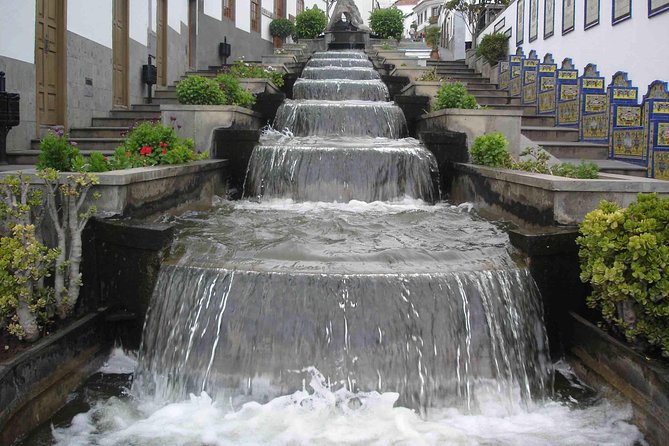
- Stop 2: Firgas and its fountain-waterfall plus the island’s municipality tiles
- Stop 3: Lunch in Valleseco (optional, and you should decide early)
- Stop 4: Tejeda viewpoints for Roque Nublo and Roque Bentaiga photos
- Stop 5: Tunte (San Bartolomé de Tirajana) for a quick village feel
- Stop 6: Finca Canarias Aloe Vera in Fataga—hands-on and shop-aware
- Stop 7: Barranco de Fataga and the Valley of Thousand Palm Trees
- How long you’ll actually spend on the bus (and how to make it better)
- The guide and driver factor: small differences that change the feel
- Is lunch or the aloe shop the weak link for you?
- Who this tour is best for (and who should skip it)
- Should you book this VIP Tour Gran Canaria?
- FAQ
- What are the main highlights of this Gran Canaria day tour?
- How long is the tour and what time does it start?
- Is pickup included, and where does it work?
- Where do I go if I’m not picked up in Las Palmas?
- Does lunch cost extra?
- Are admission tickets included for the stops?
- Is the tour in English?
- What should I wear for the day?
- Can children join the tour?
- Can I cancel, and what’s the timeframe?
Key things I’d bank on in this tour
- Guayadeque’s cave houses and ravine walk-time make the stop feel real, not just scenic.
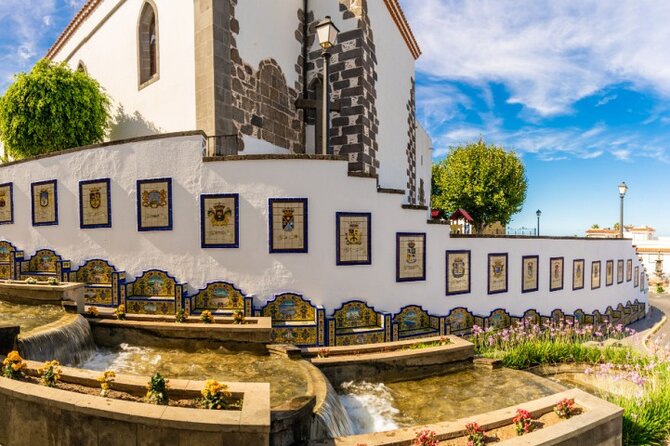
- Firgas fountain-waterfall and tiled benches give you something distinctive that’s easy to photograph.
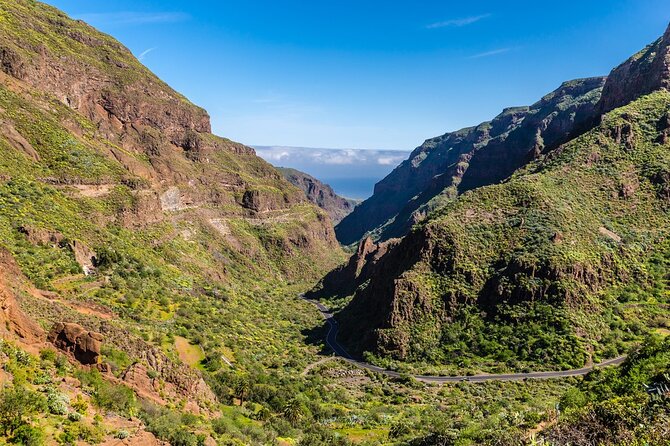
- Tejeda viewpoint timing depends on cloud cover, so bring flexibility for Roque Nublo photos.
- Aloe vera in Fataga is hands-on, but it’s also a product visit where selling can happen.
- It’s a big-vehicle day (max 58), so expect some crowding and short stays.
- Lunch is optional—plan what you’ll do if you’d rather not eat out.
Entering Gran Canaria’s inland loop: why this day feels efficient
This tour is built for travelers who want the island’s inland “other side” without stitching together bus routes or rental cars. In one day you’ll jump between valleys, small towns, and viewpoint stops, which is exactly what you want on a first visit. Gran Canaria can feel wildly different from one road to the next, and this route leans into that contrast.
The pacing is clearly a trade-off. You’re not getting a slow wander in every town. But if your goal is to sample multiple areas—north to inland, then down toward Fataga and the Thousand Palms area—you’ll likely feel satisfied by the end of the day.
You can also read our reviews of more tours and experiences in Gran Canaria.

Price and what $59.13 really buys you
At about $59.13 per person, you’re paying for a guided circuit with transportation and multiple timed stops. That’s the core value: you’re buying convenience plus interpretation—plus several stops where admission is listed as free.
Where the price can feel less “VIP” is group size and time spent on the coach. Some people book expecting a small-group premium experience. This is a coach tour (with a max of 58 travelers), so the feel is more “organized day trip” than “small circle with extra attention.”
If you can handle short stops and don’t mind that the day moves, the price-to-seeing ratio can work well.
Pickup, timing, and the Parque Tropical reality
Start time is 8:00 am, and the day runs around 9 hours including transfers. Pick-up is offered in touristic areas, and you’re asked to send your accommodation name so they can place you at the closest point.
Important note: there’s no pick-up in Las Palmas City or the harbour area. If you’re staying there, you’ll need to get to Parque Tropical (south island) by yourself. The tour also mentions an option to skip pick-up and go directly to Parque Tropical Bus Stop at 09:00h—but if the bus is full, you may not sit next to your partner.
My practical take: if you’re not near a touristic pick-up zone, budget a little extra time and calm for getting to the meeting point.
Coach comfort and mountain driving: where the day can win
The bus is described as modern and fully air-conditioned, which matters a lot when you’re traveling for hours in the morning-to-afternoon swing. The route also includes mountain roads, and drivers need skill on windy, curvy stretches.
On-the-ground experiences often mention how well the driver handles those roads, and how front seating can be a perk if you’re lucky with placement. If you care about views through the windows, consider arriving a bit early and keeping an eye on where you end up.
Also, pack for temperature swings. Even when Gran Canaria is sunny, the higher parts can feel chilly. I’d bring a light layer or sweater if you’re traveling in cooler months, since the difference can surprise you.
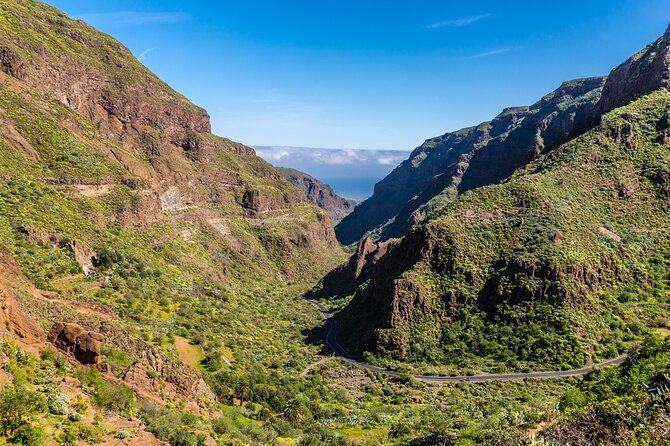
Stop 1: Barranco de Guayadeque’s cave houses and ravine time
Your first major stop is Barranco de Guayadeque, with about 30 minutes to explore. This is one of the tour’s most meaningful moments because Guayadeque isn’t just a viewpoint—it’s tied to the island’s older living traditions.
Expect a guided or self-directed walk area where you can see cave houses set into the ravine setting. It’s the kind of stop that helps you understand why these spots mattered historically: natural shelter, dramatic terrain, and a landscape shaped by erosion.
Timing here is short, so it’s best for people who want quick context and photos without getting stuck in a long museum-type pace.
Stop 2: Firgas and its fountain-waterfall plus the island’s municipality tiles
Next comes Firgas, with about 25 minutes of free time. Firgas is small, pleasant, and very photo-friendly, especially around the central sights.
Two details make this stop stand out:
- A famous fountain-waterfall feature (easy to build a morning photo around).
- Tiled benches representing the island’s municipalities (the tour description highlights the 21 municipalities and 22 benches with local motifs).
You’ll likely have enough time to do a quick circuit: church area, main square vibes, then the fountain-waterfall moment. If you’re the type who enjoys small-town texture—rather than “only big monuments”—Firgas is often the kind of stop that makes the whole day feel less generic.
Stop 3: Lunch in Valleseco (optional, and you should decide early)
Lunch is optional and typically about 1 hour. It’s taken at a restaurant in Valleseco and isn’t included in the tour price.
Here’s how to think about it:
- If you want convenience, eat there and keep the day flowing.
- If you’d rather avoid an extra sit-down cost, consider bringing your own food so you’re not forced into the lunch plan.
One caution: some experiences highlight that lunch stops can take longer than you’d expect. So if you’re hungry, good. If you prefer strict schedules, go in knowing you may lose time here.
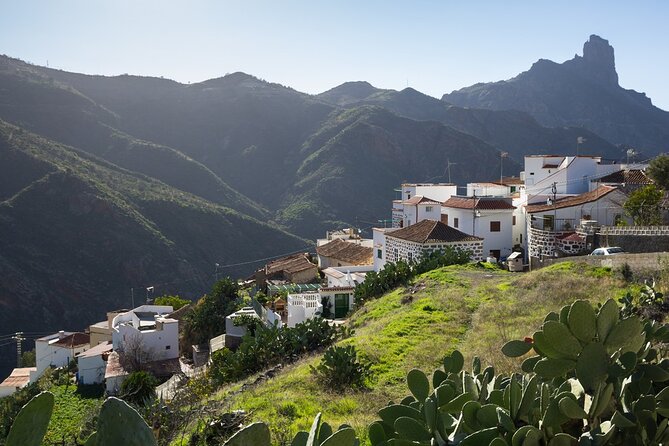
Stop 4: Tejeda viewpoints for Roque Nublo and Roque Bentaiga photos
Tejeda is handled as a viewpoint stop, not a long town visit. You’ll get around 10 minutes at the vantage point to look toward Roque Nublo and Roque Bentaiga.
This is one of the highest “photo potential” moments on the route, but the big caveat is weather. Clouds can roll in and soften or block the emblems you’re hoping to see. Even when the views are available, 10 minutes can feel like a blink—especially if you’re positioning for the shot.
My advice: if you care most about Roque Nublo photos, treat Tejeda as your “be ready” stop. Put your phone/camera in action mode early and keep moving so you don’t miss the clearest opening.
Stop 5: Tunte (San Bartolomé de Tirajana) for a quick village feel
The tour then heads to the municipality area of San Bartolomé de Tirajana, with about 20 minutes of free time in Tunte.
This is a “stretch your legs and reset” moment more than a deep sightseeing stop. You can walk around briefly and soak up the village rhythm, but don’t plan on major sightseeing in this slot.
If you like the feel of local towns more than attractions, Tunte can be a nice pause before the nature-oriented final segments.
Stop 6: Finca Canarias Aloe Vera in Fataga—hands-on and shop-aware
The aloe vera stop happens at Finca Canarias Aloe Vera in Fataga, with roughly 30 minutes. This is one of the most popular parts of the day because it gives you something tangible beyond just viewpoints: you see the plantation setting and get time to try aloe products.
The key thing to know: aloe vera visits often include product promotion. Some experiences describe being guided toward sales at or near the shop area. It’s not necessarily a problem—you may enjoy learning what aloe gel is used for—but it’s wise to go in mentally prepared.
If your interest is purely botanical or you want to keep shopping minimal, you’ll still likely enjoy the environment and any explanations you get. Just don’t expect it to function like a “silent nature walk.”
Stop 7: Barranco de Fataga and the Valley of Thousand Palm Trees
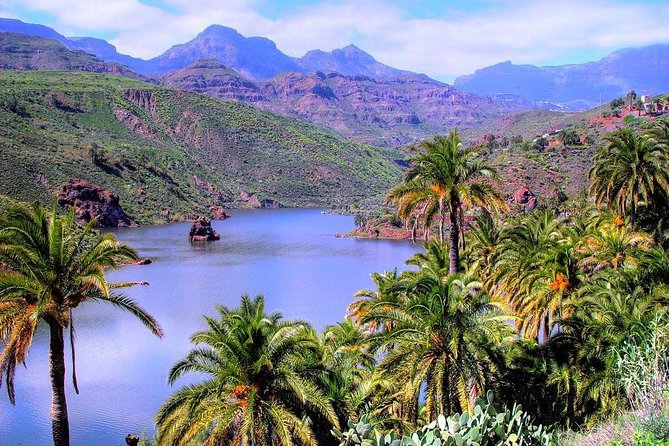
The final nature hit is Barranco de Fataga, with about 25 minutes that focuses on viewpoints around Tunte and the Valley of Thousand Palm Trees.
This is the part of the day that helps you feel the island’s texture and elevation changes without needing hiking gear. You’ll get sightlines out over the valley and palm scenery, typically with enough time to stop, look, and grab a few photos.
Because this is viewpoint-based, you’re again at the mercy of light and weather. If skies are clear, it can feel like the grand finish to all the earlier inland stops.
How long you’ll actually spend on the bus (and how to make it better)
This tour is built around moving between stops quickly. Even though the day is framed as a highlights circuit, many experiences highlight that you’ll spend a lot of time on the coach.
That isn’t automatically bad—it’s part of why this tour works: you get transportation included. But you should adjust expectations.
Also watch for language logistics. English is offered, but some days may include multiple languages on the same bus. If audio volume isn’t ideal, you might miss some narration. If you’re the type who likes full commentary, bring headphones, or accept that you’ll catch the big points and rely on the visuals.
A final practical tip: if you’re prone to motion discomfort, sit in the middle zone and keep a bottle of water handy. Mountain roads can be dramatic.
The guide and driver factor: small differences that change the feel
You’ll have a qualified tourist guide and a driver operating the route. Experiences often mention guides like Carmelo and drivers like Jesús, plus other guides such as Jose Antonio, each with their own style and pacing.
Here’s what matters for you: the tour’s success depends on how well the guide balances information with timing. Since some stops are short, the guide’s tone and ability to keep the group moving can make the difference between feeling like you got your money’s worth and feeling rushed.
If you’re sensitive to pacing, focus on the places you care about most (Guayadeque caves, Firgas fountain sights, Tejeda viewpoint, aloe stop, and the Thousand Palm area) and let the rest be bonus.
Is lunch or the aloe shop the weak link for you?
Two parts can vary in how people judge the day:
- Lunch time and venue: optional, can run longer, and is an extra cost.
- Aloe vera facilities: informative, but expect product promotion and sales.
If you’re the kind of traveler who wants “pure sightseeing,” you may find one or both moments slightly salesy or rushed. If you’re curious about local products and don’t mind shopping pressure, aloe vera can be a highlight.
Who this tour is best for (and who should skip it)
This works best for:
- First-time visitors who want a wide sweep of inland Gran Canaria in one day.
- People who like small towns and viewpoint photography more than long museum-style visits.
- Travelers who want pickup convenience and don’t want to arrange transport.
Consider skipping or choosing another format if:
- You strongly prefer small groups or longer time in each stop.
- You hate time on a coach and want a calmer rhythm.
- You need very consistent narration in a single language for the full day.
Should you book this VIP Tour Gran Canaria?
I’d book it if you want an organized day that gives you Guayadeque caves, Firgas character, Tejeda views, and an aloe vera plantation visit without dealing with schedules. It’s good value for the amount of territory you cover, and the best moments tend to be the ones that feel most real: cave houses, fountain-and-tile town details, and the palms valley viewpoints.
Skip it if VIP to you means small-group intimacy or lots of time at each stop. This is a full-day coach format, and even when the guide is great, the clock still decides how much you can really do.
If you do book, go in with the right mindset: quick impressions, strong photo stops when weather allows, and one product-oriented facility where you can browse or try and decide how much shopping you want.
FAQ
What are the main highlights of this Gran Canaria day tour?
You’ll visit Barranco de Guayadeque (with cave houses), Firgas, a Tejeda viewpoint for Roque Nublo and Roque Bentaiga, a stop in Tunte, an aloe vera plantation visit at Finca Canarias Aloe Vera in Fataga, and a Barranco de Fataga viewpoint linked to the Valley of Thousand Palm Trees.
How long is the tour and what time does it start?
The tour starts at 8:00 am and runs for about 9 hours, including transfers.
Is pickup included, and where does it work?
Pickup is offered in touristic areas. You’ll need to share your accommodation name so the operator can assign the closest pick-up point. There is no pick-up in Las Palmas City or the harbour area.
Where do I go if I’m not picked up in Las Palmas?
You should go to Parque Tropical (south island) by your own means to be picked up. If you want to avoid pick-up, you can go directly to Parque Tropical Bus Stop at 09:00h.
Does lunch cost extra?
Yes. Lunch in Valleseco is optional and not included in the tour price.
Are admission tickets included for the stops?
The stops listed (Guayadeque, Firgas, the lunch-area period, Tejeda viewpoint, Tunte, aloe vera plantation, and Barranco de Fataga viewpoint) show admission tickets as free.
Is the tour in English?
English is offered. The bus can include multiple nationalities, and in some cases more than one language may be heard during the day.
What should I wear for the day?
Wear suitable clothing and footwear for the season. In winter, a sweater or light jacket is recommended.
Can children join the tour?
Most travelers can participate, and there’s no minimum age. Children must be accompanied by an adult.
Can I cancel, and what’s the timeframe?
Free cancellation is available up to 24 hours in advance of the experience’s start time for a full refund.