REVIEW · JEJU SI
Jeju Island Private VIP Day Tour with Tickets
Book on GetYourGuide →Operated by K ONE TOUR · Bookable on GetYourGuide
Jeju, minus the group-tour chaos. I love that this VIP tour runs on a private vehicle with hotel pickup, so you start and finish without taxis or waiting around. The trade-off is simple: it’s still a full 9 hours of moving, so good shoes matter.
What makes it feel smooth is the one-on-one rhythm with a licensed guide. You also get admissions to major stops, so you’re not burning time hunting tickets at every turn. One possible drawback: the schedule is built around famous sites, so you’ll spend less time on slow wandering and more time hitting the highlights.
At $182 per person, it’s not a budget day. For small groups who care about comfort, transport, and getting tickets handled, it’s often a smart way to buy time—especially if you’d otherwise rent a car and deal with driving, parking, and routing.
In This Review
- Key highlights worth planning for
- VIP private transport: why this day feels easier
- Picking East vs West vs South vs North: how to choose your route
- East course: Seongsan Ilchubong, black sand at Gwangchigi, and coastal drama
- West course: Hallim Park gardens, tea fields, dragon-coast Yongmeori, and Sanbangsan
- South course: Columnar Joint, Jeongbang Waterfall into the ocean, and Jungmun cliffs
- North course: Hallasan UNESCO views plus optical illusion and volcanic dragon rocks
- Udo Island ferry: what’s included and what you’ll need to plan
- Tickets included: saving time so you can actually see things
- Price and value: is $182 per person fair for this private day?
- Should you book this VIP Jeju day tour?
- FAQ
- How long is the Jeju VIP private day tour?
- What route options are available for the private tour?
- Are admissions to the attractions included?
- Is hotel pickup and drop-off included?
- Does the tour include Udo Island transportation?
- What languages are available for the live guide?
- How many people are included in the private group?
- Are meals included in the tour price?
- Is the tour wheelchair accessible, and is there free cancellation?
Key highlights worth planning for
- Hotel pickup and drop-off make the day start clean and end easy.
- Private vehicle + private guide means you can ask questions and move at your pace.
- Tickets included for the big sights, so you lose less time to lines and counters.
- Four route options (East, West, South, North) let you match your interests to Jeju’s terrain.
- Udo Island ferry included, with on-island transport not included.
- Guide time fits the stops, not just fast photo stops (one guide named David was noted for professionalism and friendly answers).
VIP private transport: why this day feels easier
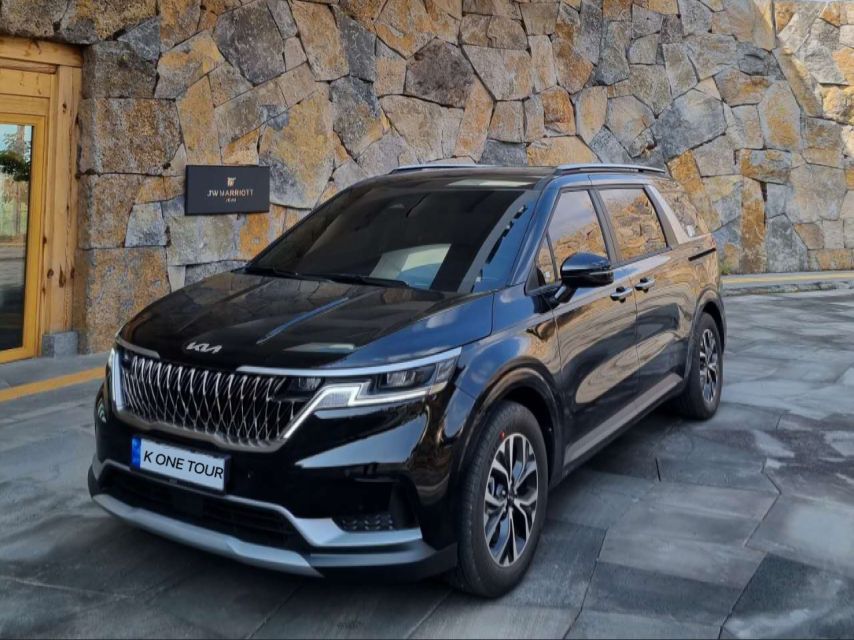
Jeju’s beauty is real, but public transit between top sites can be slow and awkward. This kind of VIP setup fixes that. You get hotel transfer, a private vehicle, and a licensed guide—so you’re not squeezed into a large group rhythm or stuck waiting while everyone regroups.
The guide matters more than you might think. With a real person keeping the flow, you can get context as you move: why a volcanic formation looks the way it does, what to notice at a waterfall, or what a scenic spot is known for beyond the Instagram shot. And when you’re spending 9 hours together, having an English/Chinese/Korean-speaking guide helps the whole day make sense.
Then there’s the practical win: admissions to attractions are included. That turns a chaotic day of ticket errands into a straightforward itinerary where your main job is showing up on time and enjoying the sights.
Picking East vs West vs South vs North: how to choose your route
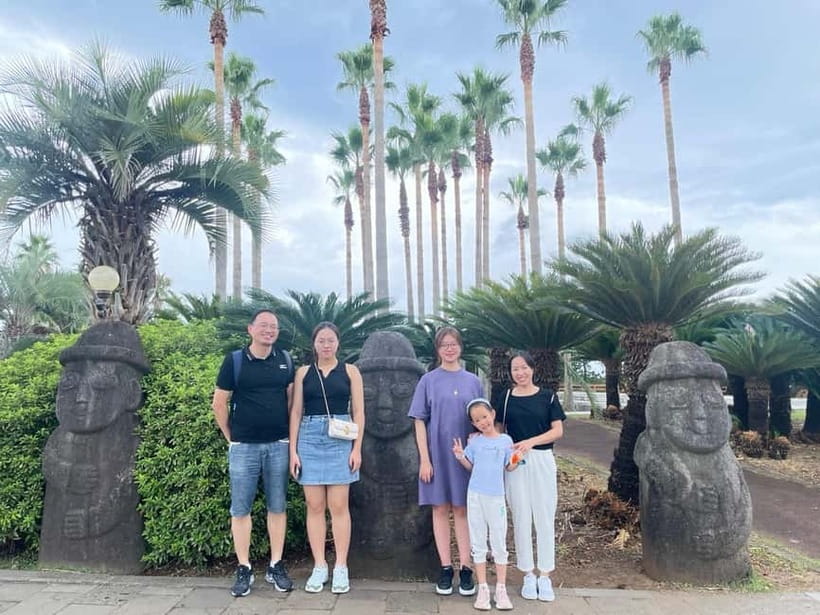
This tour is built around four course styles, and your best choice depends on what you want most: volcanic peaks, ocean drama, waterfall cliffs, gardens/tea, or coastal icons. Each course clusters “Jeju-type” scenery so you don’t waste the day crossing the island in circles.
If you love iconic geology and dramatic viewpoints, North and South are the most satisfying. If you’re into beaches plus gardens plus tea photos, West is a strong match. If you want classic East-side Jeju landmarks—along with a mix of beaches, folk culture, and volcanic landscapes—East is the one.
I’d also think about crowd comfort. Jeju’s famous stops can be busy, so having a guide who can shape the order and keep you moving with enough time is a real advantage, even if you can’t control every peak-hour moment.
East course: Seongsan Ilchubong, black sand at Gwangchigi, and coastal drama
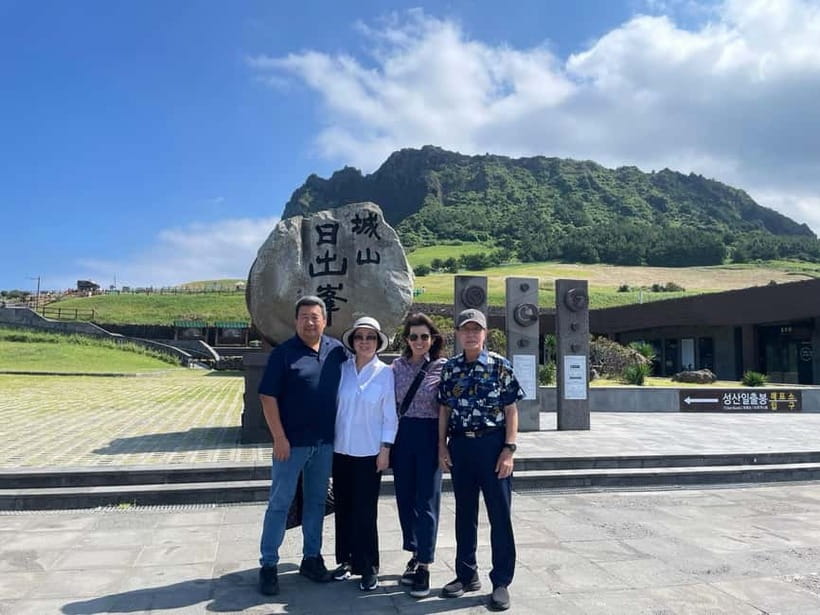
East Jeju starts with Seongsan Ilchubong, a UNESCO site and one of the island’s most recognizable symbols. This is the kind of landmark that makes Jeju feel like a movie set—an iconic volcanic formation with a view that helps you understand the island’s volcanic identity. If your main goal is “see the Jeju face everyone talks about,” this stop delivers.
Next up is Gwangchigi Beach, known for its black sand. Walking on dark sand changes how the whole beach feels. It’s a good pause from the “white beach” expectation, and it’s one of those places where the scenery looks simple but feels very Jeju once you’re there.
Then comes Cape Seopjiko, famous for its coastal walk and the kind of scenery that’s often used for filming. You’ll get ocean views from the kind of angles that make people stop mid-walk just to look back. The only caution is time: coastal viewpoints are great, but they also tempt you to linger, so listen to your guide about how much time fits.
Seongeup Folk Village adds a cultural layer. Here you see traditional thatched cottages and daily life tied to Jeju’s older ways. It’s not just a backdrop; it gives you a sense of how people built their homes on a volcanic island with its own climate and rhythms.
The East course also includes Ilchul Land, a theme-style attraction with themed areas like a lava-cave experience (Micheon lava cave), stone displays, and a cactus greenhouse. It’s a change of pace from cliffs and beaches. If you like quirky, hands-on stops, you’ll probably enjoy it more than you expect.
West course: Hallim Park gardens, tea fields, dragon-coast Yongmeori, and Sanbangsan
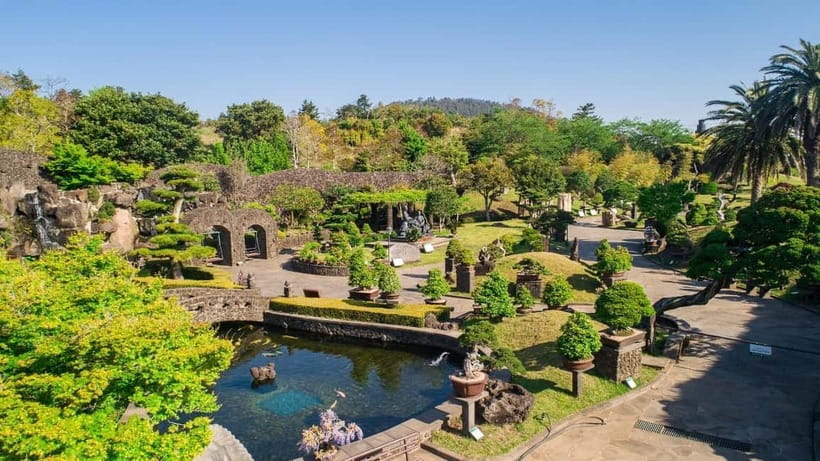
West Jeju leans scenic-soft and photo-friendly. You start at Hallim Park, which is Jeju’s largest garden park with multiple themes, including lava caves, stone displays, and even bonsai-focused areas. If you’re traveling with someone who wants “pretty scenery” without only doing rugged hiking, this is a great anchor.
Hyeopjae Beach follows, described as one of Jeju’s top beaches. Even if you’ve seen plenty of beaches before, Jeju beaches often feel different because the coast is framed by cliffs and volcanic edges. It’s a nice moment to slow down.
Then shift to Osulloc Tea Field and Museum. This is where the green fills the frame, and it’s excellent for photos that feel like real travel, not just snapshots. Tea also connects to Jeju’s climate and agriculture, so it’s more than just a pretty background if you take a moment to read and ask questions.
One of the most memorable parts of West is Yongmeori Coast (UNESCO Geopark). The name comes from the beach shape looking like a dragon leaping into the ocean, head raised. This is one of those stops where the viewpoint is the star, and you’ll want your eyes on the waterline and rock shape—not just the open ocean.
The course also includes Mt. Sanbangsan, described as a 395 m trachytic lava dome. It’s part of the Jeju UNESCO Global Geopark story, and the mountain’s volcanic character makes it feel like the island is actively shaping itself. If you enjoy geology, this is a satisfying capstone.
South course: Columnar Joint, Jeongbang Waterfall into the ocean, and Jungmun cliffs
South Jeju is for people who want the most dramatic water-and-rock combo. The day opens at Columnar Joint (UNESCO Geopark)—the largest columnar rock formation in Korea, created by lava explosion activity. Columnar joints look engineered, but they’re pure nature. The pattern is what you come for, so give yourself a minute to study it from multiple angles.
Next is Jeongbang Waterfall, famous for being the only waterfall in Asia where water goes directly into the ocean. That detail changes everything. You’re not just watching a waterfall; you’re seeing a direct link between river-to-sea flow and volcanic geography. It’s usually one of the most memorable moments of the whole day.
After that, there’s Jungmun Beach, described as pristine with crystal-clear water and dramatic cliffs. This is where the South coast’s character shows up visually: ocean brightness, cliff framing, and a coastline that makes the “Jeju postcard” look realistic.
The itinerary then includes Yakcheonsa Temple, described as the largest Buddhist temple built in the Joseon dynasty. Temple visits can feel “quick and forgettable” if they’re rushed, so the best way to use this stop is to slow down for a few minutes and watch the space—how it’s arranged and how it sits in the wider landscape.
Finally, Oedolgae Rock brings in local legend: the rock is named for a grandmother waiting for her husband to return, and it’s associated with Olle route 7. If you like sites with a story, this is a good closing emotional beat for the South course.
North course: Hallasan UNESCO views plus optical illusion and volcanic dragon rocks
North Jeju gives you a volcanic-heavy day, with both serious scenery and fun weirdness. It starts with Halla Mountain, a UNESCO World site and the highest, most famous mountain in Korea. Even if you don’t do a long hike, the aura of Hallasan is different—Jeju stops feeling like “coast only” and starts feeling like an island with a big heart in the middle.
Then there’s the Mysterious Road, known as an optical illusion road in Jeju. This is a light, playful stop that breaks up the heavier scenery. It’s also a great reminder that Jeju is not just about geology—it’s also about how humans experience space and perception.
You’ll also see Yongduam Rock, another volcanic stone formation eroded over time into a dragon-head look. The “dragon” theme shows up around Jeju, and once you see it in multiple places, it’s easier to understand why these coastlines feel myth-friendly.
The North course continues at Ihoo Beach, near Jeju city downtown, where you can see a red horse-shaped lighthouse. There’s even an association with a BTS Jimin visit, which makes the spot more famous than it might otherwise be. Even if you’re not following pop culture, it’s still a distinctive landmark.
To finish, there’s Dodu rainbow coastal road, a 1.2 km route with rainbow-painted concrete blocks. This is the kind of stop that’s almost too colorful to be real—until you’re standing there and seeing it line up with the turquoise water. It’s not the most “scientific” stop, but it’s a fun way to close a high-intensity day.
Udo Island ferry: what’s included and what you’ll need to plan
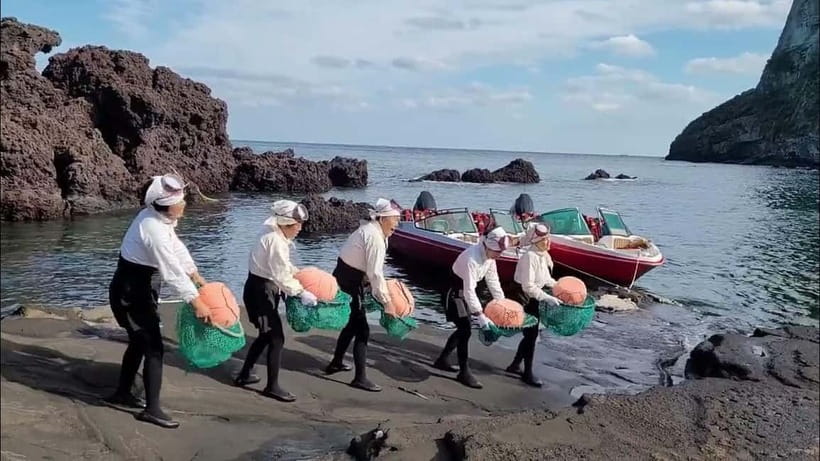
This tour includes a round-trip ferry to Udo Island, which is a nice add-on because it shifts your day from mainland Jeju icons to a smaller island vibe. Udo is usually where people go for extra views and a different pace.
One important detail: transportation on Udo Island (like electric bikes or scooters) is not included. That means you’ll need to decide whether you want to rent something there or accept more walking. If you’re traveling with kids, older travelers, or anyone with mobility limits, it’s worth thinking about that early so the island doesn’t feel like an obstacle course.
Tickets included: saving time so you can actually see things
Jeju days can get bogged down. Ticket lines, entrance fees, and last-minute payment moments steal time from the views. With this VIP format, admissions to attractions are included, which means you can focus on the experience rather than the administrative side.
It also pairs well with having a guide. If there’s a ticketed site on your course—like UNESCO formations, folk villages, or major parks—you don’t need to figure out the entrance flow alone. The day becomes more predictable.
My advice: use the included admissions as a reason to go with the flow. If your guide suggests the best order for photos or viewpoints, trust the plan. You’re paying for speed with sense, not for random rushing.
Price and value: is $182 per person fair for this private day?
$182 per person can look steep until you break down what’s bundled. You’re getting a private vehicle, hotel pickup and drop-off, a professional licensed guide, admissions to attractions, and even the round-trip ferry to Udo Island. You’re also covered for fuel, tolls, and parking fees.
Meals are not included, so you’ll still need to budget for lunch and snacks. And on Udo Island, you’ll handle the local transport yourself. That’s the clearest “extra cost” gap.
So who gets the best value? Families and small groups who would otherwise spend time coordinating their own transport. It’s also a good value for couples who don’t want the friction of driving and parking, and for anyone who wants one guide to connect all the scenery into a coherent story.
Who might feel it’s less worth it? Travelers who already planned a DIY driving loop and are comfortable handling tickets and routing on their own. If you don’t mind losing some time, self-driving can be cheaper. If you want a clean, low-stress day, this price buys a lot of convenience.
Should you book this VIP Jeju day tour?
Book it if you want to see Jeju’s most famous volcanic and coastal spots with hotel pickup, tickets handled, and a guide who can explain what you’re looking at in real time. It’s especially appealing if you’re traveling with kids, a mixed-age group, or anyone who doesn’t want to think about transportation logistics.
Pass or reconsider if you’re chasing a super relaxed pace, or if you’re mainly looking for cheap thrills and don’t mind coordinating transport yourself. This tour is built to cover a lot in 9 hours, so it’s best when you like organized days and clear priorities.
If you pick your route thoughtfully—East for classic symbols and culture, West for gardens and tea, South for dramatic water-and-rock, North for Hallasan and volcanic weirdness—you’ll likely feel like the day paid off.
FAQ
How long is the Jeju VIP private day tour?
The tour duration is 9 hours.
What route options are available for the private tour?
You can choose an East course, West course, South course, or North course.
Are admissions to the attractions included?
Yes. Admissions to the listed attractions are included.
Is hotel pickup and drop-off included?
Yes. Hotel pickup and drop-off are included.
Does the tour include Udo Island transportation?
The tour includes a round-trip ferry to Udo Island, but transportation on Udo Island (electric bike or scooter) is not included.
What languages are available for the live guide?
The live guide is available in English, Chinese, and Korean.
How many people are included in the private group?
This private tour is for 1 to 10 people. If you have more than 10 people, you need to talk to the operator.
Are meals included in the tour price?
No. Meals are not included.
Is the tour wheelchair accessible, and is there free cancellation?
Yes, the tour is wheelchair accessible. Free cancellation is available up to 24 hours in advance for a full refund.