REVIEW · HURGHADA
Luxor & Kings’ Valley Private VIP Tour with Pick up
Book on Viator →Operated by Memnon Reisen · Bookable on Viator
Luxor waits, and so does your 5:30 pickup. I love the private Egyptologist guide, which turns Karnak and the Valley of the Kings into something you can actually explain. I also love that lunch and entrance fees are included, so the day stays focused on the monuments, not your wallet. The trade-off: a long haul of roughly 13–15 hours, with about four hours each way driving.
This is a true door-to-door style day. You’ll ride in an air-conditioned vehicle, then move between the east-bank highlights and west-bank sites after crossing the Nile, with staff like drivers Mahmoud and Ibrahim often praised for careful, calm driving—exactly what you want when the day starts early.
In This Review
- Key things to know before you go
- Why this Luxor day starts before sunrise
- Road trip from Hurghada: private comfort on a long ride
- Entering Karnak Temple Complex with the right context
- Valley of the Kings: royal tombs and the afterlife story
- Deir el-Bahari and the Temple of Hatshepsut’s terrace design
- Colossi of Memnon: a short stop with a specific story
- What you get for $245: value beyond the ticket price
- Guides who keep you focused: Harbi, Harbie, and the driver difference
- Timing and pacing: how to avoid feeling rushed
- Who this Luxor VIP tour suits best
- Should you book this Luxor and Valley of the Kings private tour?
- FAQ
- What time does pickup start?
- How long is the Luxor and Valley of the Kings private VIP tour?
- Which sites are included in the tour?
- Is lunch included?
- Are entrance fees included?
- Does the tour include a Nile crossing to reach the sites?
- Are drinks included with lunch?
- Is free cancellation available?
Key things to know before you go
- Private Egyptologist guide who helps you understand what you’re seeing, not just walk past it
- Lunch + entrance fees included, so budgeting is simpler
- A long day by design: early pickup, long drives, and plenty of walking
- Karnak + Valley of the Kings + Hatshepsut + Colossi of Memnon in one sweep
- Nile crossing to reach west-bank monuments like Deir el-Bahari
- Your group only—no squeezing with strangers
Why this Luxor day starts before sunrise
This tour is built for one thing: packing the core Luxor sights into one day without the stress of self-planning. Pickup begins at 5:30am in Hurghada, and you’ll be on the road fast. That early start can feel brutal at first—then you hit Luxor and everything clicks into place.
I like that this isn’t a vague “see a few monuments” outing. The day is organized around the main UNESCO-area themes of Ancient Thebes and its necropolis: huge state temples on the east bank, royal tombs in the Valley of the Kings, and the dramatic west-bank storytelling of queens, pharaohs, and afterlife beliefs.
One honest consideration: it’s a 13 to 15-hour day. If you’re the type who gets cranky on long drives, plan for that. If you can handle a full day and want maximum value from a limited vacation window, this one fits well.
You can also read our reviews of more tours and experiences in Hurghada.
- Swimming with Dolphin VIP Snorkeling Sea Trip With Lunch and Transfer – Hurghada
★ 4.5 · 1,104 reviews


Road trip from Hurghada: private comfort on a long ride
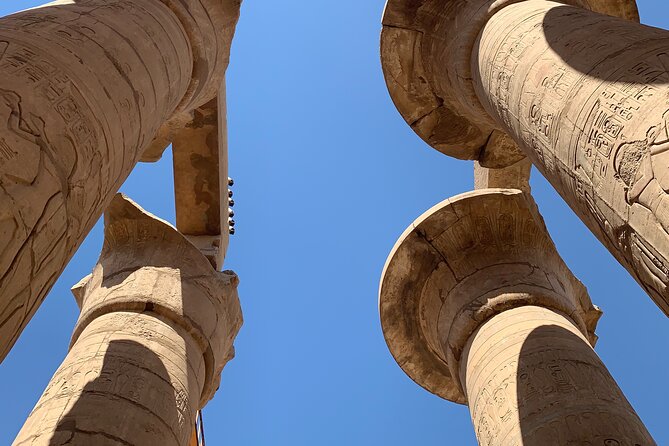
The drive to Luxor is about 4 hours each way, and the total timing adds up. The big win here is the private, air-conditioned vehicle with hotel pickup. You avoid the packed-coach vibe where everyone’s shuffling at the same slow pace.
Practical payoff: a private car means you can keep your rhythm. You’re not waiting for multiple hotel transfers, and the day feels tighter because it’s built around your schedule. Many people specifically mention that having your own driver and guide makes the whole day smoother than longer shared options.
You’ll also want to mentally prepare for comfort breaks. The tour timing is long, so expect periodic pauses during transit. Bring water habits you can stick to, and keep your day kit simple: sunscreen, hat, and shoes that handle uneven ground.
Entering Karnak Temple Complex with the right context
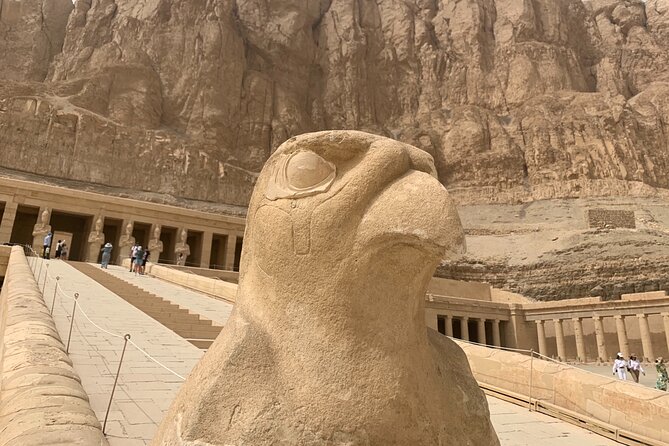
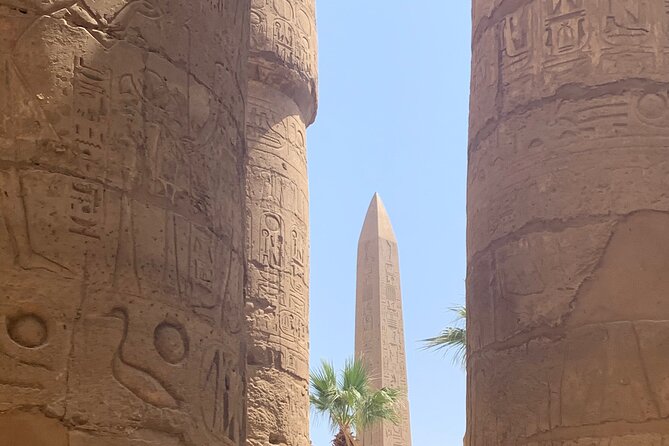
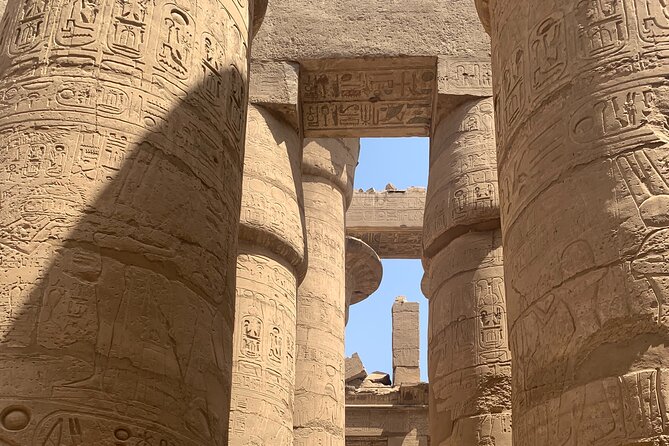
Karnak is the kind of place that can overwhelm you—until someone gives you a map for the meaning. This tour includes Karnak Temple Complex first, with about 2 hours on site.
Here’s what makes Karnak so important: it’s described as the most important antiquities of Ancient Egyptian civilization, and the complex was the main state sanctuary of the New Kingdom. You’ll see a vast mix of temples, chapels, pylons, and decayed structures that still feel powerful.
A solid guide matters here, because Karnak isn’t one building. It’s a whole ceremonial city. The key religious focus is the Theban triad:
- Amon-Ra
- Mut
- Khons
Knowing those names helps you read the site as you walk. Without that, you can end up taking photos of columns and losing the bigger story.
A practical tip: Karnak is large, and time goes quickly. Wear something breathable and expect stairs, uneven paths, and wide-open sun. Your guide can also help you pace so you don’t feel rushed through the main areas.
Valley of the Kings: royal tombs and the afterlife story
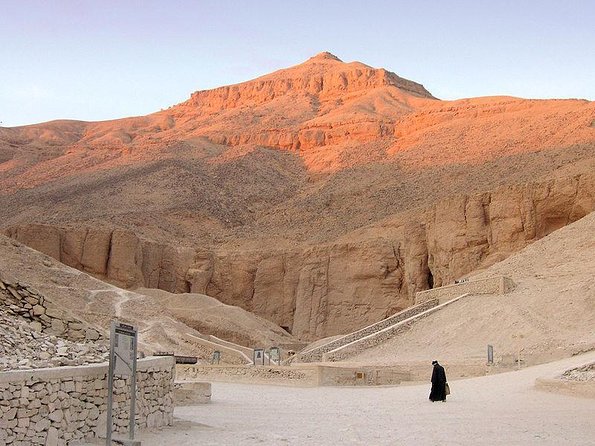
Next comes the Valley of the Kings, another 2-hour stop. This is where many New Kingdom pharaohs were buried, mainly from the 18th, 19th, and 20th dynasties. It’s famous because the tombs aren’t just graves—they’re tied to an afterlife plan.
The tour’s description puts names to the scale of the place, including rulers such as Thutmose II, Tutankhamun, and Ramses. Even if you’re not seeing every tomb, the Valley concept is what lands: the belief that the body needed preservation for the next-world journey.
You’ll also hear why mummification mattered. The idea was that preserving the body supported the pharaoh’s continuing life, and that the deceased could join the gods. A good guide keeps this from turning into a list. Instead, it becomes an explanation you can carry with you as you stand in the tomb landscape.
One consideration: the Valley is a popular site, so it’s not the quiet museum vibe. Still, a private format helps keep your flow calmer. Your guide can also help you focus on what matters most in the time you have.
Deir el-Bahari and the Temple of Hatshepsut’s terrace design
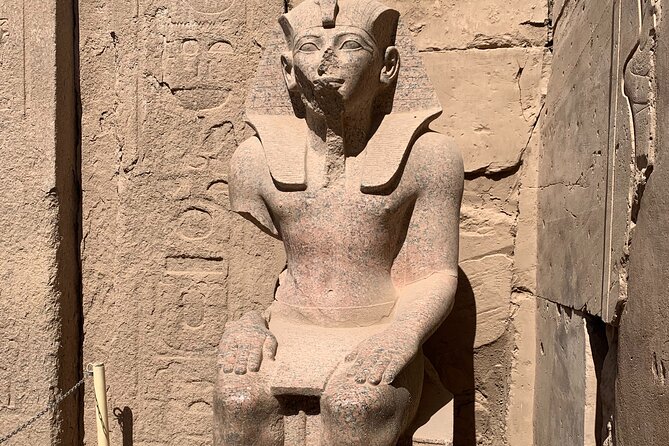
On the west bank, you’ll visit Temple of Hatshepsut at Deir el Bahari, again with about 2 hours. This is where Luxor shifts from “vast temple complex” to “architectural drama.”
The key detail here is that Hatshepsut wasn’t just a queen—she became Pharaoh. Her temple, known as Djeser-djeseru (the Holy of Holies), is one of the great terrace masterpieces. The design includes layered terraces that create that iconic stepped silhouette as you approach the site.
You’ll learn that Hatshepsut’s temple was designed by Senenmut, who served as chief steward of Amun. And the tour framing emphasizes how she was beloved during her time, which adds a human layer to a site that otherwise can feel purely monumental.
Another practical reason this stop is worth your energy: it’s across from Karnak. The tour explains the geography—Karnak is on the east bank and Deir el Bahari sits on the west bank—so you get a meaningful before-and-after feeling as you move through the day. Also, this is one of the reasons the tour’s Nile crossing matters. You’re not just changing locations; you’re changing worldviews.
As with the other west-bank stops, plan for sun and walking. The terraces look clean in photos, but your feet will still do the work.





Colossi of Memnon: a short stop with a specific story
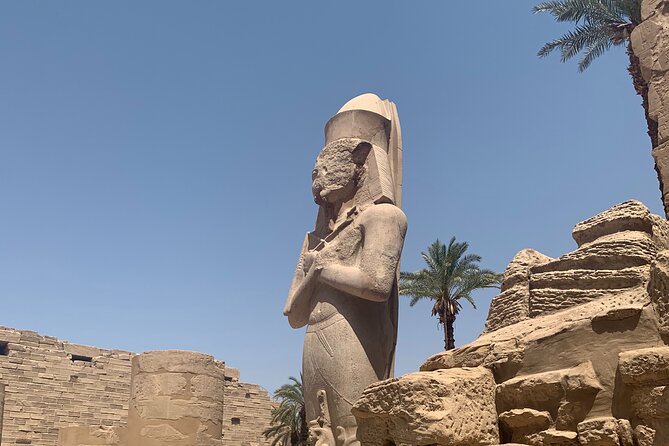
This day finishes with the Colossi of Memnon. You’ll spend about 20 minutes here, and the admission is listed as free.
These statues are often mixed up with Memnon, but the tour description is clear: they depict Pharaoh Amenhotep III—not Memnon. For around 3,400 years, the two seated stone statues have stood in the necropolis of Thebes, across from modern Luxor.
Two small but memorable details help the visit click:
- They are seated with hands on knees, facing east.
- Their gaze points toward the rising sun, which connects back to the afterlife beliefs you’ve been hearing all day.
It’s a quick stop, but it’s a smart way to end. You go from long tomb and temple storytelling to a couple of giant figures that you can see from far enough away to really register their scale.
What you get for $245: value beyond the ticket price
At $245 per person, you’re paying for a lot more than a bus ride and entrance slips.
Here’s what’s included:
- Pickup from Hurghada and transport by air-conditioned vehicle
- A professional licensed Egyptologist guide
- Lunch
- All fees and taxes
- Tickets for Karnak, the Valley of the Kings, Hatshepsut, and the listed inclusions (Colossi of Memnon is free)
What’s not included: drinks in the restaurant. That matters because lunch is included, but restaurant beverages typically add up fast if you’re thirsty after all that morning heat and walking.
In real-world value terms, this tour’s strength is that it removes decision fatigue. Your guide handles the “what to see and why,” and the tickets and entry fees are built in. If you’ve ever tried to piece together Luxor logistics on your own, you know how quickly time slips away.
Also, you’ll get a mobile ticket, which is one less thing to manage during a very long day.
Guides who keep you focused: Harbi, Harbie, and the driver difference
The tour quality tends to come down to two humans: the guide and the driver. Several guides and drivers show up by name in accounts of this experience.
A frequent name you may see attached is Harbi / Harbie as the Egyptologist guide. People highlight that this kind of guide doesn’t just recite dates. They explain connections between places, and they help manage the atmosphere so you can actually listen while you’re on the move.
Driver names that are praised include Mahmoud, Ibrahim, Hassan, Tony, and Maikel, depending on the booking. The repeated theme is safety and calm pacing—important when your day starts at 5:30am and you’ll be staring at the road for hours afterward.
One practical benefit of a well-run private day: you’re not fighting the chaos alone. Some accounts also mention that the guide helps with hawkers and merchants so they don’t take over your attention. Even if that doesn’t sound like your priority, it makes a difference for the overall mood of the day.
Timing and pacing: how to avoid feeling rushed
This is a full schedule. Even though each site gets a defined amount of time, the travel between locations—plus the Nile crossing—adds up.
Here’s how the day typically flows:
- Morning drive into Luxor
- Karnak first (about 2 hours)
- Valley of the Kings next (about 2 hours)
- Hatshepsut at Deir el Bahari (about 2 hours)
- Colossi of Memnon to wrap up (about 20 minutes)
That means you need to be ready for a day where your schedule is fixed, not flexible. You’re in control of how much you want to walk and ask questions, but you’re not turning this into a slow stroll.
If you want the monuments to feel meaningful, don’t try to treat this like a race. Use the guide time to build context, then let the place hit you when you’re inside it.
Who this Luxor VIP tour suits best
This tour is a strong match if:
- You want a private Egyptologist guide rather than group-style narration
- You’re short on time in Hurghada and want Luxor in one day
- You care about understanding what you’re seeing at Karnak, the Valley of the Kings, and Hatshepsut
- You prefer included tickets and lunch so the day stays simple
It might be a poor match if:
- You hate early starts or long driving days
- You want a half-day or relaxed pace
- You’d rather choose sites one at a time without a tight schedule
It’s also worth considering if you’re traveling with kids or older adults. The private vehicle helps comfort, but the overall day length is still long. Plan breaks, and don’t assume the day will feel easy just because it’s private.
Should you book this Luxor and Valley of the Kings private tour?
I’d book it if Luxor is on your must-do list and you want the best mix of major sites + guided context + included access in one shot. The $245 price only feels high until you price out the pieces separately—guide time, entry fees, and transport—then it starts to make sense.
Skip it if your ideal vacation day is short, slow, and low-effort. This is not that day. This is a monuments-first day.
If you do book, go in rested if you can. Bring water habits, sunscreen, and good shoes. And if you get a guide like Harbi/Harbie, lean on them early—ask one or two questions at the start of Karnak and Valley, and the rest of the day gets easier to follow.
FAQ
What time does pickup start?
Pickup starts at 5:30am.
How long is the Luxor and Valley of the Kings private VIP tour?
Plan for about 13 to 15 hours total.
Which sites are included in the tour?
You’ll visit Karnak Temple, the Valley of the Kings, Temple of Hatshepsut at Deir el Bahari, and the Colossi of Memnon.
Is lunch included?
Yes, lunch is included.
Are entrance fees included?
Yes. The tour includes the tickets for the sites mentioned and states that all fees and taxes are covered. The Colossi of Memnon admission is listed as free.
Does the tour include a Nile crossing to reach the sites?
Yes. The tour description says you’ll take a ride across the Nile River to access the sites.
Are drinks included with lunch?
Drinks in the restaurant are not included.
Is free cancellation available?
Yes. You can cancel for a full refund up to 24 hours in advance of the experience’s start time.
You Might Also Enjoy


More Tour Reviews in Hurghada
- Swimming with Dolphin VIP Snorkeling Sea Trip With Lunch and Transfer – Hurghada
★ 4.5 · 1,104 reviews