REVIEW · POMPEI CAMPANIA
Pompeii VIP 3h Tour: Skip-the-line with your Archaeologist
Book on GetYourGuide →Operated by Grand Tour Experience · Bookable on GetYourGuide
Pompeii feels close with the right guide. I really like the skip-the-line start, because you spend your time walking ruins instead of waiting in line. I also love having a local archaeologist who connects what you’re seeing to real finds from the site, like objects from the most recent excavations.
You should note one practical drawback: this is a tight 3-hour route. If you dream of slowly wandering every street and every corner, you’ll probably want extra free time after the tour.
In This Review
- Pompeii VIP 3h Tour: Key things to know
- Skip-the-line Pompeii Starts at Porta Marina Superiore
- What the Archaeologist Adds (And Why It Changes Everything)
- Porta Marina to the Antiquarium: Entry as a Time Machine
- Basilica, Forum Civile, and Temple Areas: Rome Runs the City
- Greater Decumano, Baths, and the Lupanare: Daily Life Comes Through
- Macellum and Market Life: Food, Trade, and Routine
- Domus Stops: Newly Opened Houses and Restoration Work
- Theatre Zone, Great Gymnasium, and Public Entertainment
- Garden of the Fugitives: The Emotional Core of the Route
- Amphitheatre Finale: Ending Where People Watched
- Price and Value: Is Pompeii VIP Worth $407.83?
- Best Fit: Who This Pompeii Tour Suits
- Should You Book the Pompeii VIP 3h Tour?
- FAQ
- FAQ
- How long is the Pompeii VIP tour?
- Where do I meet for the tour?
- What’s included in the price?
- Are food and drinks included?
- What languages is the guide available in?
- Is the tour wheelchair accessible?
Pompeii VIP 3h Tour: Key things to know
- Skip-the-line entry from Porta Marina Superiore so you can get moving fast
- A personal archaeologist style of guiding, with site finds explained as you go
- You’ll cover the main story arc: civic center, daily life, houses, and the eruption tragedy
- Stops include standout areas like the Lupanare, baths, theatre zone, and the Garden of the Fugitives
- You get admission tickets included, and the tour ends back at the same meeting point
Skip-the-line Pompeii Starts at Porta Marina Superiore
This tour is built for people who want Pompeii to feel alive, not like a checklist. You meet at Porta Marina Superiore, right in front of Hortus Bar, and you start from there with skip-the-line entry. That matters on a busy day because the Pompeii entrance process can eat up a lot of your morning.
What I like is the pacing right from the start: you’re not “stuck waiting for the group.” You’re immediately in the ruins, which makes the whole experience more coherent. You also get a private group setup, which usually means you can ask questions when something catches your eye.
One extra detail to plan for: Pompeii requires personal ticket data. You’ll need to send the full list of participant names and bring an original ID or passport for each adult and child. Tickets are personal, so being on time isn’t just polite—it keeps your entry smooth.
You can also read our reviews of more tours and experiences in Pompei Campania.
What the Archaeologist Adds (And Why It Changes Everything)
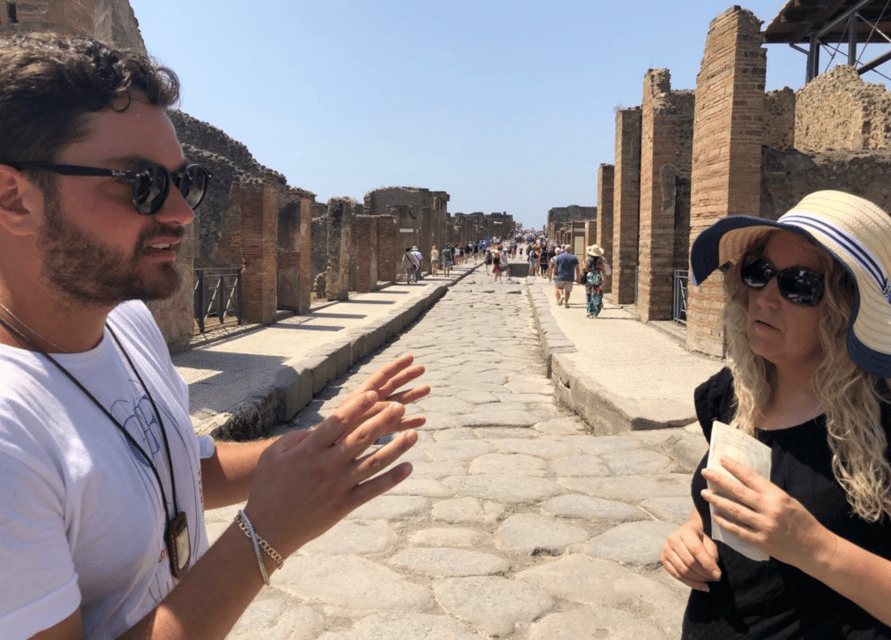
In a good Pompeii visit, you’re not just looking at walls. You’re learning how archaeologists read a city. This tour is guided by a licensed, local archaeologist, and the practical value is that you get context while you’re standing in place.
One example of the kind of connection you get: at the start, you pass through the antiquarium area where the guide shows objects from the latest excavations, including a coin that changed what we know about the eruption date and a heavy golden arm cuff. Instead of hearing vague talk, you hear how a single small item can shift the timeline or the interpretation.
The other thing I appreciate is that the guide’s explanations aren’t limited to big monuments. Pompeii is also about daily routines—markets, baths, entertainment, and homes—and this route tries to keep those “ordinary” moments in the spotlight.
If you end up with a guide like Ricardo (mentioned as a studious archaeologist in one of the comments) or Federica (praised for exceeding expectations), you’ll likely get that scientific-meets-human feel that makes Pompeii click.
Porta Marina to the Antiquarium: Entry as a Time Machine
After entry, your walk begins at Porta Marina, the ancient main-entrance area. It’s a strong way to start because you get your bearings immediately. Then you move toward the antiquarium, which is where your archaeologist can reset your thinking.
This is the part where the tour stops being only visual. You’ll see artifacts tied to the site’s more recent excavation work—again, including that coin that helped refine the eruption date and the golden arm cuff. Even if you don’t consider yourself a museum person, this kind of stop helps you “read” what comes next.
A small, practical tip: Pompeii is uneven and you’ll be doing a lot of walking. Comfortable shoes matter more than people think, especially because the day is structured to keep you moving between areas.
Basilica, Forum Civile, and Temple Areas: Rome Runs the City
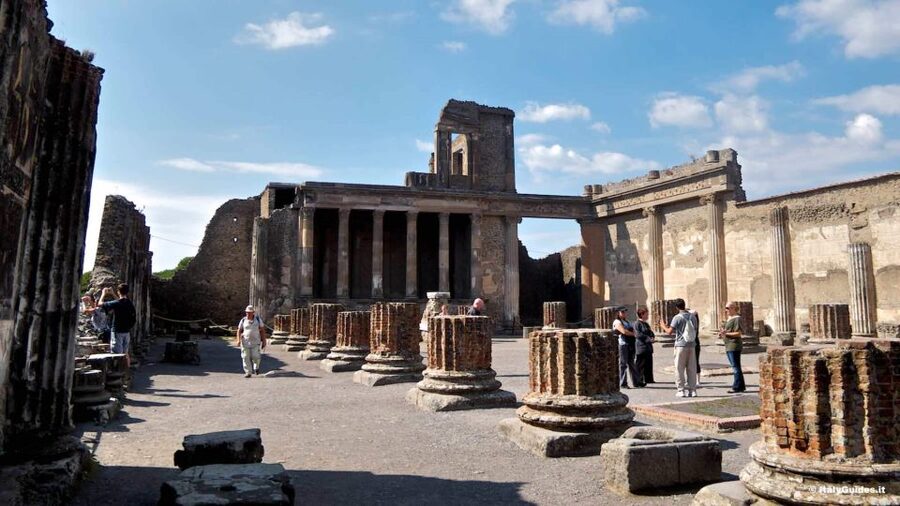
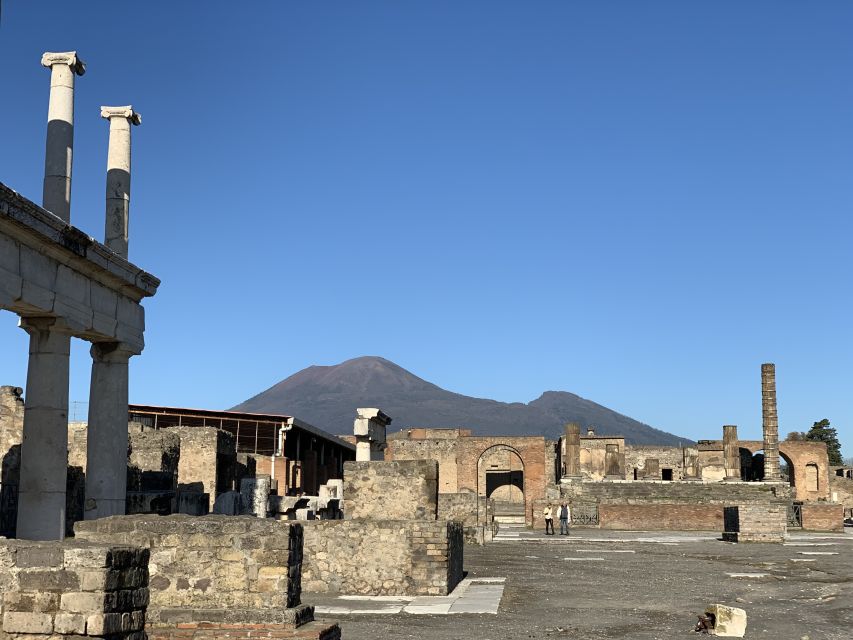
Next, you head into the Basilica area and onward to the civic heart: the Forum Civile di Pompei, plus major temple stops like the Temple of Apollo and you’ll also see the Temple of Jupiter on the route. This is where Pompeii’s public life shows up clearly.
Here’s what makes these stops valuable: you get the city’s “systems.” The forum isn’t only about grandeur. It’s also about how people traded, gathered, and followed the religious calendar. The tour points out the market and key temples, so you can connect architecture to routine.
Drawback to keep in mind: the forum can feel like a lot of stone if you’re not given a story to attach to it. That’s exactly why an archaeologist-led format helps. With the right explanations, you stop seeing ruins as isolated buildings and start seeing them as connected roles in a living city.
Greater Decumano, Baths, and the Lupanare: Daily Life Comes Through
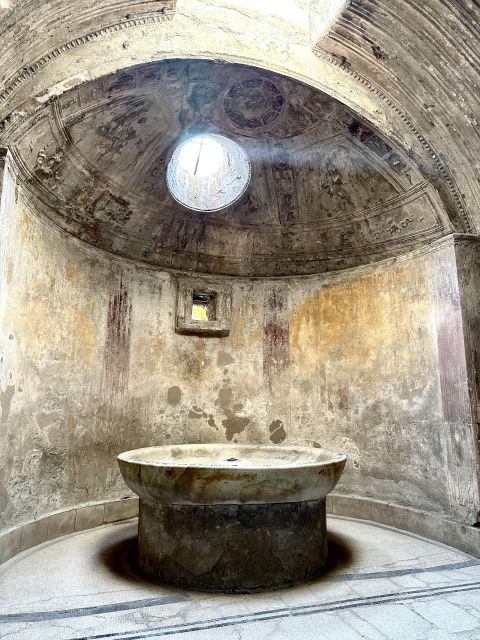
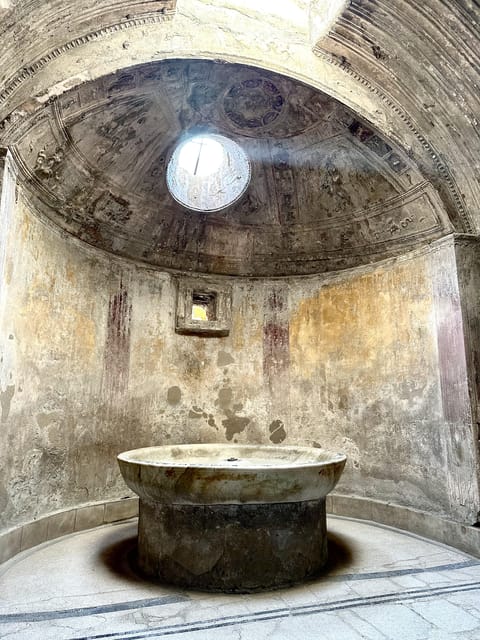
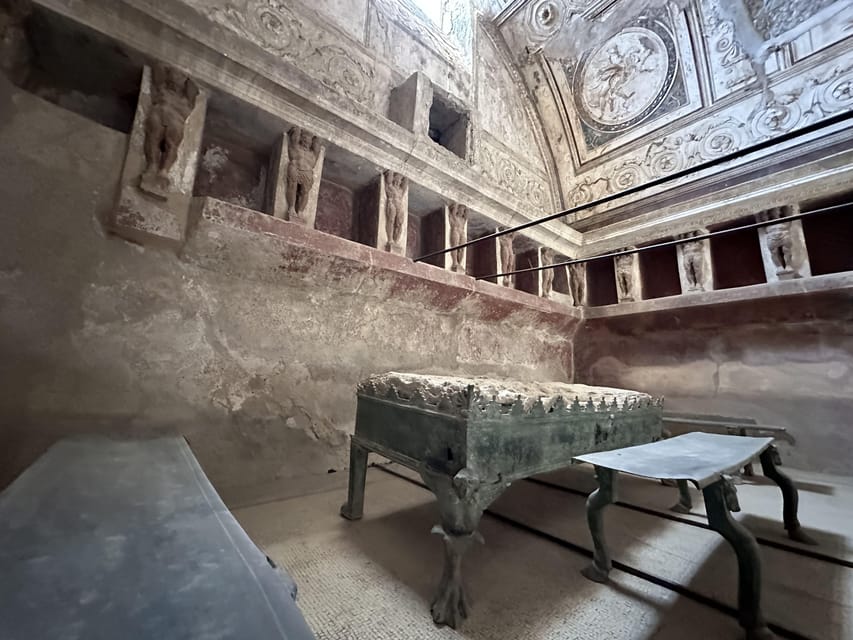
You’ll walk along the Greater Decumano and you’ll have time to look inside the thermal system. That’s a major win in a short tour, because Pompeii’s baths are one of the best places to understand how people spent time and washed, socialized, and relaxed.
Then there’s the Lupanare, which is often a surprise stop for first-timers. It’s not treated as scandal; it’s treated as evidence—another piece of urban life. When your guide frames it in context, it shifts from shock value to understanding how the city worked.
The route also includes the Forum Baths area. The benefit is that you see how bathing wasn’t just hygiene—it was part of the rhythm of the day, tied to public spaces and routine.
Macellum and Market Life: Food, Trade, and Routine
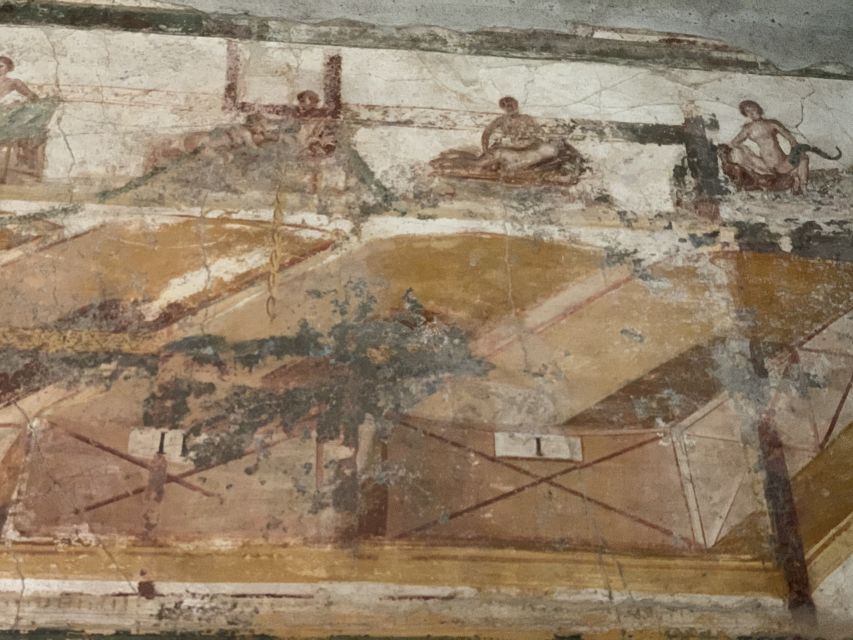
The Macellum of Pompeii is where commerce and eating overlap, so it’s a smart stop for a three-hour plan. Even if you aren’t a food-history nerd, you can picture how these places functioned: vendors, shoppers, and the constant flow of people.
Why it’s worth time: Pompeii is famous for houses and tragedy, but the market areas are what remind you this city held thousands of “normal” days right up to the eruption. The archaeologist will help you connect what you see to how people likely used the space.
A small pacing consideration: because the tour is private and structured, you may not get long “wander time” inside every building. If you like slow photography and lingering, you’ll want to do some exploring on your own after the tour.
Domus Stops: Newly Opened Houses and Restoration Work
This is one of the strongest parts of the itinerary. You’ll spend time on the more impressive domus, including the House of the Tragic Poet and the House of Menander, plus you’ll see restorations like the House of Golden Cupids along the way.
The key point for your expectations: Pompeii isn’t static. Some areas have been reopened after work, and seeing newly opened houses helps you understand that preservation is ongoing. Your guide also points out restoration details, which is a practical way to learn how archaeologists protect and interpret fragile spaces.
If you’re the type who loves mosaics, courtyards, and “who lived where” questions, you’ll likely feel this section is the heart of the tour. Just remember that house interiors can be physically demanding to experience in a short timeframe—plan to move steadily and take breaks when you can.
Theatre Zone, Great Gymnasium, and Public Entertainment
The route includes the Large Theatre and the Great Gymnasium. These stops help explain how Pompeii’s public culture worked, from performance and gatherings to the routines of training and daily movement.
The Great Gymnasium stop includes something specific in how it’s presented: many daily objects are exposed there. That’s powerful because it pushes you beyond the idea of “spectacle” and into everyday routines. Even if you don’t know a lot of Latin or ancient sport terms, the guide’s job is to translate what those objects mean in daily life.
A practical note: theatres and large public spaces can be brighter and more exposed. Sunscreen and a hat can make a difference here—especially since you’ll be outside for most of the walk.
Garden of the Fugitives: The Emotional Core of the Route
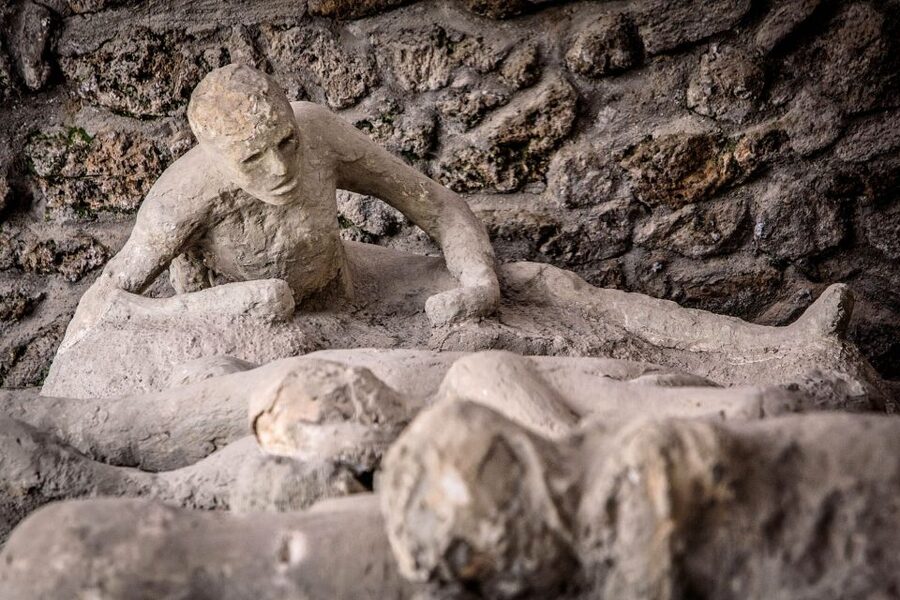
Then comes the most intense stop: the Garden of the Fugitives. The tour explains that during the eruption some people tried to escape, but they perished, and their body moulds remain as evidence.
This is the part where you’ll feel the weight of Pompeii. It’s also the part where a trained guide helps you avoid turning the scene into a shock-only stop. The explanation ties it back to what archaeologists can observe and preserve.
If you’re sensitive to tragedy, I’d plan your mindset before you reach this point. Don’t rush through it just to get it “over with.” Let the guide’s context do its work.
Amphitheatre Finale: Ending Where People Watched
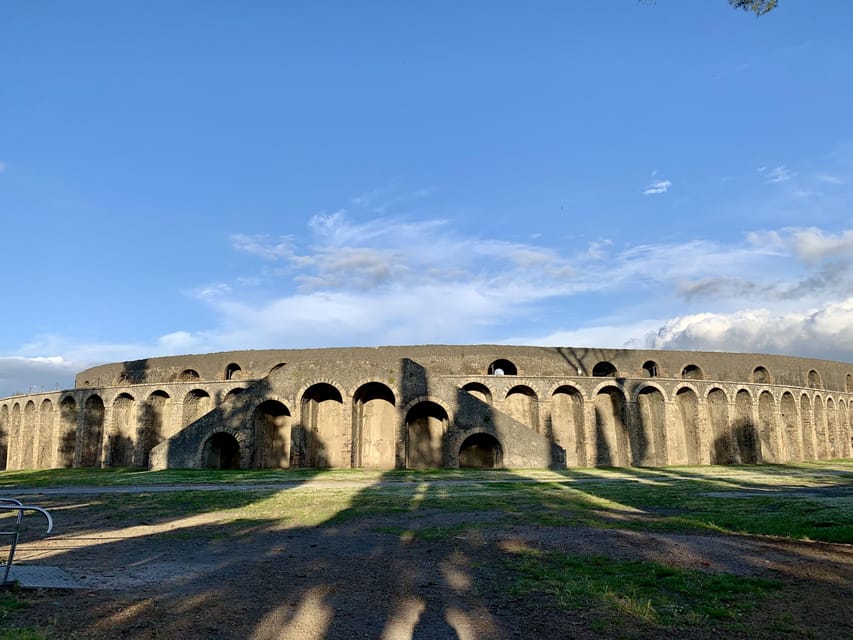
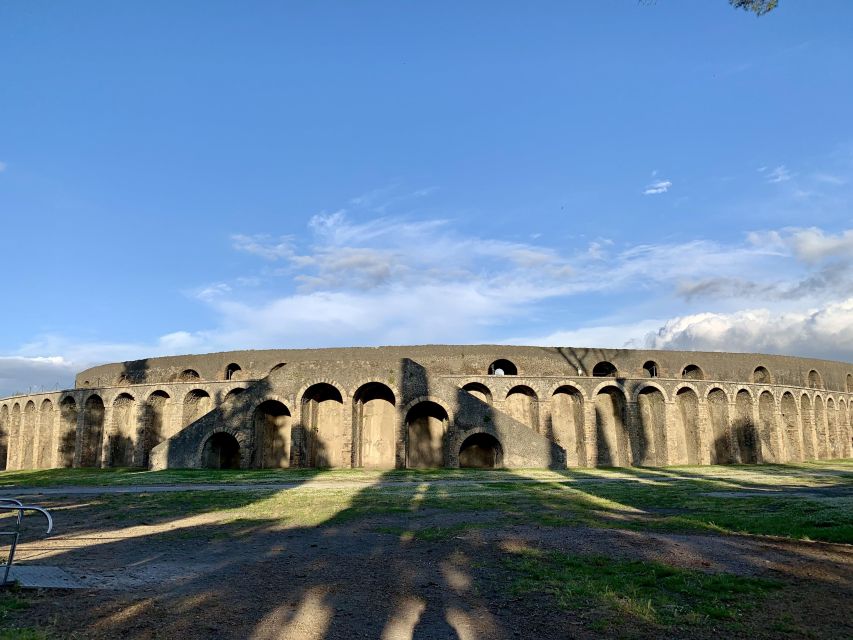
The tour wraps with the Amphitheatre, which is a fitting final stop. It’s the kind of place where you can imagine the crowd energy without needing heavy imagination. And because it’s near the end of the route, you finish with a clear sense of the city as a lived-in community, not just a museum of ruins.
This final segment can be a great “memory anchor.” When you think back later, the amphitheatre is often what ties the day together—public life, performance, and the social rhythm of Pompeii.
Price and Value: Is Pompeii VIP Worth $407.83?
The price listed is $407.83 per group, with the group size shown as up to 1. That means you’re likely paying for a truly private archaeologist-led format plus admission tickets and skip-the-line service.
Is it expensive? Yes, compared to joining a larger group. But for Pompeii, you’re also paying for time. Skip-the-line entry plus a planned 3-hour route can be the difference between getting frustrated and actually learning something.
Here’s how I’d judge value before booking:
- If you want an archaeologist’s explanations tied to specific finds and stops, this format makes sense.
- If you’re traveling with someone who can share the cost, it becomes easier to swallow (you’ll want to confirm how group size affects pricing for your date).
- If your priority is wandering completely solo at your own speed for half a day, you might prefer a self-guided plan or a longer tour.
Also, transportation and food aren’t included. So budget for how you’ll get there and whether you’ll grab a snack before or after.
Best Fit: Who This Pompeii Tour Suits
I think this tour is ideal if you want a “great hits” Pompeii experience with real interpretation. It’s especially good for:
- First-timers who don’t want to guess what to prioritize
- People who enjoy science behind history, like how excavation objects refine dates
- Anyone who prefers a smaller, question-friendly experience rather than a big group shuffle
It’s less ideal if you:
- Want to spend long hours inside homes and theaters without time pressure
- Need lots of unstructured downtime (this is a set 3-hour route)
Should You Book the Pompeii VIP 3h Tour?
I’d book it if you want a smart, time-saving way to see Pompeii and also understand what you’re seeing. The skip-the-line start, admission included, and archaeologist-led pacing are exactly the ingredients that make Pompeii feel meaningful in a limited window.
If you can handle the emotional intensity of the Garden of the Fugitives and you’re ready for steady walking, this is a solid, high-value Pompeii plan.
FAQ
FAQ
How long is the Pompeii VIP tour?
It lasts 3 hours.
Where do I meet for the tour?
You meet at Porta Marina Superiore, right in front of Hortus Bar. The tour ends back at the same meeting point.
What’s included in the price?
The tour includes a private guided tour, admission tickets, skip-the-line service, and full assistance, with a personal archaeologist.
Are food and drinks included?
No, food & drinks aren’t included.
What languages is the guide available in?
The live guide is available in English, French, Spanish, and Italian.
Is the tour wheelchair accessible?
Yes, it’s wheelchair accessible.