REVIEW · SPERLONGA
Private VIP Tour “Riviera di Ulisse”(Montagna Spaccata – Gaeta)
Book on Viator →Operated by Sperlonga Escursioni - Boat tours & rent · Bookable on Viator
One coastline, two ancient cities, and a boat that turns the day into an easy win. This private VIP tour links Sperlonga and Gaeta with Roman ruins, dramatic cliffs, and planned swim time inside the Riviera di Ulisse Regional Park.
What I like most is how the day is paced: slow navigation for the big sights, then short breaks when you can actually enjoy the water. I also love that it’s truly private for up to 12 people, so you’re not squeezed in with strangers while you’re trying to take photos.
The main consideration is simple: you’re on the sea. If the wind kicks up (mistral), the operator may cancel with little notice, especially in the afternoon, so you’ll get the best odds by choosing the morning departure.
In This Review
- Key highlights to know before you go
- Why this Sperlonga to Gaeta route feels “VIP” (and not just scenic)
- Start at Grotta di Tiberio, and see Sperlonga’s Roman layer right away
- Blue Grotto swim stop: the water break you’ll actually remember
- Following Via Flacca gives the coastline a sense of direction
- Grotta Azzurra: another bay, another swim break, plus a choice about how far to go
- Montagna Spaccata in Gaeta: the sanctuary wedged between cliffs
- Tempio di San Francesco: a neo-Gothic sea view with big presence
- Back to Sperlonga: Torre Truglia and the sea return you’ll still want
- Price and value: why this costs what it costs
- Who this tour is best for (and who should think twice)
- Practical tips so your day runs smoothly
- Should you book the Riviera di Ulisse VIP Tour?
- FAQ
- How long is the Riviera di Ulisse private VIP tour?
- What’s the group size for this private tour?
- Where do we meet for the tour?
- Where does the tour end?
- Do I need tickets, and is it mobile?
- Is snorkeling included, and how long are the swim breaks?
- Will the tour provide snorkeling equipment?
- What are the main sightseeing highlights?
- What should I do if the sea conditions are rough?
- Is it better to book a morning or afternoon departure?
Key highlights to know before you go
- Grotta di Tiberio from the sea: get the Roman context before you even step into the day’s main scenery
- Via Flacca timing: you follow an ancient route line along the coast, so the drive-by views feel meaningful
- Two swim breaks built into the route: Blue Grotto snorkeling time plus another stop at Grotta Azzurra
- Montagna Spaccata at Gaeta: the 11th-century Sanctuary sits dramatically between cliffs over deep water
- Photo-friendly angles: Torre Truglia and Gaeta’s gulf views make it easy to get clean shots from the water
- VIP group size (up to 12): calmer atmosphere, better listening to the captain’s explanations
Why this Sperlonga to Gaeta route feels “VIP” (and not just scenic)
This isn’t a bus tour where you stare at a timetable and hope the best bits don’t get cut. It’s a private boat day with a route that’s built around the coastline’s strongest moments: Roman remains near Sperlonga, then the cliff theatre around Gaeta.
You get a slow, coastal-style rhythm. That matters. When you travel by boat along this stretch, the views don’t arrive in fragments—they come as a continuous story: cliffs, caves, and the points where history used to matter. Your group can hear the captain’s explanations without having to compete with the audio of ten other tours.
And because the group is limited to up to 12, you’ll have room to move, shift seats, and get back in position for the next stop without a crowd pushing past you.
Start at Grotta di Tiberio, and see Sperlonga’s Roman layer right away
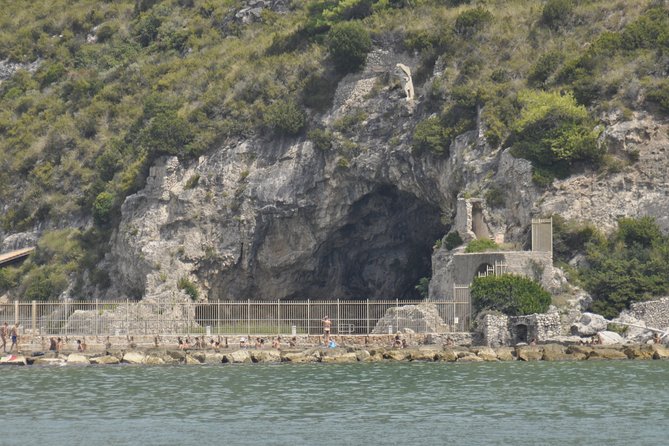
You’ll meet at Via del Porto, 3, Sperlonga, and then the day begins with a Roman anchor: Grotta di Tiberio. From the sea, you’ll see remains linked to the Villa of the Emperor. That opening is smart because it sets the stage for everything you’ll see afterward. Instead of just taking in caves and cliffs, you also learn what the site represented for the Roman world—and what it still means to local people today.
One practical plus: you’ll also get a sea-level perspective right at the beginning. It’s the fastest way to understand why this coast developed a reputation for caves and sheltered water. From there, you continue slowly inside the Riviera di Ulisse Regional Park, with the captain pointing out how the coastline’s geography shaped its past.
If you’re the type of person who likes context—why a place looks the way it does—this opening is the payoff.
Blue Grotto swim stop: the water break you’ll actually remember
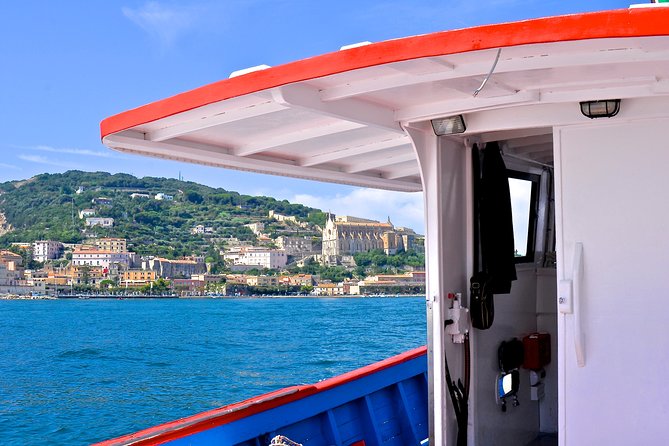
One of the first “do something” moments is the Blue Grotto area. This is your first swim stop with about 30 minutes of snorkeling time for everyone.
Here’s how to think about it. This stop isn’t just random sightseeing where you might be tempted to jump in. It’s scheduled as a refresh break, with time to put on a mask and fins and enjoy the water while the day still feels easy. You don’t need to force it, though—this tour is built so you can stay on board if you’d rather keep it relaxed.
Two key cautions from the tour info:
- the snorkeling equipment shown in some photos is not owned by the operator; it belongs to a summer camp joining excursions, so you should not expect that style of gear to be provided by them
- you’ll want to be comfortable getting in and out from a boat setup without expecting a full beach-entry experience
If you came for coastline views and gentle structure, you’ll appreciate that this swim stop is brief and timed. It keeps the day from turning into a long wait around the water.
Following Via Flacca gives the coastline a sense of direction
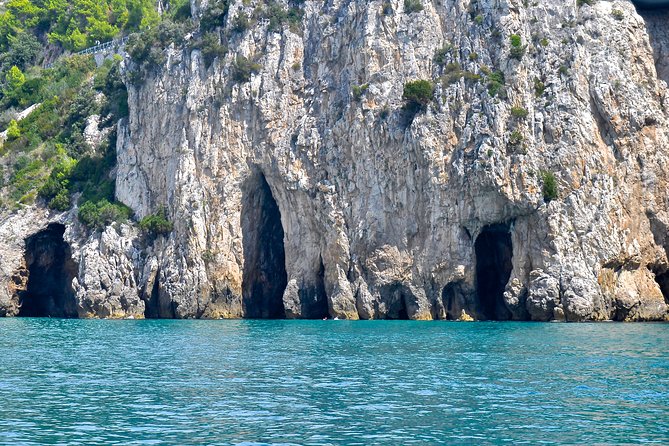
Between the caves and the towns, the route connects to Via Flacca (187 BC). That detail sounds like a history footnote, but on the water it actually changes the way you experience the coast.
When you know you’re tracking an ancient line along the shore, the views start to make more sense. You can picture how people once moved between settlements and how the landscape guided routes. This is also why boat travel fits this kind of itinerary: the sea is the common thread, and the captain can point out where the road logic would have mattered.
For your photos, this also helps. You can frame shots with more intent—looking for the medieval towers, reading the coastline shape, and understanding what you’re seeing instead of just collecting images.
Grotta Azzurra: another bay, another swim break, plus a choice about how far to go
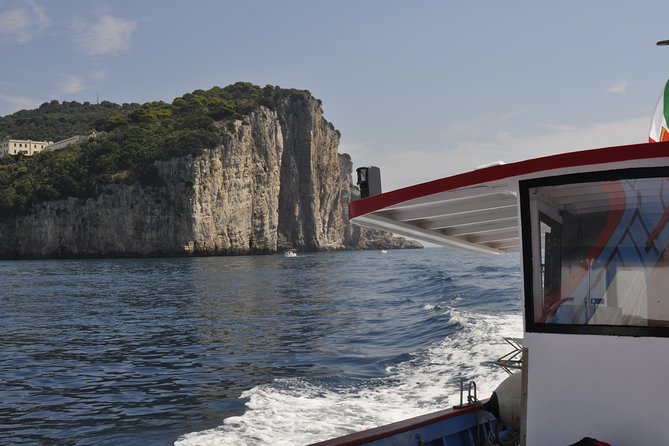
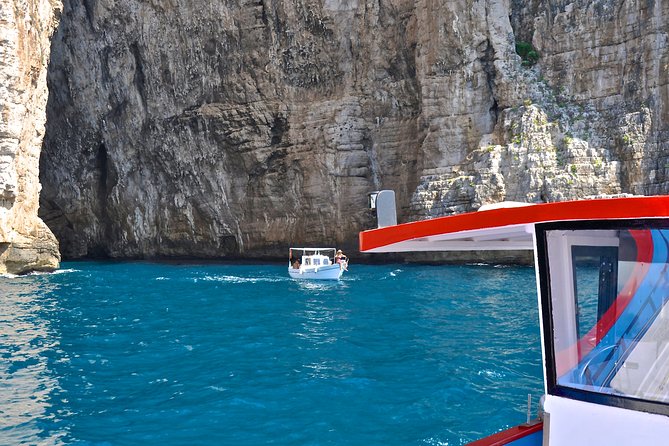
Later you reach Grotta Azzurra, at the end of slow navigation along the coast. The view of the bay is presented as a wow moment, then the time shifts to water: you’ll put on masks and fins for about a half-hour swim break.
Two practical realities:
1) The water is described as refreshing, because cold water flows directly from the cliff. That’s great on a warm day, but it also means you should be ready for a cool shock once you’re in.
2) The stop includes options. You’re not forced into the water—staying on board is allowed, though the guidance is that you’ll probably prefer getting in.
There’s also a note for the more daring: you can swim toward a cave with stalagmites and a special cliff view. Since this is activity-based, think about your own comfort level and don’t feel pressured. If you want photos, stay close to the boat; if you want the cave experience, make sure you’re confident in your swimming and navigation.
This second swim stop is a big reason the tour feels better than a “see and go” day. It gives you time to feel the place, not just watch it.
Montagna Spaccata in Gaeta: the sanctuary wedged between cliffs
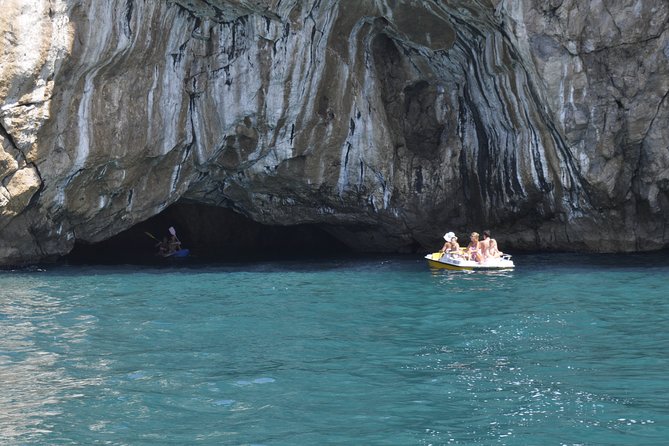
This is the portion of the day that many people remember, because it feels like a setting that was engineered for dramatic impact. You’ll head toward Gaeta and then arrive at Montagna Spaccata.
What you’re going to see: the Sanctuary of the S.S. Trinity built in the 11th century, positioned on a rock wedged between two cliffs and suspended above the deep blue sea. The cliffs are described as more than 80 meters high, and the drop into the water is steep. From the boat, you’ll also notice natural caves, including the imposing Grotta del Turco.
Then there’s the smaller, story-like detail that catches attention: after Serapo beach, there’s an islet shaped like a narrow long nave, said to resemble Ulysses’ ship. It’s one of those visuals that gives the whole name Riviera di Ulisse more weight than the label alone.
If you like spirituality paired with geology, this part is a win. It’s not just a building. It’s a building that hangs in a landscape you can feel.
Tempio di San Francesco: a neo-Gothic sea view with big presence
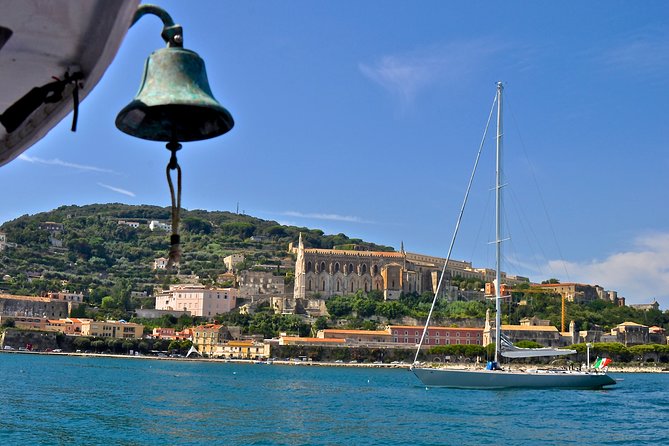
Next you continue in the Gulf of Gaeta and get a look at the Tempio di San Francesco, described as neo-Gothic art. From the water, it’s positioned overlooking the sea in a way that makes it feel more commanding than a quick land-view would.
This stop is shorter, so don’t expect a long on-foot exploration. But as part of a boat day, it works as a visual counterpoint to the older cliff sanctuary. You get the Roman opening, then dramatic caves and cliffs, then a sharper architectural look in neo-Gothic style, all without changing your pace.
If you’re traveling with someone who enjoys architecture but doesn’t want hours of walking, this is a smart compromise.
Back to Sperlonga: Torre Truglia and the sea return you’ll still want
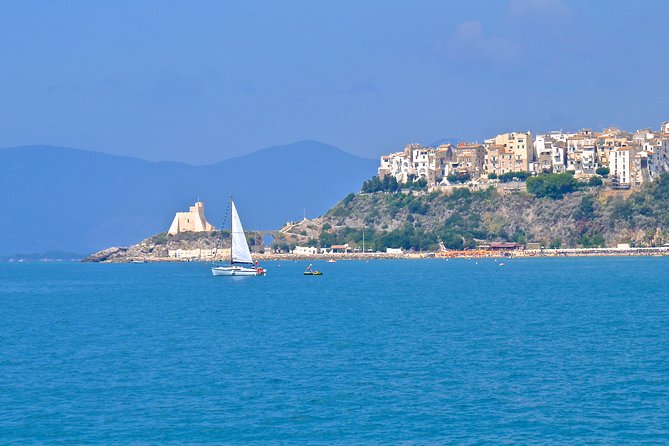
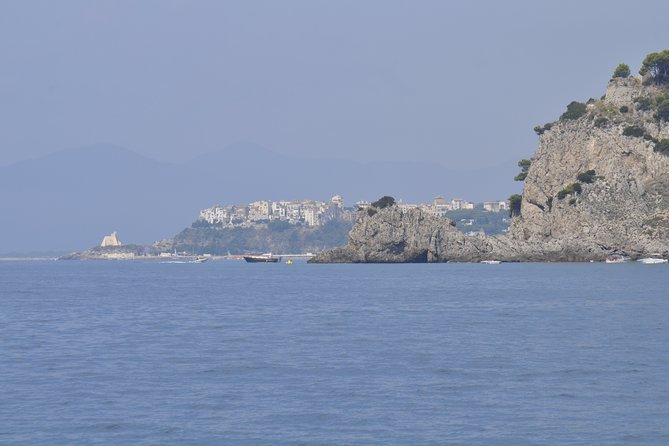
After Gaeta, you turn back west. On the return navigation, you’ll admire Torre Truglia, which is a symbol of Sperlonga, plus the historic center behind it. This is a great photo moment because the tower reads clearly from a distance, and the water angle can make the center look taller and more defined.
You’ll then dock at the Porto di Sperlonga and get off after the mooring maneuvers. That’s also a useful mental marker: you’ve moved through the best coastline segments, and now you’re back where you started, without needing a second transport plan.
A final note: there are also stops counted within the Parco Regionale Riviera di Ulisse, so even the “arrival” feels tied to the broader marine-reserve context rather than just an afterthought.
Price and value: why this costs what it costs
The tour price is $1,019.87 per group for up to 12 people, running about 4 hours 30 minutes.
If you compare it to per-person tours, private boat pricing can feel high—until you do the math for a family or a friend group. In this case, the value isn’t only the boat. It’s the format: private pacing, a small group size, and multiple structured stops where you don’t waste time waiting for a crowd.
So the real question for you is: are you traveling as a group where the per-person cost drops to something you’d pay for a good day? If yes, this becomes a strong deal. You’re paying for time on the water with planned highlights, plus the benefit of hearing explanations without competing voices.
If you’re traveling solo or as a couple, you might feel the pricing less comfortably—though it depends on how much you value a private setup.
Who this tour is best for (and who should think twice)
This is a strong fit for:
- groups of up to 12 who want privacy and a shared day on the water
- people who like caves, cliffs, and Roman context, but don’t want to do it all on foot
- anyone interested in snorkeling with a short, timed window rather than a long, demanding session
- families who want a day that stays structured (short stop, then next view)
It’s less ideal for:
- people who dislike being on open water or can’t handle cool water temperatures during the swim breaks
- anyone who expects snorkeling equipment to be provided exactly as shown in promotional photos (the tour notes explain the gear isn’t operator-owned)
Practical tips so your day runs smoothly
A few things I’d take seriously before you go:
- Choose the morning when you can. The operator recommends morning because the sea is usually calmer. Afternoon conditions can shift fast with mistral winds, and the tour may be canceled with little notice.
- Arrive 15 minutes early to handle boarding procedures. They also note that no delay will be tolerated for the scheduled departure time.
- Parking: Sperlonga has limited traffic rules (ZTL). The recommendation is to park at Parking delle vite near the south entrance and then use a shuttle that takes you directly to the meeting point area.
- Bring your own swim comfort approach. You can stay on board during swim breaks if you prefer, but if you plan to get in, be ready for cold water at least at the cliff-fed stops.
Also, based on the names that show up in feedback, you may hear plenty of anecdotes and curiosity explanations from captains and guides such as Enzo or Luigi. Either way, the vibe is set by the fact that the explanations are part of the experience, not an add-on.
Should you book the Riviera di Ulisse VIP Tour?
Book it if you want a small-group, private sea day that mixes Roman references, cave scenery, and scheduled swim time without turning into a stressful, long-plan itinerary. The Montagna Spaccata portion is the kind of visual stop that’s hard to reproduce from land.
Hold off if you’re very sensitive to weather changes or you’re hoping for a full-service snorkeling kit as shown in photos. Also, if you’re the only one paying for the full group price, the cost may feel steep.
If you can travel in the morning and you’re coming with 2–12 people, this has a lot going for it: clear route logic, multiple high-impact stops, and the advantage of hearing the story behind the scenery while you’re actually seeing it from the water.
FAQ
How long is the Riviera di Ulisse private VIP tour?
It lasts about 4 hours 30 minutes.
What’s the group size for this private tour?
It’s private for your group, with capacity up to 12 people.
Where do we meet for the tour?
The meeting point is Via del Porto, 3, 04029 Sperlonga LT, Italy.
Where does the tour end?
The activity ends back at the meeting point.
Do I need tickets, and is it mobile?
You’ll receive a mobile ticket.
Is snorkeling included, and how long are the swim breaks?
There are swim breaks, including a first snorkeling stop of about 30 minutes and another swim break of about half an hour.
Will the tour provide snorkeling equipment?
The snorkeling equipment shown in some photos is not owned by the tour operator; it belongs to a summer camp participating in excursions, so you should not assume that equipment will be provided.
What are the main sightseeing highlights?
Key highlights include Grotta di Tiberio, Grotta Azzurra, the Sanctuary at Montagna Spaccata, Tempio di San Francesco, and viewpoints back toward Torre Truglia and Sperlonga harbor.
What should I do if the sea conditions are rough?
The experience requires good weather. If it’s canceled due to poor weather, you’ll be offered a different date or a full refund.
Is it better to book a morning or afternoon departure?
The operator recommends the morning because the sea is often calmer. Afternoon tours can be affected by mistral winds, and cancellations can happen with little notice.