REVIEW · GARDINER
Private/VIP Wildlife Winter Safari of Yellowstone
Book on Viator →Operated by Yellowstone’s Casanova Guided Tours · Bookable on Viator
Yellowstone wolves feel close in winter. This VIP-style safari starts with prime Lamar Valley country, then adds a short stop at Mammoth Hot Springs—a tight plan built for winter spotting. You get private transportation and enough time on the best wildlife stretch, not a rushed circuit of pull-offs.
What I really like is the guide attention. You’ll spend the day with Jackson or Jack, who brings a calm, friendly style and tailoring to what you want to see. I also love that the basics are handled: snacks and waters, plus scopes/binoculars so you can actually use your eyes instead of squinting.
One drawback to consider: the park admission fee isn’t included, and winter pickup depends on accurate timing and location. If you booked through a third-party channel, I strongly suggest double-checking your pickup instructions before the morning of the tour.
In This Review
- Key highlights to expect
- Lamar Valley first: where winter wildlife turns on
- The Lamar Valley spotting plan: patience, optics, and real sightings
- Mammoth Hot Springs: quick travertine eye-candy with a timing tradeoff
- VIP comfort: pickup range, warm fuel, and private transportation
- Scopes, binoculars, and how to actually use them
- Guide Jackson or Jack: what makes the day feel personal
- Price and value: $297.50 per person in context
- Weather reality: winter can be great, but it’s not guaranteed
- Who should book this private winter safari?
- Should you book Yellowstone’s Private/VIP Wildlife Winter Safari?
- FAQ
- How long is the Yellowstone winter safari?
- Where does the pickup happen?
- What’s included in the tour price?
- Is park admission included?
- What stops are part of the tour?
- Is this tour private?
Key highlights to expect
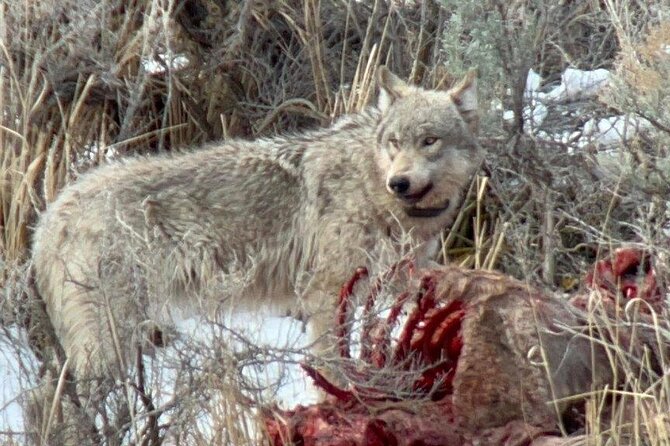
- Lamar Valley focus in winter, with long time for wildlife watching
- Scopes and binoculars provided, plus help learning how to use them
- Private, VIP feel: only your group rides and stops together
- Breakfast/snacks/waters included to keep you comfortable in the cold
- Photos sent afterward reported by guests who wanted extra keepsakes
Lamar Valley first: where winter wildlife turns on
In Yellowstone winter, the wildlife doesn’t vanish. It just becomes easier to find—if you’re in the right place at the right time. Lamar Valley sits in the park’s northeastern corner along the Lamar River, and it’s often described as America’s Serengeti. Translation: you’re not guessing at random. You’re targeting a corridor where animals feed, travel, and leave tracks that matter.
This tour builds the day around that fact. Lamar Valley gets the bulk of the time, which matters because winter conditions slow you down. Cold hands mean slower spotting. Snow and distance make quick decisions harder. A longer watch window gives you the chance to catch animals that move in bursts—then slip out of view.
I also like that the day is structured, but not rigid. In reviews, guides (often named Jackson or Jack) were praised for adjusting to what shows up, not forcing a checklist. That’s the real win on a private safari: you’re not stuck with a one-size-fits-all rhythm.
You can also read our reviews of more tours and experiences in Gardiner.
The Lamar Valley spotting plan: patience, optics, and real sightings
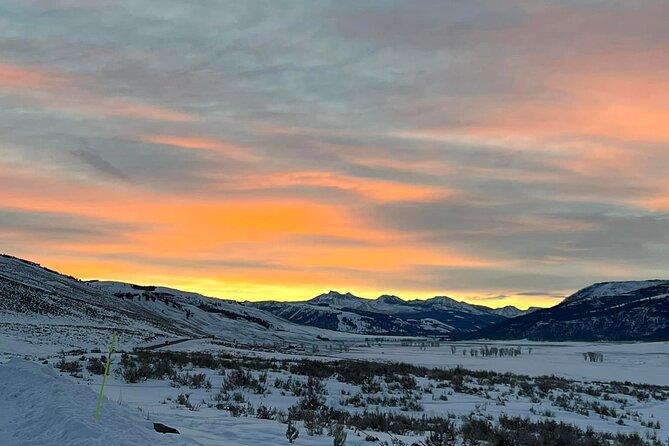
Your main stop is Lamar Valley, and it’s where most winter magic happens. Expect a lot of time scanning from safe, smart viewing areas, using both binoculars and spotting scopes. This is exactly the kind of day where gear helps, because animals may be far out and the weather can change fast.
What you’re likely to see in winter varies, but the patterns show up in guests’ experiences:
- wolves (including reports of impressive sightings)
- coyotes and foxes
- moose and bison
- eagles and other raptors
- pronghorn, deer, elk
- bighorn sheep and mountain goats in the broader region
A guide using a scope changes the whole game. With a scope, you’re not just hoping. You’re confirming. You can separate shapes at distance, track motion, and notice details in behavior—like whether animals are feeding, bedding, or moving to a new spot. That’s what makes a winter day feel like a hunt with rewards, not a cold waiting game.
One practical tip I’d take from the best-rated experiences: ask your guide to show you how to work the optics. In reviews, guests specifically praised help with using scopes, and that’s a big deal if you don’t want to waste your first 20 minutes staring at the wrong thing. Even if you’ve used binoculars before, scopes have their own rhythm.
Another thing I appreciate: this isn’t only about spotting. The guide explains what you’re looking at—animal behavior and how winter changes daily routines. You end up leaving with a better read on the ecosystem, not just a pile of photos.
Mammoth Hot Springs: quick travertine eye-candy with a timing tradeoff
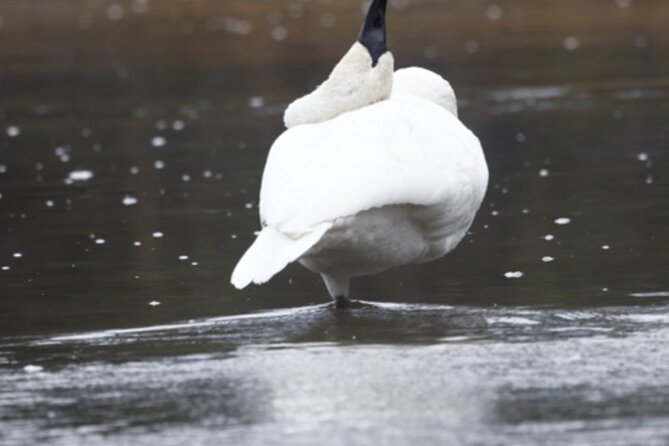
After Lamar Valley, the itinerary includes Mammoth Hot Springs for about 30 minutes. That’s short, and that’s the tradeoff. You’re paying for wildlife time, not a long stroll through every terrace view.
Still, Mammoth Hot Springs is worth that quick hit. Those terraces are made of travertine, deposited over thousands of years as mineral springs release calcium carbonate. In winter, the steam, rock tones, and contrast against snow can look dramatic, even in brief daylight.
I’d treat this stop like a photo-and-orientation break. You’ll likely be able to walk to a viewpoint, take in the mineral formations, and reset before the drive back. But if you’re the type who wants a slow, detailed walk and lots of stops, you’ll feel the time limit.
If your priority is wildlife abundance, this timing makes sense. The hardest part in winter is finding the animals. Yellowstone’s best bet is usually to spend time where sightings are most likely—then keep the rest compact.
VIP comfort: pickup range, warm fuel, and private transportation
This tour is built around comfort in winter. It offers pickup, and the pickup range is generous: from Bozeman, Montana down to Gardiner, Montana. You’ll be contacted before the tour to finalize pickup instructions, and the activity ends back at the meeting point.
That matters because Yellowstone winter often punishes “I’ll just figure it out.” Roads take time. Weather changes. Parking can be a headache. A private ride reduces the stress and keeps you focused on spotting.
You also get breakfast/snacks/waters. In practice, that’s not a small perk. A long cold day makes your brain foggy faster than you think. Food and water keep you functional for long scanning sessions and help you avoid the spiral of getting too tired to enjoy the day.
In a few reviews, guests mentioned bathroom and coffee stops along the way from the Bozeman area. You shouldn’t count on every stop being guaranteed for every schedule, but it tells me the guide planning is practical, not just scenic.
And yes, private transportation means you’re not waiting on other groups, and you can move as your guide sees fit. That flexibility is part of why private safaris often feel better than group tours—especially in winter.
Scopes, binoculars, and how to actually use them
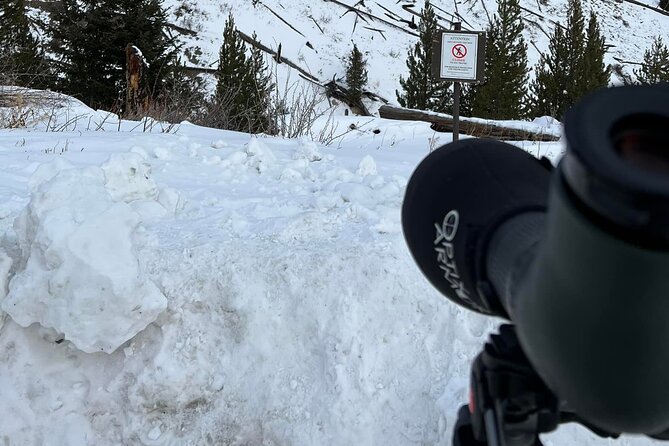
Getting binoculars and scopes is one thing. Knowing how to use them in cold weather is another. The best guest feedback in this tour focused on optics support: guides helped guests spot animals and get the most from the scope.
Here’s what you’ll want to do at the start:
- start with binoculars to find motion
- switch to scopes to confirm details at distance
- take a moment to practice focusing before the good animal appears
If you’re new to scopes, the learning curve is real. Reviews praise guides for being patient and for explaining how to use them so you don’t feel like you’re missing everything while you fumble.
Also, winter spotting comes with speed demands. Animals don’t wait for your gear to be ready. If you can get comfortable early, you’ll see more in the same amount of time. That’s one reason why the “VIP” part matters: it’s not only about being picked up. It’s about getting you ready to see.
Guide Jackson or Jack: what makes the day feel personal
The standout theme in the high ratings is the guide. Most mentions revolve around Jackson or Jack, praised for being friendly, accommodating, and strong on wildlife behavior and park context. More than one review highlighted pre-tour communication—reaching out the day before, setting expectations, and making pickup feel organized.
That kind of prep is underrated. In winter, a clear plan lowers anxiety. You get to show up, bundle up, and start watching right away.
Guests also described guides who:
- asked questions to tailor the day to interests
- slowed down when animals were in view
- helped guests learn sighting techniques
- shared thoughtful photos afterward
One review also specifically mentioned that Jack is a trained ecologist and wildlife expert from MSU. Even without that credential detail, the result is what matters: you feel like the guide isn’t just driving. He’s interpreting.
For me, the best sign is personalization without chaos. Reviews talk about the day feeling intimate because it’s private, but also well-run. That blend is hard to get right in winter—yet it shows up repeatedly in feedback.
Price and value: $297.50 per person in context
At $297.50 per person, this is not a budget impulse buy. But it’s also not pricing you out of a single private day in Yellowstone winter.
Here’s how I’d judge value:
- You get private transportation rather than sharing rides and stopping schedules.
- You get optics: scopes and binoculars.
- You get food and water: breakfast/snacks/waters are included.
- The day focuses on the most wildlife-likely area, rather than spending hours on low-probability stops.
The key thing to budget for: the admission fee is not included. That can add cost on top, depending on how you handle park entry. If you’re already planning to pay admission anyway, it’s easier to swallow. If you’re trying to keep totals tight, you’ll want to price that in early.
One more value note: private tours reduce wasted time. In winter, wasted time is real time—you lose daylight, warmth, and spotting opportunities. A tour built around Lamar Valley time tends to justify itself when you get even a couple of strong sightings.
This is also a good sign that the tour is booked ahead on average (about 22 days). That suggests it’s in demand, and winter slots do not last forever.
Weather reality: winter can be great, but it’s not guaranteed
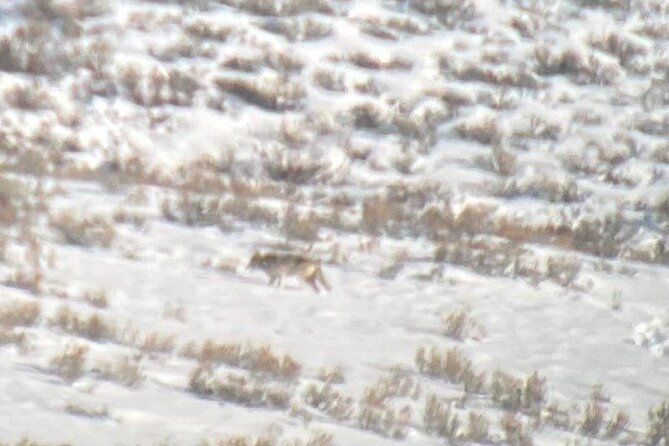
Winter in Yellowstone is beautiful, but it’s also a moving target. This tour requires good weather, and if it’s canceled due to poor conditions, you’ll be offered a different date or a full refund.
That’s the correct way to run it. Wildlife watching is heavily dependent on conditions. Visibility, road access, and animal movement all shift with weather.
The practical takeaway: dress for cold and be ready for changes. Even the best guides can’t force wolves to appear. But what you can control is your comfort and your readiness, so you can take advantage of clear windows when they happen.
Who should book this private winter safari?
Book this if you want:
- maximum time in Lamar Valley for wildlife
- a true private experience (only your group)
- included optics and snacks so you can focus on spotting
- a guide who will help you use scopes and make sense of what you’re seeing
- pickup convenience between Bozeman and Gardiner
You might want to compare options if:
- you’re expecting a long Mammoth Hot Springs walk, since the stop is brief
- you’re extremely budget-sensitive once you add park admission fees
- you prefer to handle your own wildlife timing and aren’t ready for winter weather changes
Also, the tour allows service animals, and it’s listed as near public transportation and most travelers can participate—so it’s not built on a narrow, technical activity setup.
Should you book Yellowstone’s Private/VIP Wildlife Winter Safari?
I think this is a strong choice if you want winter Yellowstone in a practical, wildlife-first format. The biggest reason: the day is structured around Lamar Valley time, and the experience is set up so you can actually see what you came for—binoculars, scopes, and a guide who helps you use them.
If you do book, do one smart thing: confirm your pickup details clearly and early. The tour’s winter logistics rely on timing, and there’s at least one cautionary tale in guest feedback about a reservation/pickup mismatch when bookings didn’t reach the vendor cleanly.
If you handle that check and you’re okay paying extra for a private, optics-assisted day, you’re very likely to walk away with memorable wildlife sightings and a better understanding of how Yellowstone works in winter.
FAQ
How long is the Yellowstone winter safari?
It runs about 6 to 8 hours total.
Where does the pickup happen?
Pickup is offered in Bozeman, Montana all the way to Gardiner, Montana. The operator contacts you prior to the tour to finalize pickup instructions.
What’s included in the tour price?
Included items are breakfast/snacks/waters, scopes/binoculars, and private transportation.
Is park admission included?
No. The admission fee is not included (it’s listed separately).
What stops are part of the tour?
The safari includes Lamar Valley and Mammoth Hot Springs.
Is this tour private?
Yes. It’s private, meaning only your group participates.