REVIEW · BALI
Pure Bali Village Experience, Cooking & Jamu Class+VIP Transfer
Book on Viator →Operated by Balikaru · Bookable on Viator
Jamu is better when you pick the herbs. This Bali village experience pairs hands-on jamu with a mountain setting and door-to-door comfort, so the day feels grounded in real village rhythms instead of a rushed checklist. I especially like the small group size and personal attention that makes it easy to ask questions and actually do the work.
My other favorite part is the cooking: you learn a proper Balinese meal at Paon Bali, including Sate Lilit on a live bamboo grill station, plus the dessert you make in a traditional clay pot. The only real drawback to know up front is that it’s an early start and you’ll do some walking, including an about-30-minute soft trek downhill, so pack for heat and comfy shoes.
In This Review
- Key points that make this tour worth your time
- A Bali village day that doesn’t feel like a factory tour
- Pickup, the mountain drive, and a photo stop that sets the mood
- Rindik instrument intro: culture first, not after the meal
- The herb and spice garden: where your jamu has a real origin
- Jamu Pavilion: craft and taste two types of Bali herbal tonics
- Paon Bali cooking class: Sate Lilit and Lak Lak, built together
- After lunch: rice planting help, stingless Trigona beehives, and a gentle downhill walk
- Traditional compound and Asta Kosala architecture: understanding space the Balinese way
- Belulang hot spring: the cool-down that turns the day into a full reset
- What you actually get for $89: value check, no rose-colored glasses
- Who this tour suits best
- Should you book Pure Bali Village Experience, Cooking & Jamu Class + VIP Transfer?
- FAQ
- What time does this tour start, and how long is it?
- Is hotel pickup and drop-off included?
- How many people are in the group?
- What will I make during the jamu class?
- What do I cook during the cooking class?
- Is the hot spring included for bathing?
- What’s included, what isn’t, and what about weather?
Key points that make this tour worth your time
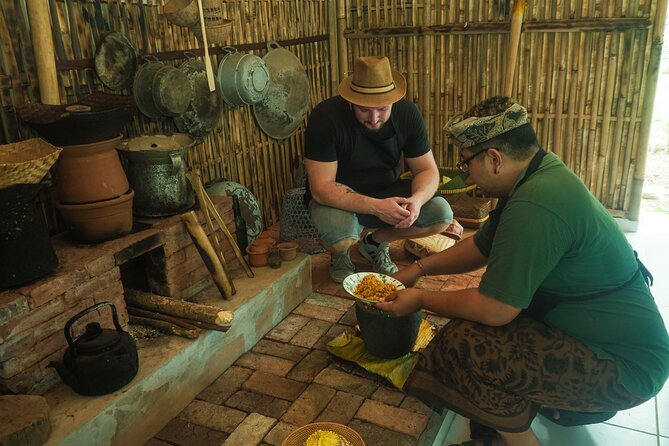
- Jamu class using herbs you encounter in the garden, not just a bottled tasting
- Small-group cooking at Paon Bali, with Sate Lilit built together and Lak Lak made step by step
- A real village loop after lunch: rice planting help, a walk through the compound, and a community farm stop with stingless Trigona beehives
- Rindik instrument intro that adds cultural context before you start eating
- Belulang hot spring at the end, with an optional soak if you want to cool down
A Bali village day that doesn’t feel like a factory tour
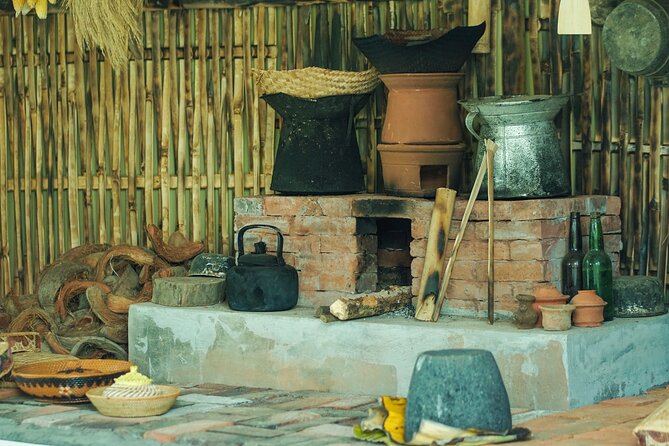
Bali can be loud. This kind of outing works because it slows you down on purpose. You’re not just “seeing” a village—you’re moving through it, tasting what you help make, and spending time with people whose daily lives revolve around farming and family compounds.
One big plus: the day is paced like a lived-in route. You get a scenic drive first, then a gentle start with introductions, a walk, and then hands-on food work. Later, the itinerary balances activity (rice planting and a downhill walk) with quieter cultural stops and a chance to reset.
And yes, the small group thing matters. When the group is capped at 12, the guide can actually explain, correct, and check that you’re doing it right—especially in the kitchen.
Pickup, the mountain drive, and a photo stop that sets the mood
You start at 7:30 am. The early timing is not a gimmick—it helps you reach the mountain village before the day gets too hot and before everything feels over-visited.
You’ll ride in an air-conditioned vehicle with pickup and drop-off included. Even if you’re staying in central areas, that door-to-door comfort is part of the value, since you’re not scrambling for transport mid-day.
On the drive, there’s also a scenic stop with photos. It’s simple, but it gives you a visual handle on what comes next: mountains, gardens, and the kind of greenery that usually disappears once you stay only in the tourist zones.
Rindik instrument intro: culture first, not after the meal
Before you get into herbs and cooking, the day begins with an introduction to Rindik, a Balinese musical instrument. This is a smart sequence. It reminds you that food, plants, and village life are tied to culture—not just entertainment.
In a typical tour, the music piece can feel like filler. Here, it works better because it’s followed by the herb and jamu portion, where you’re learning how people use plants beyond the kitchen.
Think of it as warming up your senses: hearing, then smelling, then tasting.
The herb and spice garden: where your jamu has a real origin
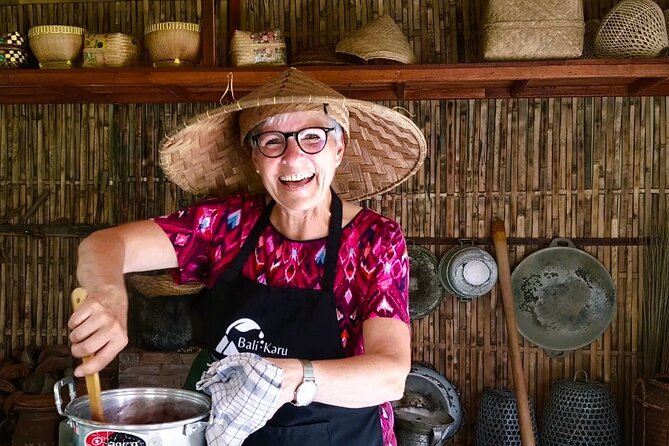
Next comes a guided tour through the herb & spice garden, with over 40 varieties of plants. This is one of those stops that changes how you understand what you’re doing later.
In the garden, you’re not just walking past labels. You’re learning the plants as living ingredients—so when you craft jamu afterward, it’s not random. It’s tied to what you saw and handled earlier.
For jamu class, that context matters. Jamu isn’t just a drink you sample at a cafe. It’s a traditional herbal tonic, and this portion helps you connect the flavor to the plant source.
Jamu Pavilion: craft and taste two types of Bali herbal tonics
At the Jamu Pavilion, you make and taste two types of jamu. This is where the experience becomes truly hands-on: you get to craft, not just watch.
You also do fruit tasting as part of the jamu production. So the “taste” part isn’t limited to one flat flavor set. It’s more like building a small map in your head of what’s earthy, herbal, and refreshing.
Practical tip: jamu can be strong. If you’re sensitive to bitter or herbal notes, go slow and ask the guide how to balance it during tasting. With a small group, questions actually land.
Paon Bali cooking class: Sate Lilit and Lak Lak, built together
Now for the reason many people book this day: cooking in Paon Bali, the open-air Bali kitchen.
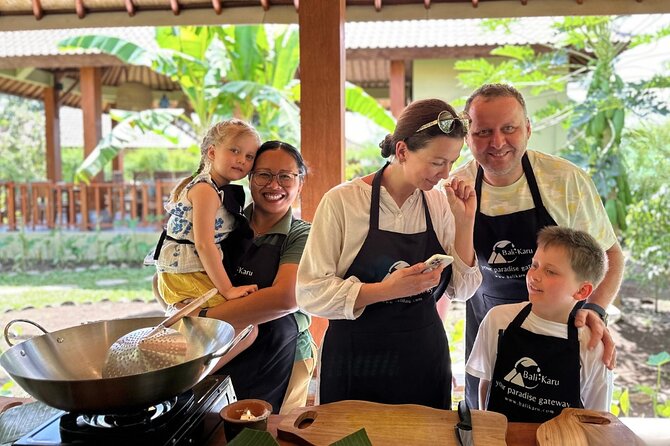
You get guided instruction from the chef, and you’re cooking an authentic Balinese meal as a group. The most memorable moment tends to be the live bamboo grill station for Sate Lilit. It’s a fun setup because you can see the heat and action right there, and you’re part of the process instead of waiting for plates to arrive.
Then there’s dessert: you learn to make Lak Lak using a traditional clay pot. Making dessert with a clay pot changes the rhythm of the work. It feels slower, more deliberate, and it gives you something to take home mentally even after you’re full—how the texture comes from the method, not just the ingredients.
Lunch itself includes nasi campur tumping plus dessert, and you eat what you helped prepare. This is where the value is clear: your payment isn’t just buying a meal. You’re paying for instruction, a shared experience, and actual food you made.
After lunch: rice planting help, stingless Trigona beehives, and a gentle downhill walk
After lunch, your energy gets turned into action. You’ll assist with rice planting—helping the farmer as part of the day’s flow. This is one of those moments that feels meaningful without needing farming experience. You’re there to help, not to be a pro.
Next, you visit the Balikaru farm with animals and stingless Trigona beehives. Even if you don’t know anything about bees, it’s a great mid-day change of pace. It shifts the focus from plants you eat to living systems that support village life.
Then comes a soft trek of about 30 minutes downhill. The word soft is important. It’s not a mountain hike, but it is still walking. Wear shoes you trust, not flip-flops you hope will survive.
If you’re traveling with someone who hates walking, this is the part you’ll want to judge together before you commit.
Traditional compound and Asta Kosala architecture: understanding space the Balinese way
Later, you stroll through the village with mountain views and chat with locals. You also visit a traditional house to learn about Asta Kosala architecture, influenced by Balinese Feng Shui.
This stop is valuable because it explains how space is organized, not just what you’re looking at. Even if you don’t remember every term, you’ll leave with an understanding that village design follows rules and meaning.
It’s also a nice contrast after cooking and planting. The day has shifted from doing with your hands to observing with your eyes.
Belulang hot spring: the cool-down that turns the day into a full reset
The final stop is the sacred Belulang hot spring. An optional bath is available, so you can choose to soak or simply enjoy the setting.
After sun, herbs, grilling, and walking, a warm soak (or a short rinse) can feel like hitting the pause button. It also closes the day in a way that feels spiritually connected rather than purely logistical.
If you’re even mildly heat-sensitive, don’t skip it. The hot spring is a practical recovery stop, not just a scenic finish.
What you actually get for $89: value check, no rose-colored glasses
At $89 per person for about 8 hours, the value comes from a few stacked elements:
- Door-to-door pickup and drop-off in an air-conditioned vehicle
- Hands-on jamu crafting and tasting (two jamu types plus fruit tasting)
- Cooking class instruction in Paon Bali, including meal components you make and eat
- Village activities like rice planting help, plus farm time and a short downhill walk
- A meaningful cultural stop with Rindik and traditional Asta Kosala architecture
- Belulang hot spring at the end (optional bath)
What’s not included is just as important. You’ll want to budget for drinks and plan to tip separately. If you show up expecting everything drinks-related to be included, you’ll be disappointed.
Also, language matters. The guide is English- or German-speaking. If you need another language, there’s a surcharge. If you want to fully enjoy the explanations while cooking, English helps a lot.
Who this tour suits best
This is a great match if you want:
- a Bali village experience that focuses on food and daily life, not only temples
- hands-on learning (jamu and cooking), where you do real work with guidance
- a small group day that stays personal and friendly
It may not be the best fit if:
- you hate early starts (7:30 am is non-negotiable)
- you don’t like walking, even gentle downhill trekking
- you want a purely indoor or low-activity schedule
Should you book Pure Bali Village Experience, Cooking & Jamu Class + VIP Transfer?
I’d book it if you care about how things are made, not just where you pose for photos. The combination of herb-to-jamu craft, then cooking with live action at Paon Bali, and then a village route that includes farm life makes the day feel complete.
If you’re the type who learns by doing (asking questions, stirring, tasting, adjusting), you’ll get your money’s worth. If you’re only looking for a quick bite and a photo, you might feel the day is more work than you expected.
My call: book this one when you want an authentic-feeling Bali day in the mountains, with real instruction and a finish at Belulang hot spring.
FAQ
What time does this tour start, and how long is it?
It starts at 7:30 am and runs about 8 hours.
Is hotel pickup and drop-off included?
Yes. You get pickup and return transfer included by air-conditioned vehicle.
How many people are in the group?
The tour is limited to a maximum of 12 travelers.
What will I make during the jamu class?
You’ll craft and taste two types of jamu at the Jamu Pavilion, and you’ll also do fruit tasting.
What do I cook during the cooking class?
You’ll cook an authentic Balinese meal in the open-air Paon Bali kitchen, including Sate Lilit and learning how to make Lak Lak dessert using a traditional clay pot.
Is the hot spring included for bathing?
Belulang hot spring is included, and bathing is optional.
What’s included, what isn’t, and what about weather?
Included items cover the vehicle, garden and jamu experiences, cooking class, lunch (nasi campur tumping and dessert), rice planting help, the farm visit with stingless Trigona beehives, and the hot spring stop. Drinks and tips are not included. Cancellation is free up to 24 hours before start time for a full refund, and the experience requires good weather. If poor weather cancels it, you’ll be offered another date or a full refund.