REVIEW · CUSCO
Sacred Valley VIP Tour with Maras and Moray from Cusco
Book on Viator →Operated by Machu Picchu Road Trip · Bookable on Viator
One day in the Sacred Valley moves fast. This VIP-style outing from Cusco strings together Chinchero’s market, the Maras Moray terraces, the salt flats of Salinas de Maras, and big Inca sites like Ollantaytambo and Pisac.
I like this tour for two reasons right away: a real guide (English and Spanish) and a buffet lunch in Urubamba during the ride through the valley. The pace still lets you see a lot without feeling like you’re rushing every step.
The one thing to watch is the hidden cost: several major stops have entrance fees not included, and they can add up once you’re there.
In This Review
- Key Highlights You’ll Actually Care About
- Meeting in Cusco: 7:00 am Start and a Straight-Day Plan
- Price and Value: What $45 Buys You in a One-Day Sacred Valley Route
- Chinchero: Tupac Inca Foundations and a Market Still Moving
- Maras Moray: Circular Terraces and the Story Behind Pachamama
- Salinas de Maras: The “Salt Mines” With About 3,000 Wells
- Ollantaytambo: Inca Village Layout and the Temple of the Sun
- Urubamba Lunch Break: A Real Meal in the Sacred Valley
- Pisac Archaeological Park: Inca Site Plus the Artisan Market
- Bilingual Guide Reality: English, Spanish, and How to Prepare
- Entrance Fees and Budget: BTG and Salt Mine Costs
- Shopping, Drinks, and Avoiding the Pushy Moment
- Who This Tour Fits Best (and Who Might Prefer Another Plan)
- Should You Book the Sacred Valley VIP Tour with Maras and Moray?
- FAQ
- How long is the Sacred Valley VIP Tour with Maras and Moray from Cusco?
- What time does the tour start?
- Where do I meet for the tour?
- What is the maximum group size?
- How much does the tour cost?
- What’s included in the price?
- Which entrance fees are not included?
- Is lunch included, and where is it served?
- Does the tour return to the meeting point?
- What’s the cancellation policy?
Key Highlights You’ll Actually Care About

- Small group max 18 people helps the day feel more human than a big bus herd.
- Traditional lunch in Urubamba is built into the schedule, not a random snack stop.
- Chinchero market + Tupac Inca Yupanqui ruins mixes craft shopping with Inca-meets-colonial history.
- Maras Moray terraces are both agricultural and spiritual in local interpretation (Pachamama is part of the story).
- Salinas de Maras salt wells are the kind of place photos won’t fully explain.
- Pisac artisan market is often a better-value place to buy crafts than central Cusco.
Meeting in Cusco: 7:00 am Start and a Straight-Day Plan
You start early—7:00 am—and the tour runs about 11 hours. The listed meeting point is Plaza Regocijo (F2M9+5X2), Cusco, and the tour ends back at the same meeting point.
The day is set up as one continuous route through the Sacred Valley. That’s great if you want efficiency. It’s less great if you were hoping to wander slowly at just one or two sites.
You can also read our reviews of more tours and experiences in Cusco.
Price and Value: What $45 Buys You in a One-Day Sacred Valley Route
At $45 per person, this tour is priced for people who want maximum seeing for a manageable cost. You get group transport, a professional guide in English and Spanish, and a buffet lunch.
The tradeoff is that you’ll handle some extra costs yourself. Entrance to archaeological centers (listed as BTG) and the salt mines are not included, and those fees can change how “cheap” the day feels in your final math.
Also, the tour is capped at 18 travelers, which matters more than you’d think. It usually means quicker group handling and less waiting at stops.
Chinchero: Tupac Inca Foundations and a Market Still Moving
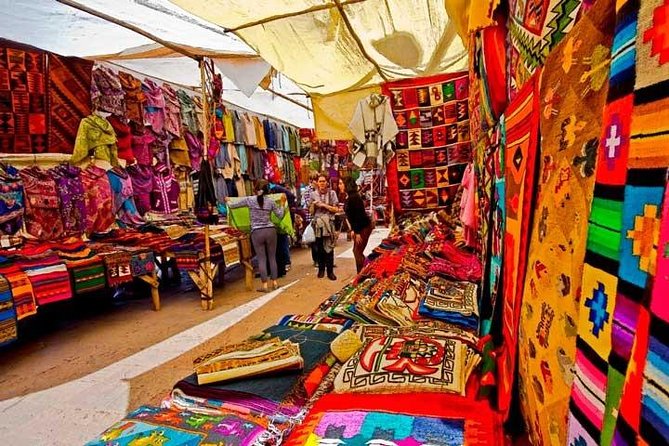
Chinchero is about 28 km from Cusco on the tarmac route toward Urubamba, and it’s a strong first stop. You’ll see remnants of a royal estate connected with Tupac Inca Yupanqui, with a colonial temple built on top of Inca foundations.
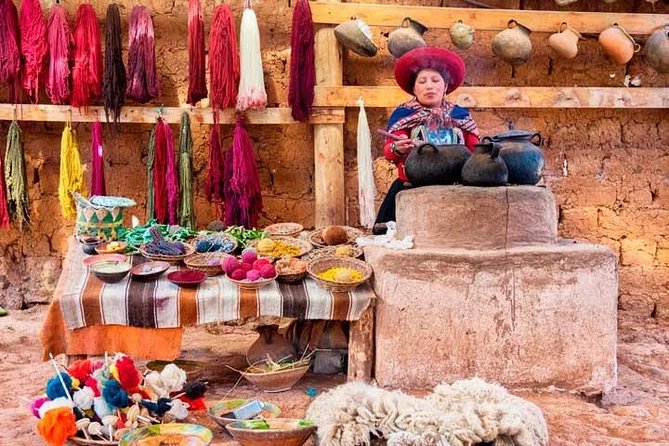
Then the emphasis shifts to the living part: the artisanal market. It’s described as rooted in bartering between valley communities and groups from higher areas, which is why the market feels like trade, not just browsing. Today it’s a colorful show of pre-Columbian style textiles and crafts.
You only get about 40 minutes here, but it’s enough time to get your bearings and pick up a few textile items if that’s your thing. The admission is listed as free, so this is one of the easiest stops financially.
Maras Moray: Circular Terraces and the Story Behind Pachamama
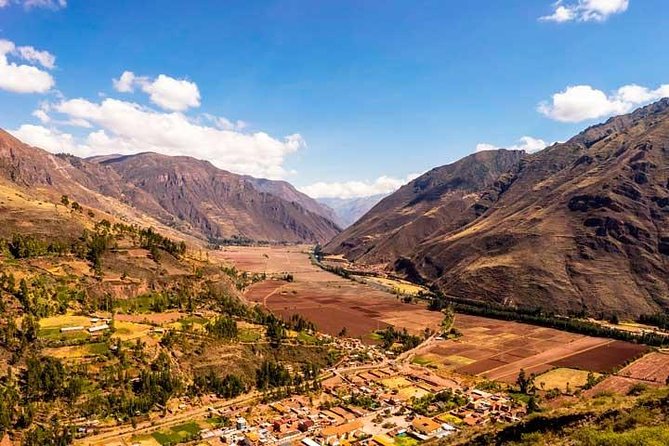
Maras Moray is around 7 km from Maras and about 1 hour from Cusco via the Chinchero route. This is the stop many people remember, because it’s visually unusual: you’ll see circular platforms of different sizes.
The explanation you get matters. These weren’t just decorative terraces. They’re tied to agricultural experimentation, and they’re also described as places with concentration of female energy—recognized locally as a magnetic center of Pachamama. That blend of farming and spiritual meaning gives the site depth beyond the photo.
Plan on about 30 minutes. It’s a quick look, so if you love landscape details, you may want to pace yourself so you can actually absorb the terraces rather than just rushing to the best viewpoints. Admission is not included for this stop.
Salinas de Maras: The “Salt Mines” With About 3,000 Wells
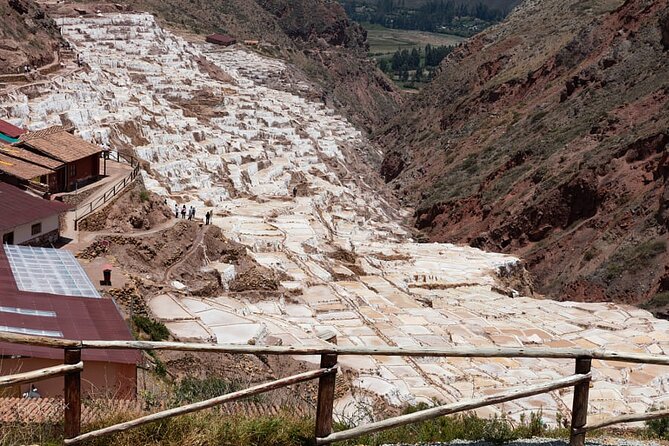
Salinas de Maras sits northwest of Maras, and it’s known as the salt mines because of how it’s formed. The site consists of about 3,000 small wells.
The process is straightforward but fascinating: saltwater from an underground stream is collected, then left to sun-dry, and once the water evaporates, the salt is ready. The tour description also notes this salt production has roots in pre-Hispanic times, so you’re seeing something with long continuity rather than a modern tourist setup.
You’re allotted about 30 minutes. That’s enough for a solid walkthrough and a few photos, but the light can be harsh here—if you’re sensitive to glare, sunglasses can save your eyes. Entrance is not included.
Ollantaytambo: Inca Village Layout and the Temple of the Sun
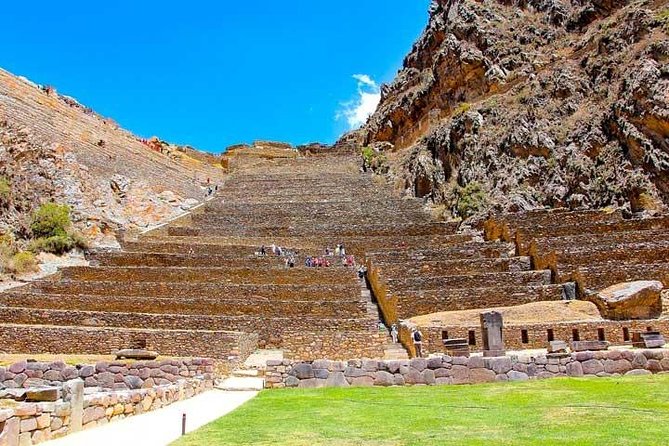
Ollantaytambo is a classic Sacred Valley anchor. It’s about 21 km from Urubamba and sits at around 2,800 m, so the area feels more grounded and village-like than some ruins.
This stop ties together legend and architecture. It’s named after the chieftain Ollanta, linked in local storytelling to an affair involving an Inca princess. More importantly for your visit, you’ll get a guided look at one of the best-preserved Inca areas near Hanan Huacaypata Square and its block-like layout of homes built on stone walls.
On the hill that dominates the village, you’ll hear about major structures such as the Temple of the Sun, the Intihuatana, and the Baths of the Princess. The description also points to a path that climbs toward the Malaga open road at 4,200 meters, crossing areas like Huilloc, known for weaving.
You have about 50 minutes. That’s decent for a guided visit, but it still won’t feel like a slow archaeological day—this is a “see the big pieces” kind of schedule. Admission is not included.
Urubamba Lunch Break: A Real Meal in the Sacred Valley
Urubamba is where you pause. It offers views over the Sacred Valley, and it becomes your lunch and rest point.
The tour includes a buffet lunch described as traditional Peruvian cuisine. In practical terms, this matters because it’s the meal that’s built into the tour timing. You won’t be stuck hunting for food between sites, which is a lifesaver when your whole day is timed to bus routes.
You have about 40 minutes at this stop. Keep an eye on time so you don’t get lulled into the view and miss the regrouping moment.
Pisac Archaeological Park: Inca Site Plus the Artisan Market
Pisac is about 33 km from Cusco by asphalt road. You’ll get both the archaeological side and the village side: an ancient village, an archaeological park described as among the most important in the region, and a modern colonial-origin settlement.
The market is a big reason people love this stop. The Pisac artisan market draws community members from remote villages, and it’s known for colorful traditional garments. If you want a smart souvenir strategy, the tour information specifically recommends buying craft works here because they are often cheaper than in Cusco.
You’ll have about 40 minutes here. Admission for Pisac is not included, so factor that into your day budget.
Bilingual Guide Reality: English, Spanish, and How to Prepare
The tour includes professional guiding in English and Spanish, and that’s a big plus. I’d still plan for the reality that bilingual tours can have uneven pacing between languages.
In particular, some parts of the day may get more time in Spanish than in English. One helpful approach is simple: if Spanish is a challenge for you, try to pick your moments—listen closely when the guide is explaining the big site pieces, not only when they’re giving extended background at the first stop.
The upside is that the guide style matters. The experience is described as respectful and responsible, with explanations that don’t overly “push” the group around.
Entrance Fees and Budget: BTG and Salt Mine Costs
A key detail: entrances are not included for archaeological centers (BTG) and the salt mines. That means the day can cost more than you expect if you only budget the $45.
One clear way to plan is to bring Peruvian soles. In a past run, cash payment was required. A workable ballpark shared for the historical sites was about 40 soles per person, with an additional 10 soles for the salt mines.
To keep it stress-free, I’d carry enough cash for several entries rather than relying on one single payment at one stop. It keeps you from scrambling when you’re already standing at ticket windows.
Shopping, Drinks, and Avoiding the Pushy Moment
This is a sightseeing day, but it also passes through places where shopping happens. Pisac in particular is a market stop, and the tour info encourages you to shop there for crafts.
One caution: you should expect the day may include opportunities to buy things beyond the market areas. Some parts of the route can feel like sales are built into the tour flow—like drink sales or a final store stop that encourages spending.
The fix is easy. Decide what you want before you’re tired. If you want textiles, set a small budget. If you don’t want shopping, treat the market as window-shopping only and keep your energy for the sites.
Who This Tour Fits Best (and Who Might Prefer Another Plan)
This Sacred Valley VIP tour is ideal if you:
- want a one-day view of major Sacred Valley highlights from Cusco
- like having a guide explain what you’re seeing (not just wandering on your own)
- appreciate a mix of ruins + markets + a proper lunch
- prefer a small group (max 18) over a very large bus day
You might consider a different plan if you:
- want long, slow time inside each archaeological park
- are very sensitive to language balance (English explanations may vary by stop)
- hate paying extra on-site once the day starts
Should You Book the Sacred Valley VIP Tour with Maras and Moray?
If your goal is to see Maras Moray, Salinas de Maras, Ollantaytambo, and Pisac in one go, this is a solid choice. The schedule is efficient, the included lunch is genuinely useful, and the small group size keeps the day from feeling chaotic.
Book it especially if you’re planning a Cusco trip with limited extra days. The only reason to hesitate is the add-on entrance fees plus the reality that the day doesn’t linger at every site. If you go in with that mindset—quick, guided, and organized—you’ll get a very good picture of the Sacred Valley in a single day.
FAQ
How long is the Sacred Valley VIP Tour with Maras and Moray from Cusco?
It runs for about 11 hours.
What time does the tour start?
The start time is 7:00 am.
Where do I meet for the tour?
The meeting point is Plaza Regocijo (F2M9+5X2), Cusco 08002, Peru.
What is the maximum group size?
The tour has a maximum of 18 travelers.
How much does the tour cost?
The price is $45.00 per person.
What’s included in the price?
Included are a professional guide service in English and Spanish, buffet lunch, and group transport.
Which entrance fees are not included?
Entrance to the archaeological centers (BTG) and admission for Maras Moray, Salinas de Maras, Ollantaytambo, and Pisac are listed as not included.
Is lunch included, and where is it served?
Yes. You’ll have a buffet lunch in Urubamba, and the tour describes it as traditional Peruvian cuisine.
Does the tour return to the meeting point?
Yes, the activity ends back at the meeting point.
What’s the cancellation policy?
You can cancel for a full refund if you cancel at least 24 hours before the experience’s start time.