REVIEW · SEDONA
Sedona Vortex Odyssey – A Spiritual & Scientific Adventure
Book on Viator →Operated by Dynamic Journey Tours · Bookable on Viator
Sedona vortex sites have a way of making you slow down. This 3-hour Sedona Vortex Odyssey blends geology, spirituality, and calm sightseeing across a tight loop of major stops, so you get the story without needing a hike.
What I like most is the small group size (max 12), which keeps the vibe quiet enough to actually watch the land and take photos. I also love how the guides, like Leo and Connor/Conner, explain the “why” behind the vortex idea using both science angles and spiritual context.
The main thing to consider is the topic can get pretty intense on the metaphysics side. If you prefer only one lens (strictly spiritual or strictly scientific), you may find the mix a lot—though you still get plenty of time to sit and experience it your way.
In This Review
- Key highlights worth knowing
- A 3-Hour Sedona Vortex Loop That Actually Feels Manageable
- Where It Starts: 105 Roadrunner Dr and a Small-Group Van Day
- Airport Mesa: Mogollon Rim Views and the Airport Vortex Story
- Thunder Mountain: Why Lightning Keeps Showing Up
- Amitabha Stupa and Peace Park: Buddhism, Amitahba, and Land-Based Meaning
- Rachel’s Knoll and the Rise of the Elders: Strange Shapes, Specific Stories
- Lover’s Knoll: Big Views Without the Big Hike
- Guides Make the Difference: Leo and Connor’s Style of Storytelling
- Price and Value: What $130 Buys in Sedona Reality
- Weather, Timing, and the Pace You’ll Feel in Real Life
- Should You Book It? My Practical Take
- FAQ
- How long is Sedona Vortex Odyssey?
- Where does the tour start and end?
- What’s included in the price?
- Is gratuity included?
- How large is the group?
- What happens if the weather is bad?
Key highlights worth knowing
- Max 12 travelers in an air-conditioned vehicle, so you’re not stuck in a loud bus crowd
- Airport Mesa + Airport Vortex viewpoints with easy parking and built-in timing for photos
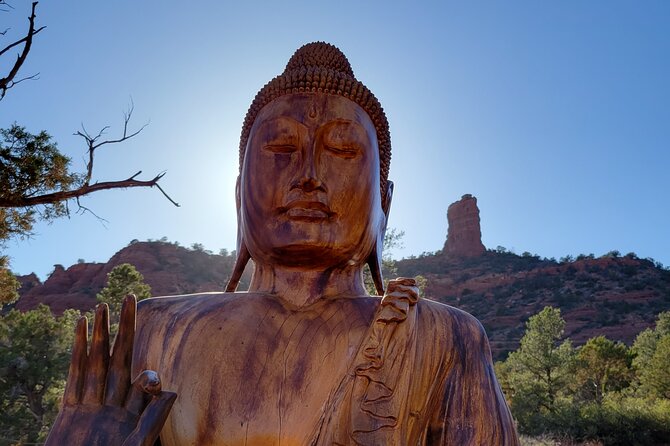
- Amitabha Stupa and Peace Park with a specific lens on Buddhism and Native American traditions
- Lover’s Knoll is a major “wow” view with no hike required
- Stops are paced for photos and reflection, not a speed-run
A 3-Hour Sedona Vortex Loop That Actually Feels Manageable
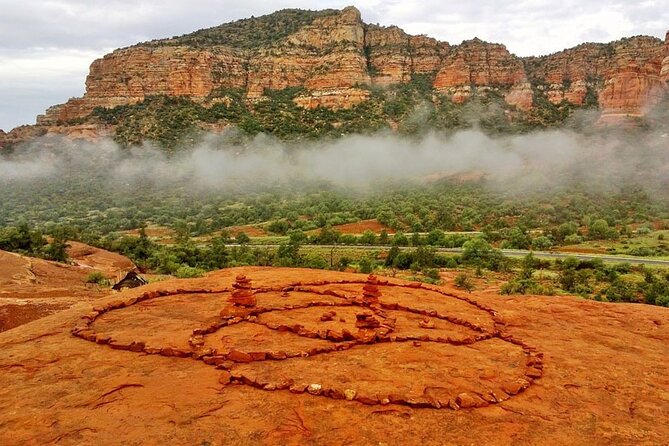
This tour is designed for the people who want Sedona’s vortex locations, but don’t want to build a day around strenuous hiking. You get multiple stops that each have a clear theme: geology and viewpoints first, then spirituality and land-based meaning, then a final “big view” stop that’s easy to access.
The pacing matters here. With around 3 hours total, the schedule gives you time at each location rather than a constant “next, next, next.” That’s especially helpful if you’re traveling with mixed mobility (and I’ve seen reviews that mention older guests doing everything on the itinerary).
You’re also paying for a guide-led connection to the places, not just transportation. At $130 per person, the value shows up in three ways: the curated stop order, admission ticket inclusions at the listed sites, and a small-group atmosphere that makes questions feel normal.
You can also read our reviews of more tours and experiences in Sedona.
Where It Starts: 105 Roadrunner Dr and a Small-Group Van Day
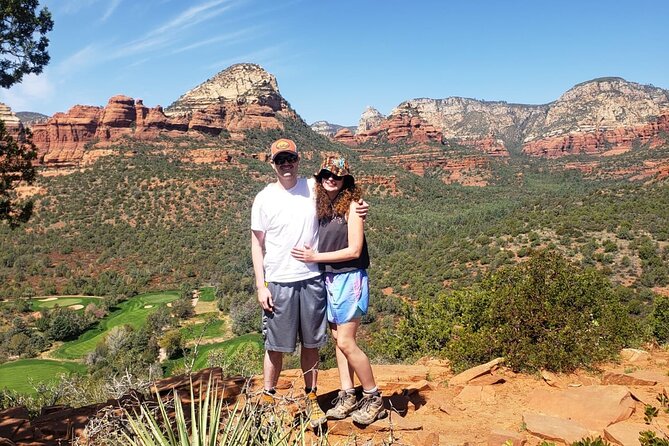
Everything begins at 105 Roadrunner Dr #9, Sedona, AZ 86336. You start at the office, then roll out to the sights in an air-conditioned vehicle with parking fees included. That last part is quietly huge in Sedona: less time hunting for parking means more time being present.
The tour is offered in English and uses a mobile ticket, which keeps the start simple. And because the group cap is 12, it feels more like a guided day with a circle of people than a production line.
From the reviews, two guide styles come up a lot: calm and structured. Guides like Leo are often described as patient, and guides like Connor/Conner are praised for balancing narration with actual time to look around.
Airport Mesa: Mogollon Rim Views and the Airport Vortex Story
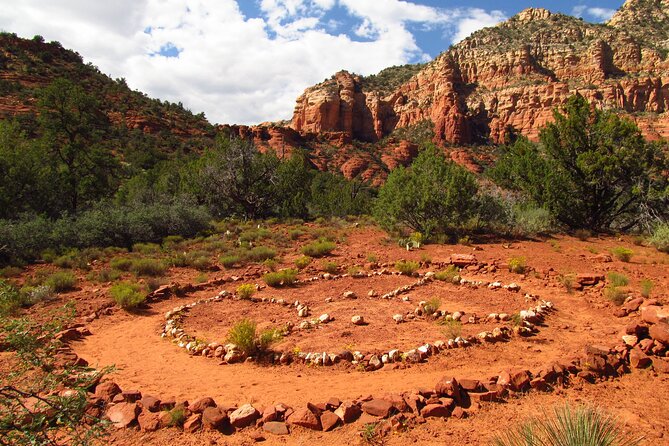
Stop one is just a quick office start (about 10 minutes). Then you head to Airport Mesa, which is one of the best “first wow” places on the tour.
At Airport Mesa, the focus is the Mogollon Rim—presented as a geological masterpiece that shapes the wider region. The guide explains how the area’s geology connects to the vortex phenomenon. Even if you already feel pulled toward the spiritual side, this geology-first approach helps you understand why these specific places keep showing up in vortex conversations.
You get about 30 minutes at Airport Mesa, with the admission ticket included. The viewpoint is also built for watching the terrain. The tour description notes you can see a four-mile-long and half-mile-wide canyon from up top of the Airport Vortex area, which is the kind of scale that’s hard to appreciate from photos alone.
Practical tip: bring your camera plan. This is one of those stops where the timing of light and the angle to the formations matter. The guide’s job is to bring you to the right spots for viewing, so you’re not constantly guessing.
Thunder Mountain: Why Lightning Keeps Showing Up
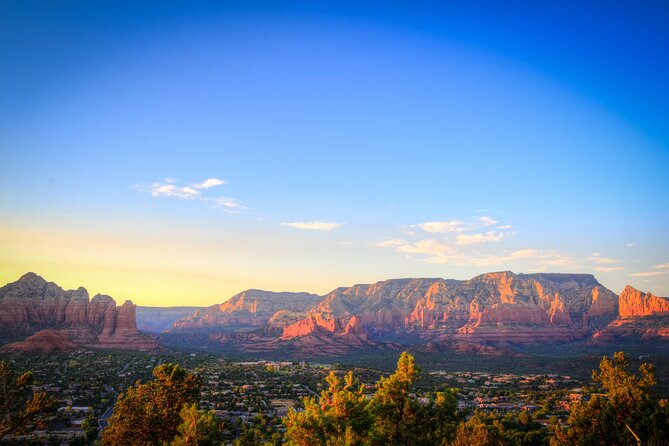
From the Airport Mesa area, the tour continues with another major vortex reference point: Thunder Mountain. The tour description frames it as a powerful vortex site that attracts lightning more often than other peaks.
Now, a quick reality check: you’re not booking a storm-chasing expedition. You’re booking a viewpoint and a story about why people connect this peak with energetic activity. The meaningful part for you is how the guide links the site to patterns in the land and the region’s reputation for unusual weather.
Even if you stay on the skeptic side, it’s still a fascinating Sedona moment. Lightning folklore has a way of turning “scenery” into “place,” and that’s where the tour earns its keep: it turns a drive-by view into a guided understanding of the region.
Amitabha Stupa and Peace Park: Buddhism, Amitahba, and Land-Based Meaning
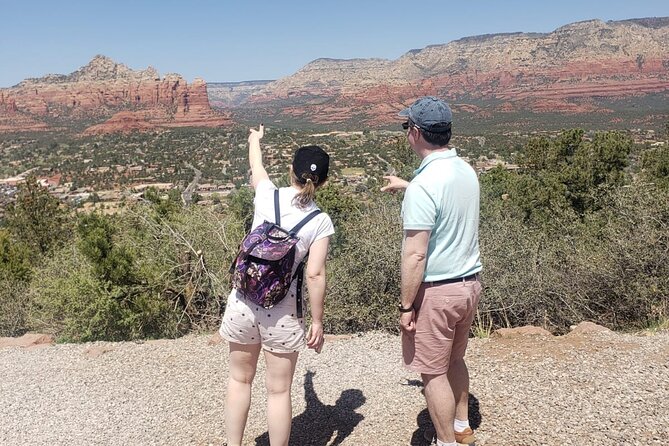
Next is Amitabha Stupa and Peace Park, one of the tour’s deeper stops. You’ll spend about 50 minutes here, and the admission is included.
This park includes a shrine to Amitahba, described in the tour as the Buddha of Light. The guide connects Buddhism with Native American shamanism, specifically referencing Hopi religion and way of life. The point isn’t to say one tradition explains the other. The point is that both traditions treat land as more than background.
You also get views—like chimney rock—from within the park grounds. It’s a different mood than the mesa lookouts. You’re switching from wide-open geology to a quieter setting where you’re more likely to slow your breath and look at details.
One review theme stands out: people describe this stop as grounding. Even guests who weren’t sure about the spiritual angle often found the atmosphere calming, and the guide’s pacing helped them stay comfortable.
Rachel’s Knoll and the Rise of the Elders: Strange Shapes, Specific Stories
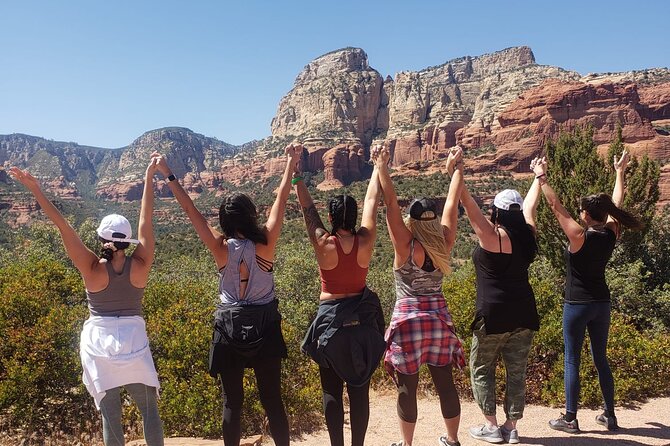
As the tour moves along, you’ll see an odd-shaped formation that’s referenced as the Rise of the elders. This is one of those Sedona moments where the land looks “formed” in a way that feels symbolic—especially after you’ve already heard the geology and vortex context.
The tour includes viewpoints that point out formations with names and interpretive meaning, including what’s described as the view into the long canyon from up top of Rachel’s Knoll (spelled a couple different ways in the materials, but the stop is consistent). These are not deep trails. It’s more about standing where the story says to stand.
What you’ll take from this stop depends on you. If you come for energy, you’ll treat the formation like a marker. If you come for scenery, you’ll treat it like a standout geological character. The good part is the tour doesn’t force one interpretation.
Also, if you’re the kind of traveler who likes “proof,” you’ll still get something practical: a guide’s explanation of what you’re looking at and why that matters. That helps you avoid the usual Sedona problem—standing somewhere beautiful but having no idea what the viewpoint is trying to show you.
Lover’s Knoll: Big Views Without the Big Hike
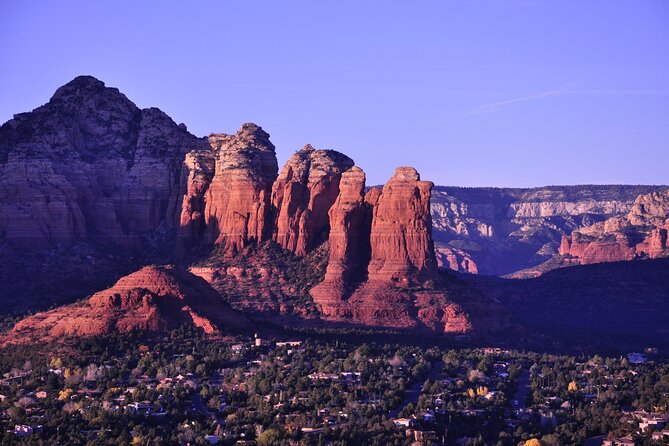
The final major viewing stop is Lover’s Knoll (about 30 minutes with admission included). This is the stop that’s often described as one of the best Sedona views you can get without hiking.
The tour frames Lover’s Knoll in terms of preservation. The story is that a previous land owner preserved the land for public access so you could reach a significant spot in a single day trip. That matters more than it sounds. In Sedona, view points can be hard to access or require time-consuming treks. Here, the tour gives you the payoff without asking you to turn your vacation into a physical project.
The tour also places it in a specific setting: it’s described as located in the center of Sedona’s vortex energy, and in the highest concentrations of ruins in the Seven Canyon region. Even if you skip the metaphysics part, ruins and preservation stories add texture. The land becomes a record of what humans valued enough to protect.
A lot of reviews focus on how this stop is quiet and photo-friendly because the group is small. If you’ve ever tried to shoot pictures at crowded viewpoints, you’ll appreciate that the tour is designed so the land gets some breathing room.
Guides Make the Difference: Leo and Connor’s Style of Storytelling
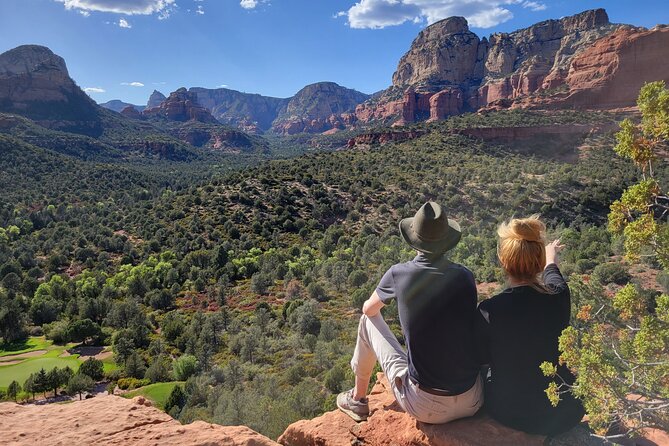
You’re really booking two things: the route and the guide. The route takes you to major vortex points. The guide turns it into a coherent experience.
From the reviews, three guide patterns show up again and again:
- Time at each stop feels right. People mention the schedule didn’t rush them, and photography had breathing space.
- Scientific + spiritual framing is part of the teaching. One review explicitly calls out the science angle and theology context.
- Calm delivery helps. Some guests mention that the tour is relaxed and easygoing, even with different activity levels.
Names that come up frequently include Leo, and Connor/Conner. You might also see mentions of other guides like Gus and Frank, with praise tied to camera skills, engagement, and teaching style.
One caution: some people say the amount of information can feel like a lot, especially if you want a shorter, lighter explanation. If that’s you, it helps to ask questions early, or simply tell the guide you want more room to sit and observe.
Price and Value: What $130 Buys in Sedona Reality
Let’s talk value without hand-waving. At $130 per person for about 3 hours, you are paying for:
- An air-conditioned vehicle
- Parking fees
- Admission tickets at the included stops
- Guide-led explanation that links the stops into a theme
- A small group cap of 12, which changes the experience more than people expect
If you’re tempted to DIY Sedona vortex hunting, you’re likely to hit two costs fast: time and parking headaches. Even with good intentions, Sedona can force you into either rushing between viewpoints or spending time figuring out where to go. This tour solves both by taking you to a tight, meaningful sequence.
Also, the “view without hiking” element at Lover’s Knoll turns the price into something practical. You’re not paying just to hear stories. You’re paying so you can reach the payoff in a day, even if you don’t want to commit to a multi-hour trail.
If you love Sedona and plan to return, this tour can also function as a “get your bearings” day. Once you understand how the geology and vortex sites are connected, your later drives and photo walks tend to feel more intentional.
Weather, Timing, and the Pace You’ll Feel in Real Life
This experience requires good weather. That matters in a place where skies can shift and scenic access can get uncomfortable. The good news is that the tour format is still pretty flexible: it’s designed around short stops and viewpoints, not long trail segments.
The pace is also one of the reasons people like it. You’re looking at sites for roughly 30 to 50 minutes at the bigger locations, then moving by van. That’s long enough to listen, take photos, and sit for a minute. It’s also short enough that you don’t feel drained.
The terrain is described as mild in the reviews, but still “adventurous” in the sense that you’ll be outside and moving between viewpoints. If you have mobility limits, it’s smart to plan for short walks on uneven ground.
Should You Book It? My Practical Take
Book Sedona Vortex Odyssey if you want:
- A guided way to see the most important vortex-related viewpoints without hiking hard
- A small-group day with room to photograph
- Both geology context and spiritual framing, so you can choose how you interpret the experience
Skip it or adjust expectations if:
- You want strictly one lane (only science or only spiritual practice)
- You’re looking for a silent nature walk with zero explanation
- You dislike structured narration and prefer long, unguided time
If you’re on your first full day in Sedona, this tour is a smart “orientation move.” If you’ve been before, it still works because the story and stop order help you see places you might otherwise overlook.
FAQ
How long is Sedona Vortex Odyssey?
The tour is about 3 hours (approx.).
Where does the tour start and end?
It starts at 105 Roadrunner Dr #9, Sedona, AZ 86336, USA and ends back at the meeting point.
What’s included in the price?
Included are an air-conditioned vehicle, parking fees, and admission tickets for the stops listed on the itinerary (Airport Mesa, Amitabha Stupa and Peace Park, and Lover’s Knoll).
Is gratuity included?
No. A 15% gratuity for your local guide is not included.
How large is the group?
The tour has a maximum of 12 travelers.
What happens if the weather is bad?
The experience requires good weather. If it’s canceled due to poor weather, you’ll be offered a different date or a full refund.