REVIEW · TANGIER
Top VIP 3-Day Tour to Fes starting from Tangier and Chefchaouen
Book on Viator →Operated by Ali Tangier tours · Bookable on Viator
Three days, three Moroccan worlds. This VIP route links Tangier’s sea cliffs and landmark mosques with Chefchaouen’s blue medina streets, then lands you in Fes for madrasas, crafts, and that historic university vibe. It’s a tight loop with serious sightseeing and real comfort built in.
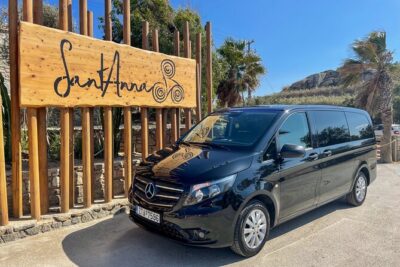
I love that you travel with a professional local guide and a private van with WiFi, so you spend your energy on Morocco instead of logistics. I also like the 5-star riad rooms booked in Chefchaouen and Fes, with breakfast and lunch included across the trip. One drawback: you’ll be moving a lot each day, and dinner isn’t included, so you’ll need a plan for at least a couple of evening meals.
Pickup is offered, and the tour includes all monument fees. That matters in Morocco, where tickets can pop up exactly when you’re already juggling maps and timing.
In This Review
- Key highlights you’ll care about
- A three-day Morocco route that moves with purpose
- Tangier’s cliff, museums, and medina food stops
- Chefchaouen’s blue lanes plus Ras el-Ma waterfall time
- Volubilis ruins and what you’re seeing beyond Fes
- Fes madrasas, tanneries, and the al-Qarawiyyin university
- Riads in Chefchaouen and Fes: comfort between sights
- Price and what’s included for $2,103.49 per person
- Walking, smells, and the camel ride reality check
- Should you book this VIP Ali Tangier Tours trip?
- FAQ
- How long is the VIP 3-day tour?
- What is the price per person?
- Is pickup offered, and is this private?
- What transportation and guide support are included?
- What meals are included, and is dinner included?
- Are monument fees included?
- Can I cancel and get a full refund?
Key highlights you’ll care about
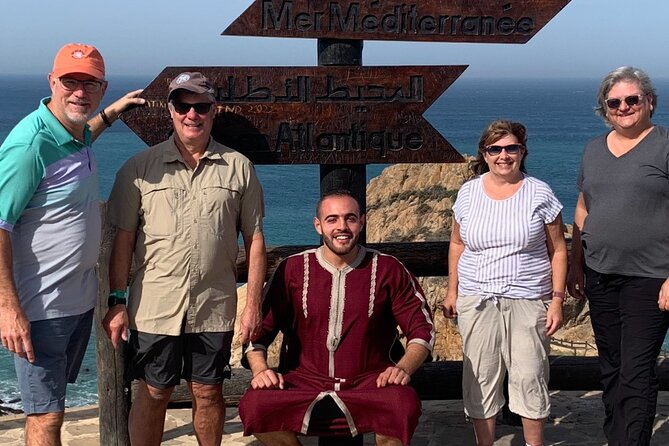
- Cap Spartel views at the Strait of Gibraltar, with the Atlantic meeting the Mediterranean
- Tangier medina time for a proper food break on panoramic terraces
- Chefchaouen’s Ras el-Ma waterfall visit beyond the blue gate area
- Fes madrasas and al-Qarawiyyin: Al-Attarine, Bou Inania, and the famed university mosque
- Craft-focused stops like Chouara Tannery and Nejjarine Museum for things you can actually buy or understand
A three-day Morocco route that moves with purpose
This tour is built for people who want northern Morocco without the stress of planning every connection. You get a clear rhythm: coastal Tangier day, Rif Mountains and blue Chefchaouen day, then historic Fes with medina walking and craft stops.
The “VIP” part isn’t just marketing. You’re in booked traditional luxury riads in both Chefchaouen and Fes, and you’re not paying extra for monument entry along the way. That keeps the trip feeling smoother, especially when medinas are busy and parking is always a bit of a puzzle.
If you like your travel days structured, this fits. If you prefer pure free time with no schedule at all, you might feel the pace.
You can also read our reviews of more tours and experiences in Tangier.


Tangier’s cliff, museums, and medina food stops
Tangier is where the trip starts with variety. You start with iconic landmarks that help you understand the city’s role as a doorway between Europe and Africa—then you shift quickly from big views to smaller streets.
You’ll see the Mohammed V Mosque completed in 1983, plus the Marshan Palace in the Marshan neighborhood, tied to Tangier’s older political story as part of the Tangier International Zone era. These stops aren’t just photo moments; they set a baseline for how Tangier blends layers.
Then comes the coast. At Parc Perdicaris, you get a brief historical landing point connected to the famed Perdicaris incident (kidnapped in 1904). It’s short, but it gives you a story anchor for the area you’re standing in.
After that, Cap Spartel is the one you’ll remember. It’s about 300 meters up and sits at the entrance to the Strait of Gibraltar, near the Caves of Hercules. The best value here is the view: you look outward and you immediately get why everyone has been trading, traveling, and strategizing through this throat of water for centuries.
From views to motion, you can do a camel ride at Achakkar Beach. Even if you’re not a camel person, it’s part of the northern Morocco experience package here—just know it’s included and not a passive viewing stop.
Next you head into Tangier’s historic hill world: the Tangier Casbah area, plus the Kasbah Museum of Mediterranean Cultures. That museum stop is a practical add-on, because it helps you connect what you’re seeing with the mix of influences you’ll notice across northern Morocco.
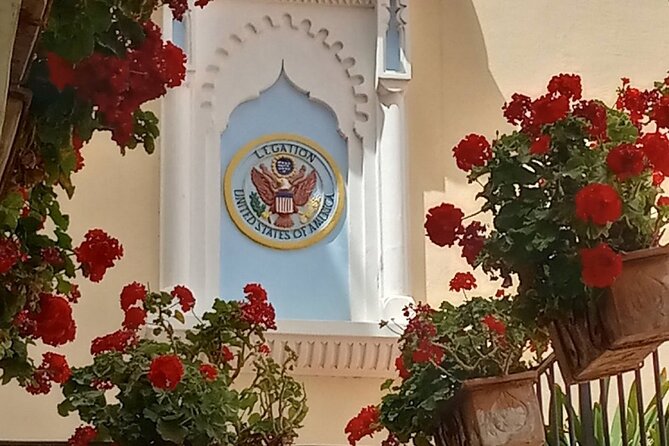
You also get green breaks like Mendoubia Garden, plus a set of cultural institutions that many visitors skip. The Tangier American Legation Museum is especially interesting because it represents the early American public property outside the United States and the diplomatic relationship with Morocco. And if you’re the kind of person who likes to spot minority histories in big cities, the Moshe Nahon Synagogue is a memorable stop.
Finally, you’ll hit the Medina of Tangier with time to eat. The trip is designed to get you into Moroccan food without turning it into a scavenger hunt. Plan on walking through the maze of small streets, then pausing on a panoramic terrace to refuel before the next big change: heading toward Chefchaouen.
How to enjoy Tangier day most: wear shoes that can handle uneven stone, and don’t overpack your pockets with valuables during medina time. You want to move comfortably, especially when the day shifts from open areas to tighter lanes.
Chefchaouen’s blue lanes plus Ras el-Ma waterfall time
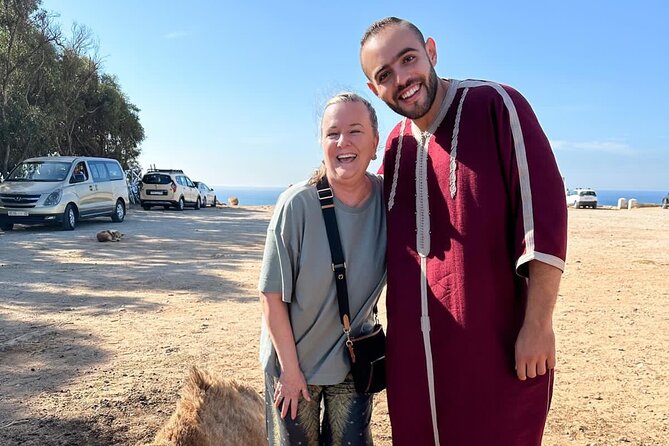
Chefchaouen is the emotional pivot of the trip. You leave Tangier and start traveling through the Rif Mountains region, with glimpses of daily life along the road. One small detail I like here: the drive can pass through a Jbala area where you may see local women in traditional dress selling handmade items. That’s not a “stage set.” It’s real roadside commerce, and your guide’s presence helps you approach it respectfully.
Once you arrive, Chefchaouen’s vibe does the work. The blue pedestrian streets and viewpoints slow people down. Even if you’ve seen blue cities before, this one still lands differently because you’re looking down into a valley and up into tight lanes at the same time.
You’ll also go to Ras el-Ma, the waterfall area beyond Chefchaouen’s Medina gate. That’s where the trip earns the word “walk.” It’s not just wandering for wandering’s sake; it gives you a natural contrast to the medina color—cooler, greener, more spread out.
Food time is built in again. You’ll stop for lunch on the Outta Hammam panoramic terrace inside the Medina area. The practical win: you eat while you’re already in position to keep moving. You’re not losing half your afternoon searching for somewhere that feels right.
Chefchaouen tip that pays off: if the streets feel crowded, step off the main lanes. Your best photos and the calmer moments tend to happen a few minutes away from the busiest flows.
One more thing: Chefchaouen is the kind of place where you can shop without losing your mind. You can pick up small souvenirs and see what local crafts look like in a place where people expect visitors.
Volubilis ruins and what you’re seeing beyond Fes
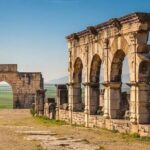
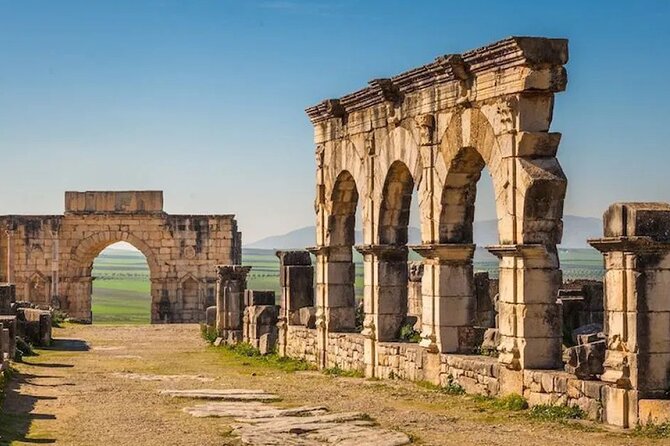
Volubilis is the “wait, Morocco goes back further than I thought” day marker. You’ll visit the Roman ruins of Volubilis, built on an older Punic-Berber site. This stop is useful because it broadens your timeline before Fes starts throwing dates at you.
The site sits in the Saïss plain near the Oued Rhoumane, in northern Morocco. You’re also in the orbit of Moulay Driss Zerhoun, where Idriss I rests and where the Idrisside dynasty begins its story. Even if you’re not a museum-only person, this stop has value because you can actually look at the physical bones of a city layout—columns, stones, and street lines.
The visit duration here is short, so you’re not doing a full archaeologist marathon. That’s actually a good thing. In a 3-day trip, Volubilis gives you a big mental payoff without stealing the whole schedule.
Drawback to keep in mind: ruins are ruins—if you’re sensitive to sun or if you hate walking on uneven ground, you’ll want to plan your pace and bring water.
Fes madrasas, tanneries, and the al-Qarawiyyin university
Fes is where the trip turns from scenic to intense. This is the day for architecture, education sites, and the craft economy you can smell from a few streets away.
You’ll start with the Al-Attarine Madrasa, built in 1323–5 by Marinid sultan Uthman II Abu Said. It’s named after the nearby Souk al-Attarine, associated with spice and perfume. That context matters because it ties the building to the marketplace economy around it.
Next is Bou Inania Medersa, built in 1350–55 by Abu Inan Faris. It’s widely acknowledged as a high point of Marinid architecture and is also notable because it functioned as a congregational mosque, not only a school.
After that, you’ll visit the Mosque and University of al-Qarawiyyin. Founded as a mosque by Fatima al-Fihri in 857–859, it became a leading center during the Islamic Golden Age. If you’ve ever wondered how education worked in older cities, this is the stop that explains it with a real place.
Then comes a palace, but not in the “painted ceilings only” way. You’ll see Dar Glaoui (Glaoui Palace), a late 19th to early 20th-century palace owned by the Glaoui family. It gives you a clearer picture of power in Fes after the earlier centuries.
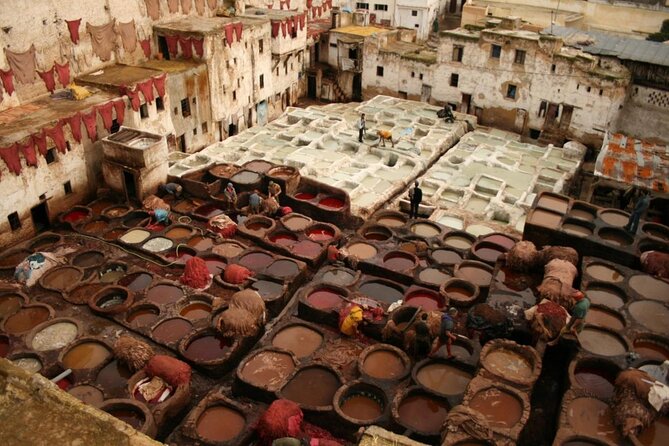
If madrasas aren’t enough excitement for you, Fes delivers more. You’ll go to the Chouara Tannery, described as one of the three tanneries in the city and the largest. It’s one of the oldest and sits in Fes el Bali near the Saffarin Madrasa. This is a sensory stop—views and observation first, plus the historic craft idea underneath. You won’t get the full tanning process in a classroom way, but you do get the real-world system and how it shapes the medina.
You’ll also step into the Nejjarine Museum of Wooden Arts & Crafts (Funduq al-Najjarin). It’s attached to a historic funduq in Fes el Bali at Al-Najjarin Square near a traditional fountain. For me, this is the “slow down and look closely” part of the day. You come in after the intensity and you get to appreciate craft details in a more controlled setting.
Along the way, there are also historic gates, including a triple-arched Moorish gate that once served as an entrance to old Fes.
You end with time in Fes el-Bali, including a food pause on panoramic terraces overlooking the old medina. Then you walk through craft workshops and markets, with help from your guide to find good-quality ceramics, rugs, and small souvenirs. That’s a big deal. In a maze like this, knowing who to trust saves you money and frustration.
My practical advice for Fes day: take breaks often. The medina is not built for long straight lines. When you feel your legs getting tired, step into a quieter area and let your guide take over the route.


Riads in Chefchaouen and Fes: comfort between sights
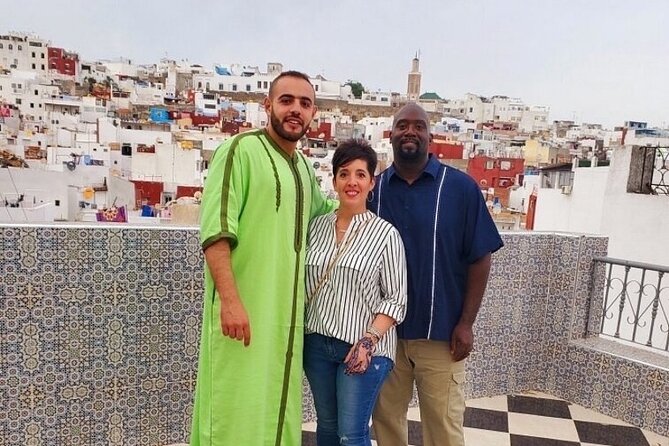
This tour’s comfort level isn’t generic. You’re booked in traditional luxury riads in both Chefchaouen and Fes, described as 5-star rooms. That’s a key value point because it turns “3 days of sightseeing” into “3 days you can recover from.”
Riads matter in Morocco because medinas can be loud and your feet will be working hard. After walking, you’ll want a proper place to reset. Having breakfast included also means you don’t start each day negotiating or searching in a hurry.
Also, coffee/tea or juice is included along the way. It’s a small line item that changes the mood on long days. You get something warm or refreshing without having to stop mid-activity and break flow.
If you care about sleep quality, choose this tour for the structure. If you only want the cheapest bed possible, you’ll probably feel this is high-priced for what you think “a tour” should cost.
Price and what’s included for $2,103.49 per person
At $2,103.49 per person, this isn’t a budget trip. The question is whether the inclusions justify the cost for your travel style.
Here’s what you’re getting that usually costs extra on Morocco trips:
- A private van and air-conditioned vehicle plus WiFi onboard
- A professional local guide for the sights
- 5-star riad rooms in Chefchaouen and Fes
- Coffee/tea/juice
- All monument fees
- Breakfast (3) and lunch (3)
What’s not included is dinner. That’s the most obvious gap, and it’s the one you can’t ignore. In a tour like this, you’ll likely eat dinner on your own either back at the riad area or somewhere your guide suggests. It’s not a dealbreaker, but it does mean you should keep a spending buffer.
Group discounts are listed, and there’s also a mobile ticket. That combination can matter if you’re traveling with others who want to reduce per-person costs without losing the “only your group participates” setup.
Value verdict: If you want fewer moving parts—transport, tickets, guide time, and meals handled—this is priced like a smoother, higher-comfort experience. If you like to plan your own route and pay as you go, you could likely build something cheaper, but it won’t feel as tidy.
Walking, smells, and the camel ride reality check
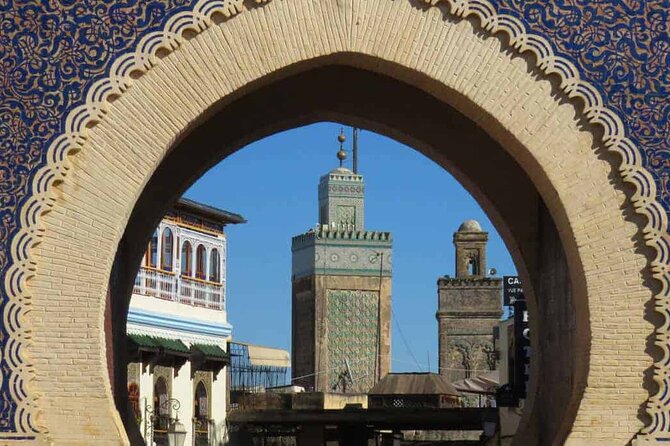
Three days in northern Morocco is active. You’ll do museum time, medina walking, and viewpoint stops. In Fes, you’re especially dealing with steep lanes, uneven surfaces, and crowds that come and go.
Two stops are worth thinking about before you go:
- Chouara Tannery: it’s historic craft observation, but you should expect strong sensory cues. If smells bother you, plan to view from the best vantage your guide recommends and take short breaks.
- Camel ride at Achakkar Beach: it’s included, so decide in advance whether you’re comfortable with that activity. If you skip it, you might still be waiting nearby, so wear shoes and bring a layer.
Also, medinas can tire you out fast. Your tour includes guide support for navigating markets and craft workshops. That’s not just convenience—it helps you avoid getting dragged into low-quality stalls when your energy is low.
The good news: you’re not dealing with these challenges alone. You have a guide and private transport, plus scheduled rests like terrace meals and garden time in Tangier.
Should you book this VIP Ali Tangier Tours trip?
I’d book this tour if you want a guided, comfort-forward way to hit Tangier + Chefchaouen + Fes without scrambling for tickets, timing, or directions. The included riads, monument fees, breakfasts, and lunches are the big reasons it can feel like good value despite the price tag.
I’d think twice if you hate structured days, if you want fully free time to wander without appointments, or if dinner not being included would annoy you. And if you’re sensitive to intense sensory moments, especially around the tannery area, take that seriously and plan your pacing.
If you like clear stops, expert guidance, and the payoff of sleeping somewhere nice after a long medina day, this feels like a smart, well-built choice.
FAQ
How long is the VIP 3-day tour?
The tour runs for about 3 days.
What is the price per person?
The price is $2,103.49 per person.
Is pickup offered, and is this private?
Pickup is offered. It’s also described as a private tour/activity, and only your group participates.
What transportation and guide support are included?
You get an air-conditioned vehicle and private transportation, WiFi on board, and a professional local guide with a private van.
What meals are included, and is dinner included?
Breakfast is included for 3 days and lunch is included for 3 days. Dinner is not included.
Are monument fees included?
Yes. All monument fees are included.
Can I cancel and get a full refund?
Yes. Free cancellation is available, and you can cancel up to 24 hours in advance for a full refund.