REVIEW · PHU QUOC
VIP New Tour 2-Day: Cu Chi Tunnels – Mekong delta Homestay
Book on GetYourGuide →Operated by Mekong Delta Tour · Bookable on GetYourGuide
Underground tunnels and Mekong waterways in two days. This trip is interesting because it mixes Cu Chi Tunnels with real countryside time at the Family Tiny Garden homestay, plus biking and kayaking. I like the way the day is split between history and hands-on nature activities, and I like that you’re fed well with included meals from BBQ dinners to market breakfasts. One drawback to plan for: it’s a packed schedule with early starts, and the water time is more for rowing and kayaking than long swimming.
What really makes it feel like more than a checklist is the vibe on the ground. You visit major Mekong sights like Vinh Trang Pagoda, then you move through canals by rowed sampan and by boat on the Tien River. The homestay includes dinner and even karaoke overnight, so the trip has a social, local-energy feel instead of just drop-off sightseeing.
In This Review
- Key highlights you’ll actually care about
- Cu Chi Tunnels + Mekong homestay: what this VIP 2-day trip is really about
- Day 1: Cu Chi Tunnels, documentary viewing, traps, and guerilla food
- Day 1: Long An countryside to Vinh Trang Pagoda and My Tho river cruising
- Family Tiny Garden homestay night: A/C room, BBQ dinner, and karaoke energy
- Day 2 at 5:30am: sunrise cycling through rice fields and fruit orchards
- Kayaking adventure through the maze of waterways: what to expect on the water
- Lunch, checkout, and getting back to HCMC
- Price and value: is $110 fair for tunnels, homestay, meals, and transport?
- Who this tour fits (and who might not enjoy it)
- Should you book VIP New Tour: Cu Chi Tunnels and Mekong Delta Homestay?
- FAQ
- Where does the tour start and where does it end?
- What’s included in the $110 price?
- What happens on Day 1 after you arrive at Cu Chi?
- Do you get to visit Vinh Trang Pagoda?
- What activities are planned besides the tunnels?
- What languages does the tour use?
- Is the tour suitable for elderly travelers?
Key highlights you’ll actually care about
- Cu Chi Tunnels on a timeline you can follow: documentary first, then you see living areas, trap doors, and underground “work spaces.”
- Mekong countryside activities, not only viewpoints: cycling through rice fields and orchards, plus kayaking through waterways.
- A homestay base with practical comfort: Family Tiny Garden offers an A/C room so you’re not cooked after a long day.
- Multiple river-and-canal formats: boat ride, small canals by sampan, then kayaking on Day 2.
- Food that matches the places: tapioca and tea at Cu Chi, then BBQ meals and market coffee later.
- A guide who brings energy: one praised guide, Hieu, has a reputation for staying helpful and keeping the mood up with singing or dancing.
Cu Chi Tunnels + Mekong homestay: what this VIP 2-day trip is really about
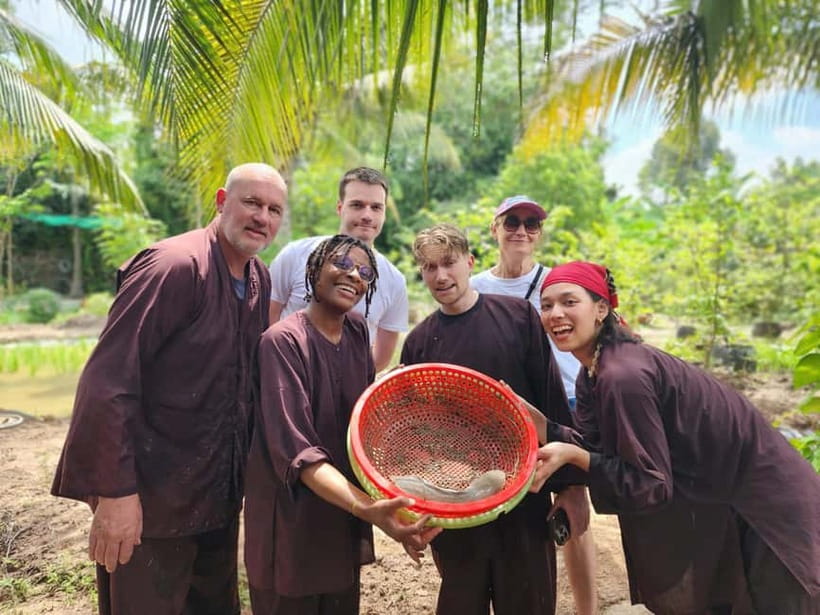
This isn’t a slow “rest and drift” Mekong tour. It’s a classic two-day combo that stacks two different Vietnam stories in one package: underground wartime survival at Cu Chi, then river-and-farm daily life in Long An and the My Tho area of the Mekong Delta.
For you, the value is that you get transitions built in. The itinerary moves from history (tunnels, traps, underground living zones) to outdoor rhythm (rice fields, orchard cycling, waterways by kayak). You’re not spending your time figuring out routes, buying tickets, or translating every tiny step. You’re also getting meals included all the way through, which matters in Vietnam where food can be delicious but can also be a time trap if you’re always searching for your next meal.
You’ll want to be comfortable with a busy day. Even the “easy” moments—like pagoda viewing and boat rides—fit into a schedule where you’re constantly moving to the next stop.
You can also read our reviews of more tours and experiences in Phu Quoc.
Day 1: Cu Chi Tunnels, documentary viewing, traps, and guerilla food
Your day starts with pickup around 7:30am in District 1, then the drive to Cu Chi (about 70 km, roughly 1.5 hours) gets you out of HCMC traffic and into the long-day mindset.
By 9:30am, you watch a documentary film. That’s not filler. It’s your baseline. It helps you understand what you’re about to walk through: a tunnel system designed for survival, movement, and staying hidden during war conditions.
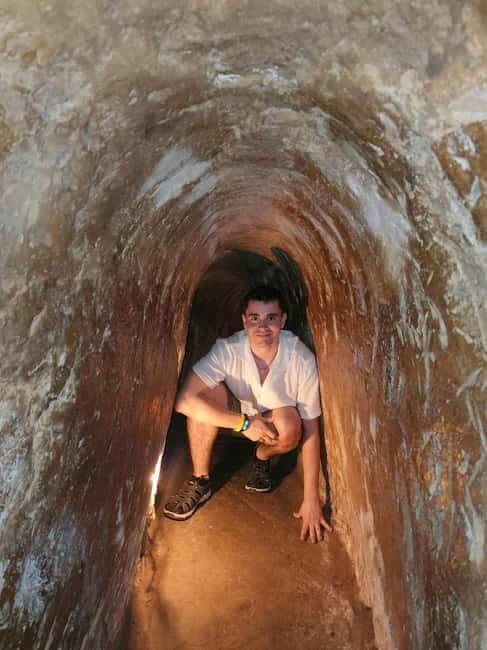
After the film, you move into the constructed living areas. This is where the experience becomes more visual and less abstract. You’ll see setups such as kitchens, bedrooms, storage spaces, weapons-factory-style areas, field-hospital zones, and command centers—all shown as parts of the underground “town” people relied on. Then you get the tour angle that really sticks: the explanation of how the system worked, plus the dangerous trap doors and maze-like design that made the tunnels hard to navigate and hard to attack.
Food is part of the lesson too. You’ll taste special tea and tapioca, described as guerilla’s food during the war. Even if you’re not a foodie, it’s a useful link between the survival story and what people could realistically eat and share underground.
Consideration: This part of the day is intense because the topic is intense. If you’re sensitive to war-related details, go in knowing the experience is designed to show the destructive power of bomb attacks and the way the tunnels responded to that threat.
Day 1: Long An countryside to Vinh Trang Pagoda and My Tho river cruising
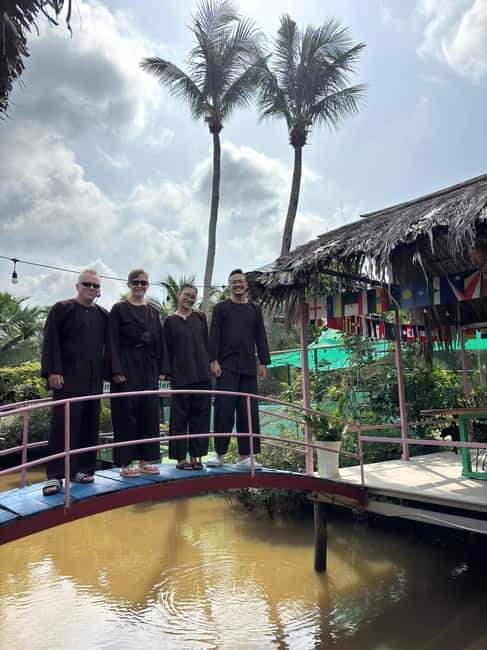
Around 12:10pm, you return toward the Mekong Delta area in Long An Province and check into the Family Tiny Garden homestay. You’ll have time for a BBQ meal soon after, and then the itinerary pivots to culture.
Next stop: Vinh Trang Pagoda, described as the largest ancient temple in the Mekong Delta. This stop breaks up the day because it shifts the mood. It’s not about motion and survival; it’s about seeing a major religious site in the region that many people connect with daily life and heritage.
After the pagoda visit, you move to My Tho and check into a cruise. Then you’re back on the water with a leisurely boat ride on the Tien River. This stretch is one of the more relaxing blocks of the day. You get fresh air and you can watch the peaceful flow of local life from the water instead of from a road.
You’ll also see Vietnamese traditional music: Đàn Ca Tài Tử, which UNESCO recognized as Intangible Cultural Heritage in 2013. Even if you don’t know the genre, it’s a nice reminder that the Mekong Delta is not just scenery—it’s also performance, craft, and living tradition.
Then comes the canal work: you relax by hand-rowed sampan in small canals. This is a slower kind of sightseeing, and it helps you understand how narrow and interconnected the waterways really are.
Add-on stops that make the cruise feel grounded:
- A bee farm, where you can enjoy honey tea
- A visit to the largest coconut candy factory in the Mekong Delta, where you see how a familiar snack ties into local production
These aren’t “random shopping stops” in the itinerary. They’re production stops that connect the river economy to daily items you might otherwise treat as background.
Family Tiny Garden homestay night: A/C room, BBQ dinner, and karaoke energy
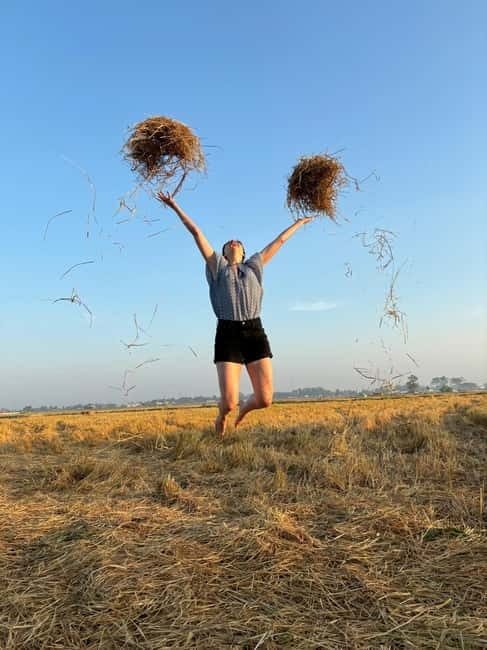
Once you’re back from the boat circuit, the day closes at the homestay. You’ll have a 6:30pm dinner with BBQ, which is the kind of included meal that keeps the tour feeling complete—no hunting for food after a long day.
You also get an overnight moment to actually settle in. The homestay includes an A/C room, which is huge on a two-day schedule. It means you can cool down, shower, and reset instead of spending your energy overheating and feeling behind.
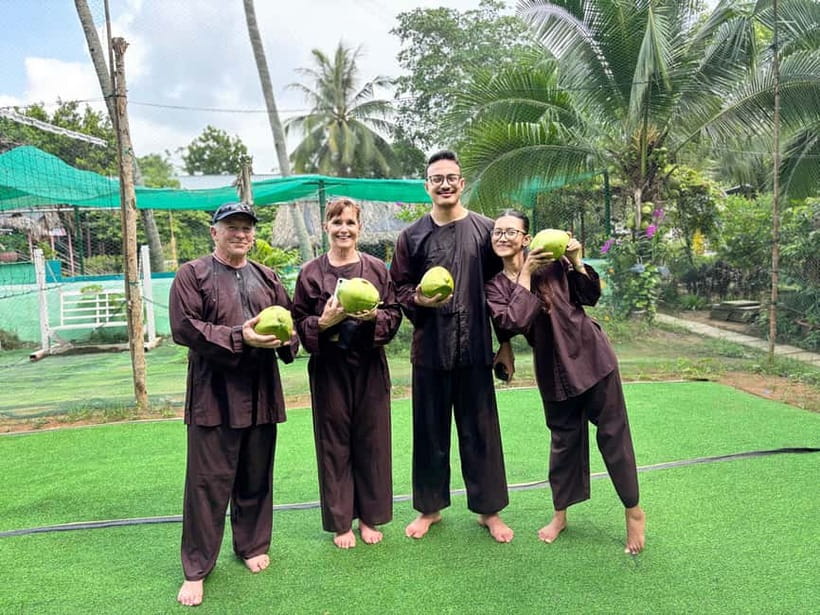
Then there’s the social side: you’ll have a chance to sing karaoke at the homestay. It’s not everyone’s cup of tea, but it adds a local, shared-experience feel. In one set of feedback, the guide’s upbeat personality—plus the willingness to sing or dance—made this kind of group moment much more enjoyable.
Day 2 at 5:30am: sunrise cycling through rice fields and fruit orchards
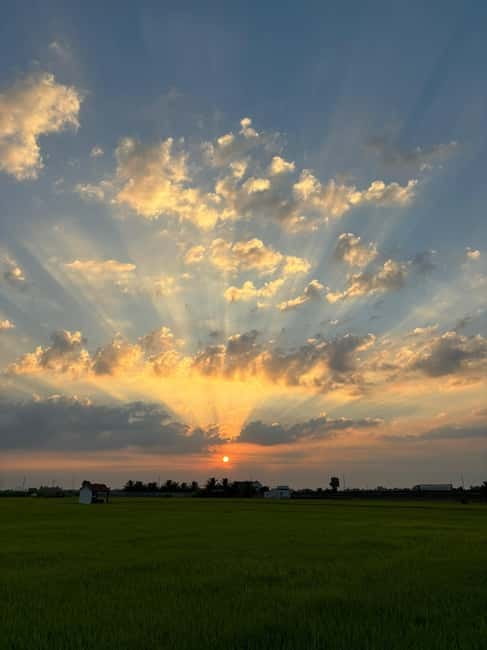
The second day starts early: 5:30am. You can ride bicycles to watch sunrise over rice fields, or you can do it after breakfast—so you have some flexibility.
This early block is where the Mekong countryside becomes real. Cycling through rice fields and farmland isn’t just a view stop. It’s movement at a human pace, and you’re more likely to notice small details: irrigation patterns, orchard edges, and how farms connect to waterways and villages.
Then you head into orchards and fruit areas. The itinerary includes places with crops like dragon fruit, grapefruit, oranges, and guava. Even if you don’t recognize every fruit, the mix gives you a sense of seasonal farming variety in the region.
Next you visit a local market, enjoy coffee, and have breakfast. This is a practical stop: it’s one of the easiest ways to see how locals eat and what’s for sale without needing to guess what you should try.
Consideration: Early mornings are a big part of the value here, but also a big part of the workload. If you’re not a morning person, plan for it mentally.
Kayaking adventure through the maze of waterways: what to expect on the water
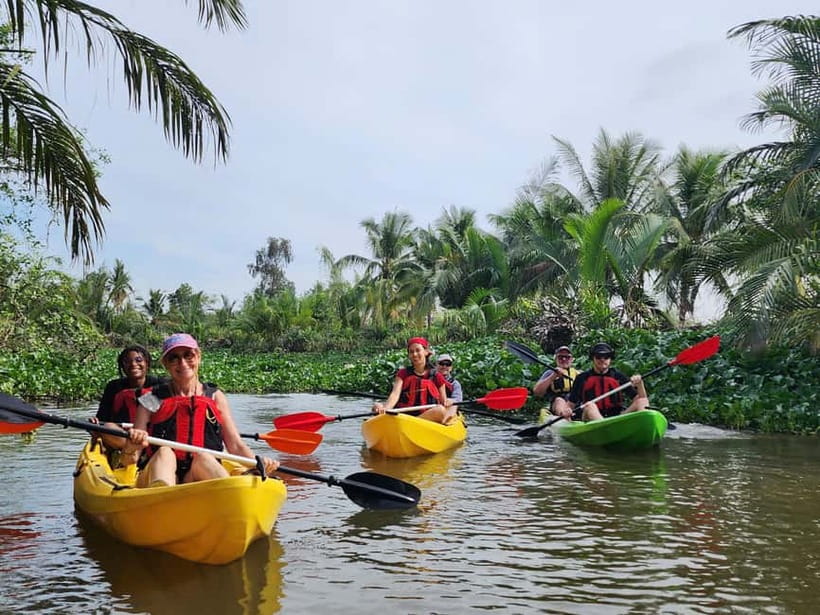
After breakfast and market time, you head into your main water activity: kayaking at about 8:30am. The itinerary describes it as going through a maze of waterways, which fits the theme of the whole tour: the Mekong isn’t a single river view. It’s a network.
This is the part of the tour that may feel different depending on your expectations. One feedback note pointed out that the water time can feel more like photo moments than deep, long swimming or extended beach time. That matches the itinerary structure: you’re getting kayaking, not a beach day.
So if your goal is exercise, gentle challenge, and lots of canal scenery, kayaking fits perfectly. If your goal is a big swim session, you might feel like you wanted more time in the water in a different way.
For comfort:
- Wear clothes you’re okay getting a little splashed
- Bring quick-dry items if you have them
- Keep your phone secured, because river air + water travel is not the safest combo for loose gear
Lunch, checkout, and getting back to HCMC
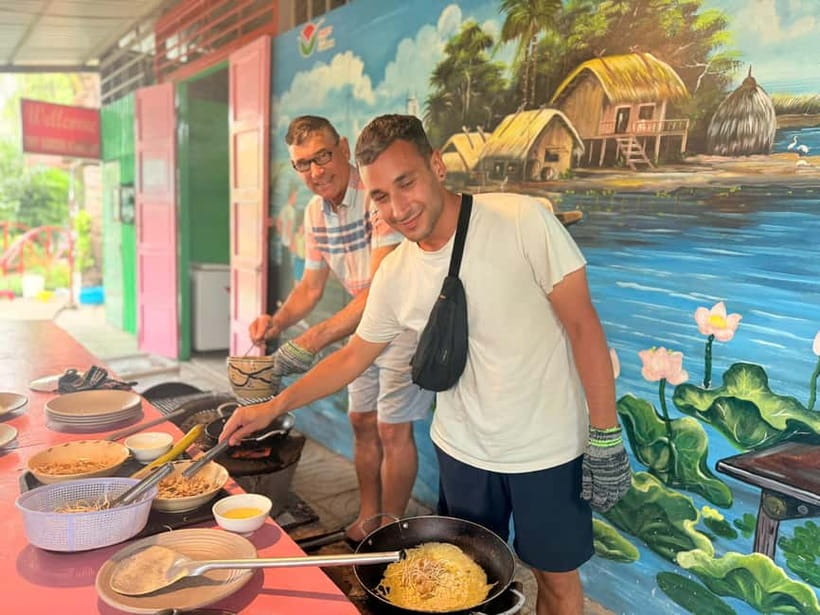
Around 11:50am, you have lunch. At 12:30pm you check out. Then you’re on the bus back to Ho Chi Minh City, with arrival around 2:30pm at the original pick-up point area.
That timing matters because it sets your post-tour options. You’ll likely have the rest of your day open to eat, rest, or continue traveling—without needing another overnight.
Price and value: is $110 fair for tunnels, homestay, meals, and transport?
At $110 per person, this tour is priced like a full package, not like a collection of separate tickets. What you’re getting included is the key:
- Private transport plus a bottle of mineral water
- Boat trip on the Mekong Delta
- Homestay Family Tiny Garden A/C room
- English guide
- Rowing boat and bicycle, plus kayaking and bike
- All meals (breakfast, lunch, dinner across the two days)
- All entrance fees and tax
- Travel insurance
That adds up quickly when you compare it to building your own route. The big value isn’t just the number of activities—it’s that meals, entrance fees, and transport are handled. You spend less time planning and more time experiencing.
Where the value lands for you:
- If you want both Cu Chi and the Mekong in one trip, the package saves real effort.
- If you’d otherwise struggle to coordinate river transport + homestay logistics, this handles that complexity.
- If you like guided storytelling, you’re paying for an interpretation of tunnels and canal life, not just transport.
The tradeoff is you’re committing to a tight schedule. You’re buying structure, and that structure can feel like a lot if you prefer slow travel.
Who this tour fits (and who might not enjoy it)
This is a strong fit if you:
- Want a history + nature mix in just two days
- Like active sightseeing: cycling, kayaking, and time on the water
- Appreciate guided context, especially for Cu Chi Tunnels
- Are comfortable with an early start and a full itinerary
- Want included meals so you can focus on the experience
It may not be ideal if you:
- Want a relaxed beach-style day on the water (kayaking is the focus, and swimming time is limited)
- Dislike packed schedules with back-to-back stops
- Need very straightforward language guidance all the time. The guide and explanations can be split between Vietnamese and English, so you’ll get basic information but you should be ready to follow along actively.
Also, it’s not suitable for people over 95 years, so take that seriously when assessing your own comfort and mobility.
Should you book VIP New Tour: Cu Chi Tunnels and Mekong Delta Homestay?
If your ideal Vietnam weekend includes Cu Chi Tunnels plus real Mekong countryside time, I’d say yes. The combo is well-matched: tunnels give you a powerful story, then the Mekong slows you down with waterways, orchards, pagoda culture, and homestay life.
Book it if you like guided energy and you’re okay with a busy pace. One highlight that really pops in the experience is the guide’s lively attitude—people noted a guide named Hieu as especially helpful and willing to keep things fun, even with singing or dancing.
Skip or look around if you want lots of swimming time, a slow itinerary, or zero early mornings. This tour is built around movement and structure, not leisure.
FAQ
Where does the tour start and where does it end?
The tour starts at 67 Thu Khoa Huan Street, District 1, HCMC, Vietnam. It ends back at the meeting point.
What’s included in the $110 price?
The price includes private transport, a bottle of mineral water, a boat trip on the Mekong Delta, a Family Tiny Garden A/C room, an English guide, rowing boat and bicycle, kayaking and bike, all meals (breakfast, lunch, dinner), entrance fees and tax, and travel insurance.
What happens on Day 1 after you arrive at Cu Chi?
After arriving around 9:30am, you watch a documentary film, then see constructed living areas like kitchens, bedrooms, storage, weapons factories, field hospitals, and command centers. You also learn about hidden trap doors and dangerous traps. You’ll taste tea and tapioca, then return to the Mekong Delta area.
Do you get to visit Vinh Trang Pagoda?
Yes. After checking in and having BBQ in the Mekong Delta area, you’ll visit Vinh Trang Pagoda, described as the largest ancient temple in the Mekong Delta.
What activities are planned besides the tunnels?
Besides Cu Chi Tunnels, you’ll do cycling, rowing (sampan in small canals), kayaking through waterways, and visits including a bee farm (honey tea) and a coconut candy factory. You’ll also enjoy BBQ meals and karaoke at the homestay.
What languages does the tour use?
The tour uses English and Vietnamese. An English guide is included.
Is the tour suitable for elderly travelers?
It’s listed as not suitable for people over 95 years.