REVIEW · MEXICO CITY
National Museum of Anthropology Early access with VIP Archaeologist
Book on Viator →Operated by Paseos Olmedo · Bookable on Viator
World-class artifacts deserve a guide. This 2.5-hour visit to the National Museum of Anthropology feels more focused than wandering on your own, especially with the VIP Archaeologist-style framing and a small group.
I especially like two things: you get real context for the big icons, and the setting itself is a reason to go. The museum’s standout architecture includes the famous central pond and the Umbrella structure that marks the building’s layout in a memorable way.
One consideration: the tour’s “early access” promise may not feel that way in practice, and you could see a late start if traffic and museum entry steps take longer than expected. In other words, bring patience for a smooth start, not perfect timing.
In This Review
- Key highlights worth planning for
- The Museum That Makes Chapultepec Feel Like a World Stage
- Meeting at Starbucks on Reforma: Simple Start, Big Museum Energy
- Getting Oriented Fast With the Museum’s Courtyard and the Umbrella
- The Core Highlights: What the Tour Helps You Actually Notice
- Stone of the Sun (Aztec Calendar)
- Statue of Coatlicue
- Olmec Colossal Heads
- Tula Atlantean Figures
- Zapotec Mask of the God Zapotec Bat
- “VIP Archaeologist” Style: Science-First, Not Alien-Theory Storytime
- English-Led and Small Group: Why This Changes the Feel
- Price and What You’re Getting for $25
- Timing, Wear, and How to Make the Most of 2.5 Hours
- Who Should Book This Tour
- Should You Book This National Museum of Anthropology Early Access Tour?
- FAQ
- Where does the tour start?
- What time does the tour start?
- How long is the tour?
- What is the price?
- Is museum admission included?
- What language is the tour offered in?
- How big is the group?
- Does the tour end at the same place?
- Is early access actually guaranteed?
- Is the activity accessible and are service animals allowed?
- Can I cancel for a refund?
Key highlights worth planning for
- Chapultepec location: You’re in the museum’s iconic forest setting, not a random downtown stop
- Umbrella architecture: The courtyard pond and water-feeding column make orientation easy
- Must-see objects: Stone of the Sun, Coatlicue, Olmec colossal heads, and more
- Science-first explanations: The guide keeps interpretations tied to what museums and scholarship can support
- Small group size: Up to 11 people helps you actually hear answers
- English-led: Practical for most visitors who want clear explanations without switching gears
The Museum That Makes Chapultepec Feel Like a World Stage
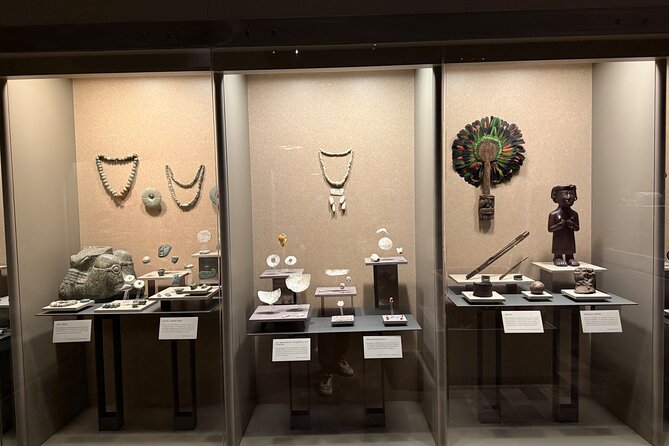
The National Museum of Anthropology is one of those places where the building, the artifacts, and the story all pull in the same direction. It opened in 1964 in the Chapultepec Forest area, and it’s still the largest and most visited museum in Mexico—so yes, expect crowds. But here’s the upside: crowds are exactly why a guided format helps. You don’t have to guess where to start or how long to spend.
The museum also has real cultural weight. In 2025, it received the Princess of Asturias de la Concordia Award for its role in conserving, researching, and sharing indigenous heritage. That matters because the tour focus isn’t just on seeing famous objects. It’s on understanding why these collections exist, how they were studied, and how you’re supposed to respect the cultures behind them.
And Chapultepec itself gives you a built-in bonus. Even if you’re short on time, arriving in this forest setting makes the day feel more like an experience than a checklist. You’ll walk out thinking you saw Mexico in layers: landscape first, museum next, then the artifacts.
You can also read our reviews of more tours and experiences in Mexico City.


Meeting at Starbucks on Reforma: Simple Start, Big Museum Energy
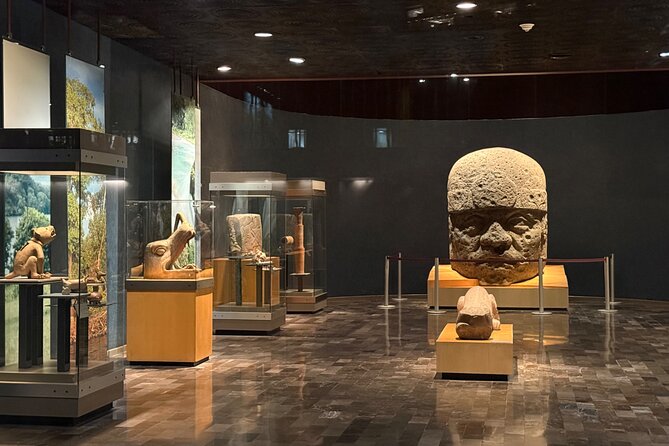
This tour meets at Starbucks on Av. P.º de la Reforma s/n, in the Bosque de Chapultepec area (I Secc). The start time is listed as 8:40 am, and it ends back at the same meeting point. That round-trip setup is handy. You don’t have to figure out a second pickup point after the museum.
It’s also close to public transportation, which helps if you’re juggling taxis, metro lines, or just dodging the morning traffic mood in Mexico City.
Now, about timing. Even when the meeting time is early, you can still face delays. Mexico City traffic can mess with meet-and-greet moments, and big museums have their own internal processes for entry and security. One issue that came up is that the group didn’t always start exactly at 8:40 am, with a later start in at least one case. So I’d treat early morning as a best-effort target, not a guaranteed clockwork promise.
Practical tip: arrive a little before the meeting time, and give yourself buffer around the entrance process once you reach the museum. When you’re dealing with a museum of this size, “start on time” is less about the guide and more about real-world entry flow.
Getting Oriented Fast With the Museum’s Courtyard and the Umbrella
One reason this museum is easier to enjoy with a guide is that the architecture practically teaches you where you are. The building, designed by Pedro Ramírez Vázquez, Jorge Campuzano, and Rafael Mijares, wraps around a central courtyard with a pond. In the middle is the emblematic Umbrella—essentially a column with a roof that releases water in a waterfall effect.
When you see it described, it sounds like a cool photo spot. When you’re there, it becomes a mental anchor. It helps you orient yourself so you don’t lose time drifting between rooms.
This is the kind of feature that matters for value. If you’re spending a fixed 2 hours 30 minutes in a museum this large, you need efficient navigation. Architecture that naturally guides people reduces stress, and it also helps you focus on what you came for: the artifacts and the explanations.
The Core Highlights: What the Tour Helps You Actually Notice
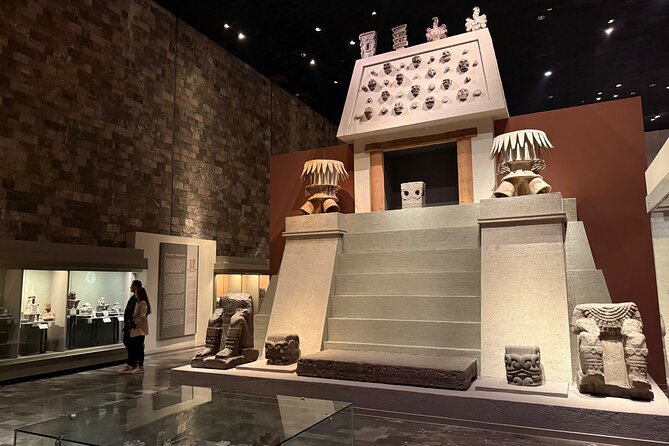
The tour time is short enough that you don’t want a vague visit. This experience is built around key stops—famous pieces people come from all over the world to see, plus the cultural context that makes them more than museum furniture.
Here are the big names you can expect to encounter, and why they’re worth your attention:
Stone of the Sun (Aztec Calendar)
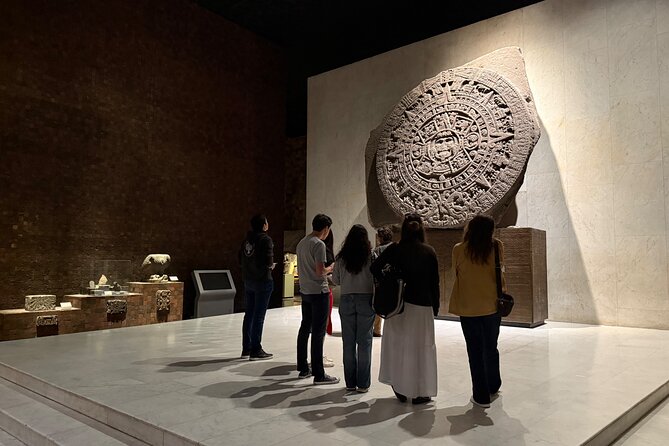
The Stone of the Sun—also called the Aztec Calendar—is a 24-ton monolith. That weight is hard to imagine until you’re near it. A good guide helps you read it as a system of symbols, not just a carved slab.
What I like about having a guide here is simple: without context, it’s easy to look for one “main” image and miss how the whole design works together. With explanations, you can spend your limited time understanding what you’re looking at.




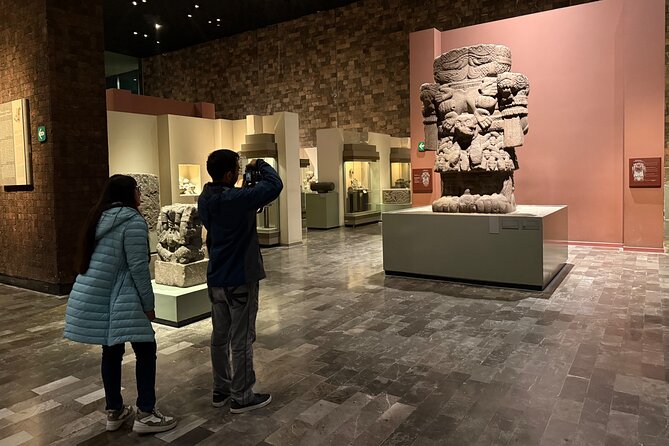
Statue of Coatlicue
Coatlicue is an Aztec goddess associated with life and death. This isn’t the kind of figure you just glance at. A responsible walkthrough treats her as a major religious and symbolic figure rather than a scary decoration.
If you’re sensitive to how cultures are represented, this matters. The tour’s framing leans toward respect and science-based interpretation, so you’re less likely to get sensationalized talking points.
Olmec Colossal Heads
The Olmec colossal heads are iconic, and they can also be confusing if you don’t know what to ask. With a guide, you get better chances to connect the physical object to the civilization it represents.
These are the kinds of pieces that can derail a self-guided visit, because people either rush through them or stare without knowing what they’re trying to understand.
Tula Atlantean Figures
The Tula Atlanteans help widen the timeline and show how different cultures shaped the region’s art language. They also serve as useful contrast to the more widely recognized Aztec pieces.
Zapotec Mask of the God Zapotec Bat
Masks often tell you more about beliefs than about style. This Zapotec Bat-related god mask can click into place when you hear it explained in relation to the broader cultural system.
In a museum with dozens of rooms, this kind of targeted set of artworks is how you leave with clarity instead of exhaustion.
“VIP Archaeologist” Style: Science-First, Not Alien-Theory Storytime
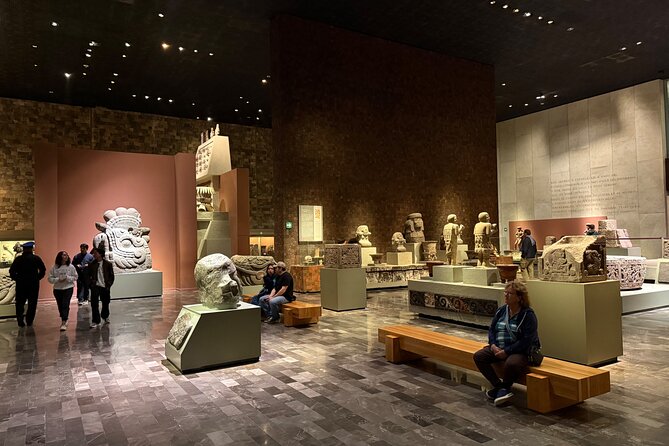
A key theme in the experience is scientific interpretation. If you’re expecting sci-fi takes, this likely isn’t your tour.
One guide mentioned in the provided info is archaeologist Rodolfo, described as having the highest certifications. He also addressed an issue that sometimes pops up in museums: visitors linking Mexican cultural artifacts to aliens or claims that can’t be proven through available scholarship. The approach here is to keep explanations anchored to what museum records and research can support.
That might sound like a limitation, but for many people it’s exactly the point. When you’re looking at objects that are emotionally and culturally significant, it’s better to get careful context than wild guessing. A science-first guide approach can also make the museum labels feel more useful. Instead of just reading dates and names, you can connect them to what you’re seeing.
And it’s not only about rejecting ideas. The guide role also seems to help with storytelling that stays grounded. That showed up in the praise for guides such as Iván and Raúl Hernández. Their strengths were about giving background and structure—so you walk out understanding why the collection is arranged the way it is.
One more practical note: the museum is huge, so a guide can’t cover everything. A science-first guide helps you choose what matters most, which is half the value of any “VIP” format.
English-Led and Small Group: Why This Changes the Feel
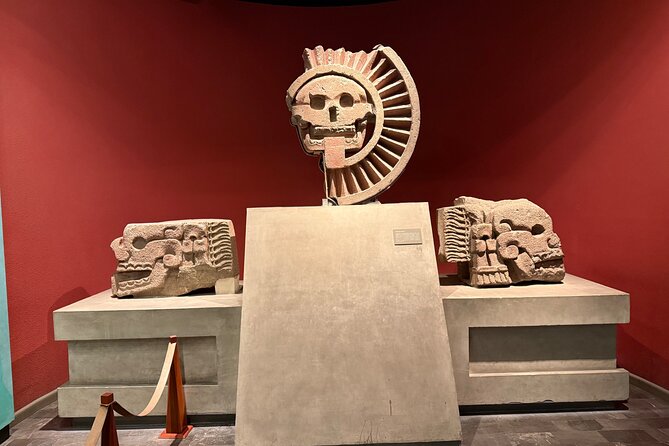
This tour is offered in English and capped at a maximum of 11 travelers. That small group size isn’t just a comfort feature. It affects how the visit works.
With 11 people, questions can actually land. You can hear explanations without leaning into someone else’s shoulder. It also means the guide can adjust pacing if a group gets curious about one culture or one object.
When you’re visiting a museum known for overwhelming scale, smaller group structure is a real advantage. It turns a potentially exhausting day into something manageable.
Price and What You’re Getting for $25
At $25 per person, this experience is priced like a “smart add-on” rather than a premium private tour. For that money, you get:
- A 2 hours 30 minutes guided visit in English
- Museum admission included
- A small group setting (max 11)
You’re basically paying for two things: interpretation and efficiency. Museum entry alone can be a big chunk of the cost in many major destinations. With admission included, you’re not paying to get inside and then paying again for the guide. That helps make the whole thing feel fair.
Now, about whether “early access” equals value. If you’re expecting a major head-start over regular entry, it might not happen in a dramatic way depending on traffic and internal museum procedures. But the tour still offers value because it organizes your time inside. In a museum this large, “being early” can matter less than “knowing where to focus.”
So my take on value: if you like clear explanations and you want to see the biggest artifacts without losing your afternoon, this is a solid deal.
Timing, Wear, and How to Make the Most of 2.5 Hours
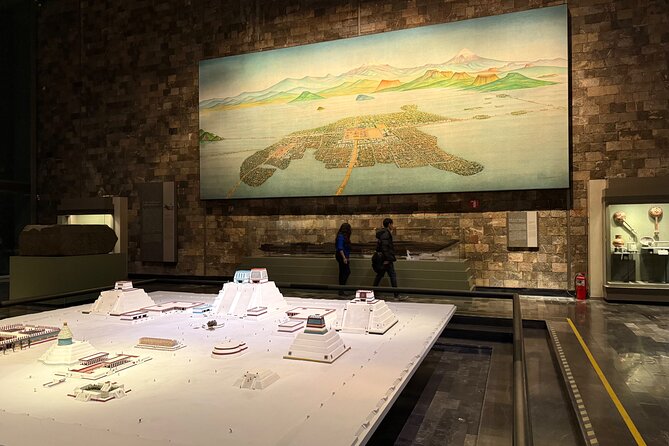
Two and a half hours inside the National Museum of Anthropology is enough for a strong highlights route. It is not enough for full coverage of everything the museum offers. That’s not a problem if you go in with the right mindset.
Wear comfortable shoes. Expect crowds. Plan on a bit of waiting at entry steps, especially at a major museum with security protocols. Even if the tour starts close to schedule, you can still lose a small amount of time to normal museum flow. That’s why a guide’s ability to keep things moving matters.
Also, if you’re a detail person, ask your guide one or two questions early. This tour seems designed to give background and structure, so you’ll get more out of the time if you steer toward what you care about—Maya context, symbolic meaning, or how artifacts relate to specific cultures.
And if you’re going in hoping for alien theory connections: keep your expectations anchored. The science-first approach means you’re more likely to get respectful, evidence-based interpretations.
Who Should Book This Tour
This tour fits best if you want:
- A first visit to the museum and you want direction fast
- A guided explanation of the major artifacts like the Stone of the Sun and Coatlicue
- English-led clarity instead of translating labels for hours
- A smaller group format where questions are realistic
It’s also a good pick for people who care about accurate interpretation. The tour’s approach—anchored in scholarship and respect—helps reduce the chance of sensational talking points.
If you’re the type who loves wandering every room, you might feel it’s too structured. But if your goal is to leave informed instead of overwhelmed, this setup makes sense.
Should You Book This National Museum of Anthropology Early Access Tour?
Yes, with one smart expectation reset.
Book it if you want a focused, English-led highlight route with admission included, a small group size, and explanations that keep to science-based context. The museum’s key symbolic pieces—the Umbrella architecture, the Stone of the Sun, Coatlicue, and the major pre-Hispanic works—are exactly the kind of highlights a guide can turn into understanding.
Don’t book it if you’re mainly chasing a guaranteed early entry advantage over everyone else. “Early access” may not feel dramatic once you factor in traffic and museum entry steps. In that case, your money is still likely well spent, but it’s the guided focus that delivers the value—not the promise of arriving long before the crowd.
If you want, tell me your travel dates and what you’re most interested in (Aztec, Maya, Olmec, Zapotec, or museum architecture). I can suggest how to prioritize your attention so you get the most from the 2.5-hour window.
FAQ
Where does the tour start?
It starts at Starbucks on Av. P.º de la Reforma s/n, Bosque de Chapultepec I Secc, Miguel Hidalgo, 11850 Ciudad de México, CDMX, Mexico.
What time does the tour start?
The listed start time is 8:40 am.
How long is the tour?
The duration is approximately 2 hours 30 minutes.
What is the price?
The price is $25.00 per person.
Is museum admission included?
Yes, admission ticket is included.
What language is the tour offered in?
The tour is offered in English.
How big is the group?
The experience has a maximum of 11 travelers.
Does the tour end at the same place?
Yes, it ends back at the meeting point.
Is early access actually guaranteed?
The tour description includes early access, but real start times can be affected by traffic and museum entry procedures.
Is the activity accessible and are service animals allowed?
Service animals are allowed, it is near public transportation, and most travelers can participate.
Can I cancel for a refund?
You can cancel up to 24 hours in advance for a full refund.