Luxor in one long, well-guided day. This private VIP tour strings together the West Bank’s royal tombs and the East Bank’s biggest temple sites, with a guide who keeps the story clear and moving. I love the fact that you’re not stuck bouncing between taxis all day, because the tour includes air-conditioned private transport plus bottled water.
Two things I especially like: the private Egyptology guide (not just a driver doing narration) and the value-boosting extras like lunch and admission tickets for the listed stops. One consideration: it’s a packed 10-hour day, so you’ll want good stamina for walking, heat, and going from tomb to temple back and forth.
In This Review
- Key Things That Make This Luxor VIP Day Worth It
- A Private VIP Day in Luxor That Actually Works With Your Time
- Price and Logistics: What $19.99 Really Buys You
- Valley of the Kings: Tomb Details That Make the West Bank Click
- Ramesses IX: Color, ceilings, and a giant goddess ceiling view
- Ramesses III: Side-room scenes and the Tomb of the Harpers feeling
- Merneptah (Tomb No. 8): Architecture changes you can actually spot
- Tutankhamun, KV62: Small chambers with big historical gravity
- Deir el Bahari and Colossi of Memnon: Hatshepsut’s Power in the Desert Air
- Karnak Temple: The Avenue, the Columns, and the Sacred Lake Route
- What you’ll see inside Karnak’s biggest moments
- Obelisks stops that feel small but matter
- Temple of Amun sections: more time than you think
- Luxor Temple: A “Living” Monument With Layers of Belief
- Guide Quality and Safety: Why the “Private” Part Matters in Luxor
- What a Packed 10 Hours Feels Like (And How to Make It Better)
- Who This Tour Fits Best
- Should You Book This Luxor East and West VIP Day Tour?
- FAQ
- How long is the Private VIP Day Tour in Luxor?
- What does the tour cost?
- Is pickup offered, and are there extra pickup fees?
- Is this tour private?
- What’s included in the tour price?
- What is not included?
- How far in advance is this usually booked?
- What sites are visited during the day?
- Do I get tickets digitally?
- What is the cancellation policy?
Key Things That Make This Luxor VIP Day Worth It
- Private guide focus: you get real explanations at each site, not a rushed script.
- Tickets + lunch included: fewer extras to chase after you arrive.
- East and West Bank in one shot: royal tombs in the morning, temple power on the East Bank later.
- Tomb-to-tomb variety: Ramesses IX, Ramesses III (with side-room scenes), Merneptah, and KV62 all differ in layout and artwork.
- Karnak in full context: Hypostyle Hall, the Avenue of Sphinxes, obelisks, and the Sacred Lake area are woven into one route.
- Well-paced transitions: the schedule includes time per stop so you can actually look, not just pass through.
A Private VIP Day in Luxor That Actually Works With Your Time
If you’re short on days in Egypt, Luxor can feel like a problem: everything important is far apart, and the best-known sites are spread across two banks. This tour solves that by combining the East Bank highlights (Karnak and Luxor Temple) with the West Bank centerpiece (Valley of the Kings and Deir el Bahari) in one organized sweep.
What makes it feel VIP isn’t a fancy theme. It’s the practical stuff: pickup is offered, you move in a private, air-conditioned vehicle, and the guide sets expectations so you know what you’re looking at before you’re standing in front of it. I also like that you don’t have to keep re-budgeting each stop. Lunch and bottled water are included, and admission is built into the experience for the listed sights.
The one thing to remember is the rhythm. Ten hours means real sightseeing, not a stroll. You’ll do multiple tomb visits and several Karnak sections, so you’ll need to tolerate crowded areas if they’re busy and be okay with short interior time.
You can also read our reviews of more tours and experiences in Luxor.

Price and Logistics: What $19.99 Really Buys You
At $19.99 per person for a 10-hour private VIP day, the big value isn’t magic pricing. It’s what’s included: private transportation, a private Egyptology guide, lunch, bottled water, and tickets for the stops on your selected route.
That matters because Luxor add-ons can snowball fast. If you had to independently coordinate transport, pay for guide time, and buy entries site-by-site, the “cheap” feeling can vanish quickly. Here, you’re paying for a full day of guided, ticketed access across major attractions—plus the comfort of not spending half your daylight hailing rides between banks.
There are a couple of charges to watch:
- $5 extra if pickup is from the airport.
- $10 extra if pickup is from the West Bank.
If you’re already staying on the East Bank, that’s an easy cost-saver. If you’re on the West Bank or arriving at the airport, factor those small fees into your plan.
Valley of the Kings: Tomb Details That Make the West Bank Click
The Valley of the Kings is where Luxor stops being “ancient places” and starts being a human story about power, belief, and artistry. Your day begins with a visit that typically lasts about 2 hours, including entry and time inside tombs.
Here’s the key: the tombs are not interchangeable. Each one has a different layout and emphasis, so the guide’s job is to help you read the ceilings, corridors, and wall programs instead of just taking photos in the dark.
Ramesses IX: Color, ceilings, and a giant goddess ceiling view
You spend about 20 minutes at the tomb of Ramesses IX. This one is known for being richly decorated and unusually detailed. One detail worth paying attention to is the ceiling above the sarcophagi, where the goddess Nut stretches across the space. Even when some paintings fade over time, the overall sense of ornament and pattern is strong.
Ramesses III: Side-room scenes and the Tomb of the Harpers feeling
Next is the tomb of Ramesses III (about 20 minutes). This is where you’ll likely notice a difference in how scenes are arranged. The main areas feature ritual texts linked to underworld journeys, while small side rooms include secular scenes—like foreign tributes. The tomb is also associated with blind harpists, which connects to its alternative name, Tomb of the Harpers.
There’s a practical takeaway here: don’t rush the side areas. The main corridor gets the attention, but the “extra” stories are often in those smaller rooms.


Merneptah (Tomb No. 8): Architecture changes you can actually spot
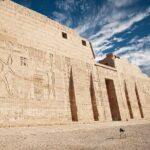
The tomb of Merneptah takes about 25 minutes. It’s described as a model of royal tombs, and it has architectural choices that make it feel more “designed” than older examples. A standout fact: it was discovered by Howard Carter in 1903.
If you like details, look for how the tomb moves away from older axis-jogging layouts. The entrance was also widened, and there’s a shift in how many lateral rooms you encounter versus how tall the corridors and rooms feel.
Tutankhamun, KV62: Small chambers with big historical gravity
Then comes Tutankhamun’s tomb (KV62). The tour route notes that it has four chambers plus an entrance staircase and corridor. The time you’ll spend here is typically short compared to how important the tomb is in modern history, so plan to focus on the structure and what’s still visible rather than expecting an hour-long museum vibe.
Deir el Bahari and Colossi of Memnon: Hatshepsut’s Power in the Desert Air
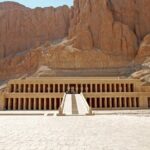
After the Valley of the Kings, the tour shifts to Deir el Bahari for about 1 hour 30 minutes at the Temple of Hatshepsut. This is a major contrast: fewer tight corridors, more monumental architecture on a dramatic ridge.
Hatshepsut matters in the story because she was the only woman ever to reign as Pharaoh. The tour also ties her dynasty to later rulers by noting that she was an ancestor of Tutankhamun. That connection gives your West Bank tomb visits extra emotional weight—like you’re seeing links between reigns, not isolated monuments.
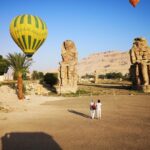
Then you move to the Colossi of Memnon (about 20 minutes). These are the two largest ancient statues in Egypt, dating to Amenhotep III. The statues are a good “breather” stop after tomb interiors. They’re also easier to read from a distance: you can appreciate scale first, then let the guide add historical meaning.
Karnak Temple: The Avenue, the Columns, and the Sacred Lake Route
Karnak is where many people feel overwhelmed, because it’s huge and built across different reigns. This tour helps by breaking Karnak into logical sections, typically totaling around 2 hours in one main visit plus additional Karnak-focused stops.
What you’ll see inside Karnak’s biggest moments
You’ll move through signature areas like:
- The Avenue of Sphinxes
- The Hypostyle Hall with 134 gigantic columns
- The Obelisks of Queen Hatshepsut and Thutmose I
- The Temple of Amon with lotus and papyrus designs
- Mentions of the Granite Scarab (Amenophis III) and the Sacred Lake area
Why this works: Karnak isn’t just one building. It’s layers of ambition and religion stacked over centuries. When the guide points out what came from which reign, you start to recognize repeating symbols—so your brain stops treating everything as random stone.
Obelisks stops that feel small but matter
There are two shorter stops focused on obelisks: one around the Obelisk of Queen Hatshepsut and another around the Obelisk of Thutmose I, each about 10 minutes. These are the moments to slow down. Obelisks are basically history turned into stone needles, and they’re easier to “read” when you’re not racing between long halls.
Temple of Amun sections: more time than you think
The tour includes additional time labeled for the Temple of Amun (about 30 minutes) and Temple of Ramesses III, Karnak (about 30 minutes). That second temple stop is valuable because Ramesses III is noted as someone who significantly expanded an already legendary space—so you can feel how later rulers added their mark to existing power.
Luxor Temple: A “Living” Monument With Layers of Belief
The final big stop is Luxor Temple for about 1 hour 30 minutes. This site is described as one of the world’s oldest living monuments, continuously used for about 4,000 years. That continuity is the whole point: you’re not just looking at an archaeological theme park. You’re walking through layered history where different religions built on older spaces.
The tour highlights several human-story details:
- priests associated with Alexander the Great reportedly carved hidden messages here
- Roman soldiers lived inside
- a mosque was built directly on the temple complex
Even if you don’t remember every historical name, the effect is clear. Luxor Temple feels different from the tombs. It’s louder. It’s outdoor stone that catches light, and the guide’s explanations give meaning to carvings and layouts you might otherwise miss.
Guide Quality and Safety: Why the “Private” Part Matters in Luxor
In Luxor, “private tour” can mean a lot of things: sometimes it just means you avoid a crowd, and the guide quality is still random. Here, the private guide focus is where the experience earns its name.
In the feedback connected to this tour style, Ahmed is repeatedly praised for being knowledgeable about Luxor and Egypt in general, plus for being careful and trustworthy—especially for a solo traveler who felt safe. Another recurring positive note is attentiveness and punctuality, with comments about being on time and making arrangements easier. One review even points out that the guide went beyond the expected scope when personal health issues came up.
What you should take from that: if you’re traveling alone or you want your day to run cleanly, choose this style of tour because you’re paying for guidance that helps you manage time, navigation, and site priorities.
What a Packed 10 Hours Feels Like (And How to Make It Better)
Let’s be honest: 10 hours across both banks can be a lot. You’ll be dealing with:
- tomb interiors that are cooler but darker
- temple exteriors with sun and glare
- repeated transitions, especially from the Valley of the Kings area toward Deir el Bahari and then back to the East Bank
So I’d plan smart.
- Wear comfortable shoes for uneven stone and lots of stairs.
- Bring water needs seriously; bottled water is included, but you still want to manage your intake.
- If you’re sensitive to heat, time your breaks with the short stops (like obelisk viewing) instead of waiting until you’re wiped out.
Also, don’t expect each stop to be equally long. Some sites are quick (like obelisks), while others—like Valley of the Kings and Karnak—get deeper attention. The tour is built to hit major “must-sees,” then give you just enough time to actually understand what’s in front of you.
Who This Tour Fits Best
This is a strong fit if:
- you want East and West Bank highlights in one day
- you like clear Egyptology explanations rather than drifting through on your own
- you care about comfort, since the day includes an air-conditioned vehicle, lunch, and bottled water
- you’re traveling solo and prefer a guide who keeps you feeling looked after
It might be less ideal if:
- you want a slow, unstructured day
- you hate short tomb visits or moving between multiple sites with little downtime
Should You Book This Luxor East and West VIP Day Tour?
I’d book it if you’re trying to make Luxor count within limited time. The value is real because you’re getting a private guide, transport, lunch, water, and tickets tied to major sites—without turning the day into a checklist of logistics.
I’d think twice only if you’re easily worn down by long days or you want very deep time at just one site. This tour spreads attention across Valley of the Kings, Hatshepsut, Karnak, and Luxor Temple, so the tradeoff is breadth over extreme depth at one single monument.
If that tradeoff matches your travel style, this is a solid, well-structured way to see Luxor without losing your day to delays.
FAQ
How long is the Private VIP Day Tour in Luxor?
It runs for about 10 hours.
What does the tour cost?
The price is $19.99 per person.
Is pickup offered, and are there extra pickup fees?
Pickup is offered. There is an extra charge of $5 if pickup is from the airport, and an extra charge of $10 if pickup is from the West Bank.
Is this tour private?
Yes. It is a private tour/activity, and only your group participates.
What’s included in the tour price?
The tour includes an air-conditioned vehicle, private transportation, a private Egyptology guide, lunch, bottled water, and tickets to the mentioned sightseeing if the option is selected.
What is not included?
Any extra sightseeing not mentioned is not included. There may also be pickup extras as listed (airport and West Bank), and those are separate charges.
How far in advance is this usually booked?
On average, it is booked about 5 days in advance.
What sites are visited during the day?
The route includes the Valley of the Kings (with tombs such as Ramesses IX, Ramesses III, Merneptah, and KV62 for Tutankhamun), Temple of Hatshepsut at Deir el Bahari, Colossi of Memnon, and multiple stops in the Karnak area plus Luxor Temple.
Do I get tickets digitally?
You get a mobile ticket.
What is the cancellation policy?
Free cancellation is available. You can cancel up to 24 hours in advance for a full refund; within 24 hours, there is no refund.