One day in Luxor can feel like time travel. This private VIP setup links the West Bank necropolis with the big East Bank temple complexes, all with hotel pickup and an air-conditioned vehicle so you can spend your energy on the monuments instead of logistics.
I especially like the way the tour is built around an Egyptologist-led route, so the stops are more than quick photo breaks. You’ll focus on the Valley of the Kings highlights and then move into major temple sights like Deir el Bahari, Karnak, and Luxor Temple.
The main drawback is simple: it’s a long day (about 8–10 hours) packed with several sites, and some tomb time is brief. If you want slow, museum-style wandering, you may wish you had an extra day—or at least more flexibility.
In This Review
- Key highlights worth your attention
- Private VIP Luxor day: why “all in one” works here
- Valley of the Kings: four tombs and the King Tut spotlight
- Ramses VI: color details, Nut on the ceiling, and a big sarcophagus
- Merenptah: architectural choices you can spot quickly
- Ramses III (KV 11): ritual texts, foreign tribute scenes, and the harpists
- Deir el Bahari and Hatshepsut: why this temple feels different
- Colossi of Memnon: a quick stop with big-statement scale
- Karnak Temples: the Hypostyle Hall and the 134-column effect
- Luxor Temple: the southern sanctuary bookend
- Hot air balloon add-on over the Nile: when it makes sense
- Price and value: what you’re really paying for
- What 8 to 10 hours feels like on the ground
- Should you book this Luxor East and West VIP tour?
- FAQ
- How long is the private VIP tour?
- What does the tour include besides the guided sites?
- Are entrance fees included?
- Do I get lunch on this tour?
- Is the hot air balloon included?
- Is this tour private?
- What sites are included on the East and West Bank?
- Is it all on one day?
- What ticket method do I receive?
- Can I cancel and get a full refund?
Key highlights worth your attention
- Hotel pickup, drop-off, and A/C: reduces stress, especially in the heat.
- Valley of the Kings tomb focus: multiple royal tomb visits, including famous names like King Tut, Ramses VI, Merenptah, and Ramses III.
- Hatshepsut at Deir el Bahari: one of Egypt’s most dramatic temple settings, linked to the same dynasty as Tutankhamen.
- Karnak Temples scale: Hypostyle Hall with 134 columns, plus obelisks and key temple areas.
- Flexible add-on option: hot air balloon over the Nile is offered as an extra thrill.
Private VIP Luxor day: why “all in one” works here
Luxor is one of those places where the monuments are spread out, and a half-day plan can feel like you’re just passing through. This East and West Bank all-day format fixes that. You get a single, guided flow: West Bank tomb country first, then the temple heavy hitters on the East Bank.
The private angle matters more than you might think. You’re not playing dodge-the-crowd with a big bus group. It also makes it easier for your guide to time the stops so you can see the essentials without racing from one ticket line to another.
And the car details are practical: pickup and drop-off from your Luxor hotel, plus air-conditioned transport. For a day that includes walking, stair steps, and low-lit tomb chambers, that comfort is real value, not fluff.
You can also read our reviews of more tours and experiences in Luxor.

Valley of the Kings: four tombs and the King Tut spotlight
The West Bank starts with the Necropolis of Thebes: the Valley of the Kings, where 62 pharaohs were buried. In this tour, you don’t try to “do everything.” Instead, you visit several royal tombs, with the day anchored around the tomb of Tutankhamen.
Tutankhamen’s tomb is famous for one big reason: it was discovered nearly intact in 1922 by Howard Carter. Even if you’ve seen photos before, being there in person changes the scale and the feeling. The key point isn’t just the fame—it’s the sense that this is an actual royal burial complex carved into the mountain.
The route also includes specific tombs with distinct artistic and architectural styles. You’re looking at the evolution of royal burial design across reigns, not just one “type” of tomb.
What you’ll want to watch for:
- The wall art quality and how it holds up over time (some details are clearer than others).
- The way tomb layouts can change—corridors, room shapes, and axis design can differ from one ruler’s burial to another.
- The visual “story” guides give you: ritual texts, protective symbolism, and scenes tied to kingship.
Time is the trade-off. You’ll get focused chunks—enough to understand what you’re seeing, but not enough for hours in one chamber. If you’re the kind of person who hates moving on before you’re done, plan to take notes and save the longer look for a return visit.
Ramses VI: color details, Nut on the ceiling, and a big sarcophagus
One of the tomb stops is dedicated to Ramses VI. This tomb is noted for its color and decoration, including the ceiling where the goddess Nut stretches across the space. That ceiling detail is the kind of element you’ll miss if you’re walking too fast.
The sarcophagus is described as one of the largest in the valley. Even with some deterioration in painted areas, the scale and craftsmanship still come through. It’s a good example of how Luxor doesn’t just do famous names—it also does impressive physical things: size, placement, and iconography you can actually register in a short visit.
If you’re the practical type, here’s how to get more out of a 30-minute tomb window: look up first, then scan the major figures and compositions, and finally check for inscriptions or decorative framing. Your guide’s explanations will help you connect what you’re seeing to the purpose of the tomb.
Merenptah: architectural choices you can spot quickly
Another stop is the Tomb of Merenptah (noted as Tomb 8). The guide’s focus here helps you see the tomb as design, not just walls.
The provided information points to shifts in tomb layout: fewer lateral rooms, taller corridors and chambers, and—most importantly—an alignment change. Instead of the jogged axis used in earlier tombs, the tomb is built on a single axis, and the entrance is made wider than earlier examples.
Also, this tomb is tied to Howard Carter’s discovery in 1903. That detail is useful because it anchors what you’re seeing to the broader excavation story, not just the ancient story.
In a tight schedule, your best approach is to treat each tomb like a “different answer to the same problem”: how do you design a royal afterlife space? Once you think that way, the architectural differences become the main event.
Ramses III (KV 11): ritual texts, foreign tribute scenes, and the harpists
If you want a tomb that feels busy, complex, and slightly surprising, Ramses III’s tomb (KV 11) is the one to pay attention to.
The tomb is described as a complex system and features colourful painted sunken reliefs with ritual texts such as the Litany of Ra and the Book of Gates, plus scenes of Ramses before the gods. That’s the “standard” royal afterlife program—but then the tomb adds something extra: secular scenes in small side rooms.
Those side scenes include foreign tributes such as detailed pottery imported from the Aegean, plus royal armoury items, boats, and blind harpists. That last group gives the tomb its alternative name: Tomb of the Harpers.
This is where the Egyptologist-style guidance earns its keep. Without it, you might only notice that there’s a lot of artwork. With it, you start understanding what the scenes are saying about power, reach, ceremony, and belief.

Deir el Bahari and Hatshepsut: why this temple feels different
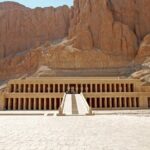
After the tombs, the tour shifts to the Temple of Queen Hatshepsut at Deir el Bahari. This is the moment when the day changes tone from enclosed chambers to open, layered architecture.
Hatshepsut is presented as the only woman to reign over Egypt as Pharaoh, and the temple is a major statement of that authority. The information also notes she was an ancestor of King Tutankhamen and belonged to the same dynasty. That connection helps the day feel linked rather than like random stops.
Deir el Bahari’s layout is visually dramatic, and you’ll likely feel it more than you expected. You don’t need a deep art degree to enjoy it. The steps, terraces, and strong lines do most of the work.
The main trade-off again is time. You’ll have about 1.5 hours here, which is enough to see the highlights and understand the theme, but not enough for slow wandering at every corner.
Colossi of Memnon: a quick stop with big-statement scale
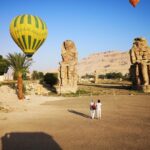
Next come the Colossi of Memnon, the two largest ancient statues in Egypt, dating to the era of King Amenhotep III. The timing is short—about 15 minutes—so you’re not treating this like a long viewpoint session.
What makes it worthwhile in a packed itinerary is the contrast. After tombs and a major temple complex, you’re hit with monumental sculpture: two figures that have survived for an age-long reason. Even in a short stop, your brain registers the scale.
If you want a better impact here, don’t only look straight at the statues. Spend a minute looking for how they sit in relation to the surrounding space. That helps you “measure” the monument instead of just snapping and moving on.
Karnak Temples: the Hypostyle Hall and the 134-column effect
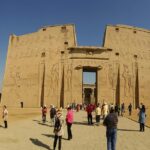
On the East Bank, the tour goes to Karnak Temples, widely treated as one of the world’s great architectural masterpieces. It’s a complex built across different reigns, which is exactly why Karnak can feel overwhelming without a plan.
This tour includes key elements:
- The Avenue of Sphinxes
- The Hypostyle Hall with 134 gigantic columns
- Obelisks linked to Queen Hatshepsut and Tutomosis I
- The Temple of Amon with lotus and papyrus designs
- The Granite Scarabeus of Amenophis III
- The Sacred Lake
The 2-hour time block is useful because it lets you see the major zones without rushing through everything at once. Still, Karnak is big. If you’re prone to getting tired in large ruins, this is where you’ll want to pace yourself and focus on the anchor features your guide points out.
Then there are extra short stops tied to the obelisks and temple areas (brief but helpful). Think of them as “checkpoints” that keep the giant site from feeling like a blur.
Luxor Temple: the southern sanctuary bookend
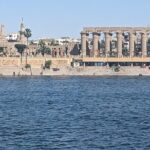
After lunch, the tour continues to Luxor Temple. It’s described as Ipet-resyt, the Southern Sanctuary, located about three kilometers south of Karnak and once linked to it by a processional way bordered with sphinxes.
The provided information also notes the oldest evidence dates to the 18th Dynasty. That makes Luxor Temple a useful counterpart to Karnak: Karnak is massive and layered. Luxor Temple feels like a more focused statement—still monumental, but easier to grasp quickly.
You’ll have about 1.5 hours here. This is a good amount if you want to slow down slightly at the end of a packed day, compare East Bank styles, and close the loop on the temple theme.
Hot air balloon add-on over the Nile: when it makes sense
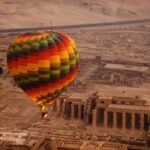
The tour offers an optional hot air balloon over the Nile. The promise here is simple: views from above with a strong sense of place.
Because it’s listed as an extra activity cost (not included), you should decide based on your priorities and budget. If you’ve never flown over major ancient sites from the sky, it can be a memorable way to break up a day of ground-level ruins.
If you do add it, plan your day so the balloon doesn’t force last-minute stress. With a schedule that already runs about 8–10 hours, you want the balloon to feel like a bonus, not a scramble.
Price and value: what you’re really paying for
The price is $37.98 per person. For that amount, the tour includes a lot of practical costs that often get added separately on your own:
- pickup and drop-off from Luxor hotels
- an English-speaking guide
- private transportation in an air-conditioned vehicle
- coffee and/or tea
- entrance fees only if you select the option
- lunch only if you select the option
So the best way to judge value is not the headline price. It’s what you’re choosing to bundle. If you select entrance fees and lunch, your day becomes easier to budget. If you skip them, you’ll pay those parts separately.
Two more realities to keep in mind:
- Tips are not included, so you’ll want to plan for them.
- The hot air balloon is optional, so it’s an extra cost.
One helpful plus: the tour is private, only your group participates. That can make the per-person value feel better than a seat on a bus, especially for couples or small families who want a smoother rhythm.
What 8 to 10 hours feels like on the ground
This is a full day: tomb country, then major temples. Expect multiple zones, lots of walking, and time splits that work like a series of chapters.
A realistic way to enjoy it is to treat each stop as a “focus session”:
- Valley of the Kings: history + architecture + key tomb names
- Hatshepsut: temple setting and royal authority
- Colossi: scale hit
- Karnak: huge site, but with anchor features
- Luxor Temple: the final temple statement
The short tomb windows aren’t a flaw if your goal is to get oriented and leave with a clear mental map of Luxor. But if your goal is slow contemplation, you might feel the pace.
Also, remember that the day includes both enclosed tomb spaces and open temple courtyards. You’ll likely feel that physical shift: light levels change, your footing changes, and the pace changes.
Should you book this Luxor East and West VIP tour?
Book it if you want a structured, private day that covers the big East and West Bank highlights with an Egyptologist-led explanation. It’s ideal for people who like getting their bearings fast and who prefer a clean plan with pickup, A/C transport, and a guide who helps you notice the meaningful details (like Nut’s ceiling in Ramses VI or the structural changes in Merenptah’s tomb).
Skip it (or consider shortening your wishlist) if you want lots of unscheduled time at one site. Karnak and the Valley of the Kings are deep places. A single day can’t replace a slower second visit.
If you fit the “see the essentials with comfort” style, this private VIP Luxor day is a strong way to get a lot of Egypt without the usual day-trip chaos.
FAQ
How long is the private VIP tour?
It runs about 8 to 10 hours (approx.).
What does the tour include besides the guided sites?
Pickup and drop-off from Luxor hotels, an English-speaking guide, private transportation in an air-conditioned vehicle, and coffee and/or tea.
Are entrance fees included?
Entrance fees are included only if you choose the option for them.
Do I get lunch on this tour?
Lunch is included only if you choose the lunch option.
Is the hot air balloon included?
No. The hot air balloon is offered as an optional activity cost.
Is this tour private?
Yes. It’s private, and only your group participates.
What sites are included on the East and West Bank?
Key stops include the Valley of the Kings (multiple tombs including Tutankhamen), Temple of Hatshepsut at Deir el Bahari, Colossi of Memnon, Karnak Temples, and Luxor Temple.
Is it all on one day?
Yes. It’s a single-day East and West Bank tour.
What ticket method do I receive?
You get a mobile ticket.
Can I cancel and get a full refund?
Yes, free cancellation is available. You can cancel up to 24 hours in advance for a full refund.