REVIEW · WEST YELLOWSTONE
Yellowstone Lower Loop VIP Full-Day Private Tour with Lunch
Book on Viator →Operated by Yellowstone’s Casanova Guided Tours · Bookable on Viator
Yellowstone can feel huge. This VIP private Lower Loop day strings together the park’s top geothermal stops and the best odds for wildlife, without you playing route planner all morning. Guides such as Jack, Ava, Alex, and Luke have a knack for pointing out what to watch, where to stand, and how to make the day fit your pace.
I love that you get real support on the ground: a professional, certified Adventure Guide, plus binoculars and spotting scopes when animals are far off. I also like the simple comfort factor built in, since breakfast/snacks and lunch are included along with tea, coffee, hot chocolate, cider, and plenty of drinks. One consideration: your tour price covers the guide and transportation, but Yellowstone park entry fees are not included, so you’ll want a plan for that before you go.
In This Review
- Key points at a glance
- Entering Yellowstone’s Lower Loop Without the Traffic Headache
- West Yellowstone Meeting Point and Pickup Choices That Matter
- Firehole Canyon Drive: A Short Scenic Warm-Up With Waterfall Views
- Norris Geyser Basin: Hot, Changeable, and Full of Geothermal Personality
- Gibbon Falls: The Photo Stop That Teaches You the Park’s Age
- Old Faithful: Easy Viewing, Ranger Forecasts, and the Best Sort of Waiting
- Fountain Paint Pot and Grand Prismatic Spring: Color, Texture, and Why No Two Features Match
- Yellowstone Lake Break: Cold Water Facts and View-First Stops
- Mud Volcano Area and the Caldera Story You Can See
- Grand Canyon of the Yellowstone: Upper and Lower Falls in Bright Geologic Colors
- Hayden Valley Wildlife: When Yellowstone Turns Into a Safari
- What You Get for $550: Value Beyond the Big Names
- Who Should Book This Yellowstone Lower Loop VIP Tour
- Should You Book It
- FAQ
- How long is the Yellowstone Lower Loop VIP tour?
- Where does the tour start and end?
- Is this a private tour?
- What is included in the price?
- Are Yellowstone park entry fees included?
- What are the main stops on the Lower Loop day?
- What is the tour language?
- Is pickup available?
- Are tips included for the guide?
- What is the cancellation and weather rule?
Key points at a glance
- Private vehicle, private pace: only your group rides together, so you can slow down or move on based on what you see.
- A lower-loop hit list: Norris Geyser Basin, Old Faithful, Fountain Paint Pot, Grand Prismatic Spring, and the canyon area.
- Wildlife-focused timing: Hayden Valley is built into the day for a strong chance at bison and other big animals.
- Tools for spotting: binoculars and spotting scopes are included so you do not miss distant activity.
- Food handled: breakfast/snacks/lunch plus warm drinks and sodas on request.
- Geology explained in plain words: every thermal stop comes with context for what you are seeing.
Entering Yellowstone’s Lower Loop Without the Traffic Headache
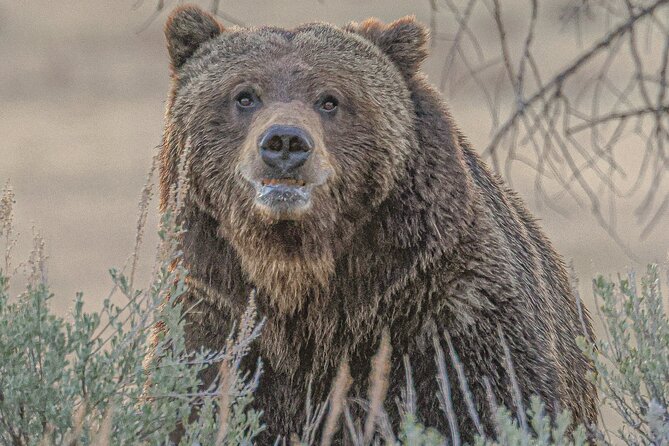
The Lower Loop is where Yellowstone gives you big “wow” fast, and doing it as a private day helps you actually enjoy the scenery instead of wrestling for parking. From West Yellowstone, you start and finish at the same meeting point, so the day stays clean and predictable: one vehicle, one guide, one group, and a route designed to hit the main features efficiently.
A private format also changes your experience in the small ways. You can ask questions when the guide is describing something specific, like why Norris can look different from one visit to the next. You can also linger at a waterfall or a geyser viewpoint if the light is right, instead of rushing because the shared schedule is stuck behind you.
If you like Yellowstone, you probably already know this park rewards patience. This tour leans into that with the right blend of scheduled stops and real-time flexibility for what shows up on the road—especially wildlife.
You can also read our reviews of more tours and experiences in West Yellowstone.
West Yellowstone Meeting Point and Pickup Choices That Matter
Your tour meets at the West Yellowstone Visitor Information Center & Chamber of Commerce at 30 Yellowstone Ave, West Yellowstone, MT 59758. The experience ends back at the same location, so you do not have to puzzle out how to get yourself between areas after the last viewpoint.
Pickup is available if you are staying inside Yellowstone, but it costs extra. That is worth considering if you are lodged deep in the park and would otherwise spend time driving to West Yellowstone in the morning.
Also note the “mobile ticket” detail. That usually makes check-in feel easier, since you are not hunting for paper tickets while you are trying to get ready for an early start.
Firehole Canyon Drive: A Short Scenic Warm-Up With Waterfall Views
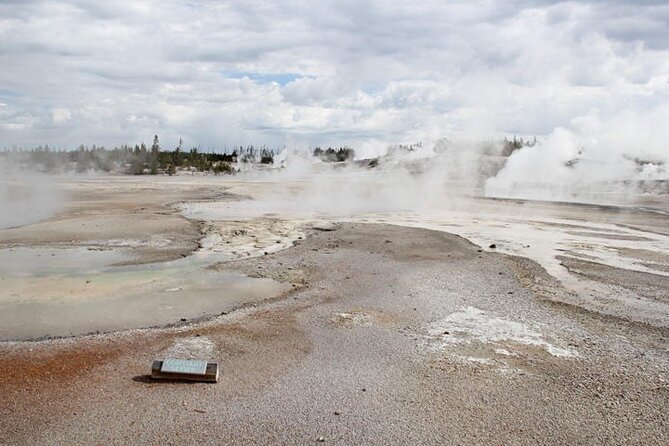
Before the big geothermal basins, there is a quick hit on Firehole Canyon Drive. This is a 2-mile one-way road off the Grand Loop south of Madison, and it is designed for moments rather than long hiking. You get a waterfall overlook and access to a swimming area on the drive.
Even if you do not plan to swim, this stop is useful because it sets the mood. Yellowstone thermal features are rarely “just one thing.” You often see steam, color, and water movement before you ever get to a geyser basin, and Firehole Canyon is a good way to start noticing those details.
The trade-off is time: this is not a destination you build a day around. It is a warm-up, so plan to save your energy for Norris and the major springs.
Norris Geyser Basin: Hot, Changeable, and Full of Geothermal Personality
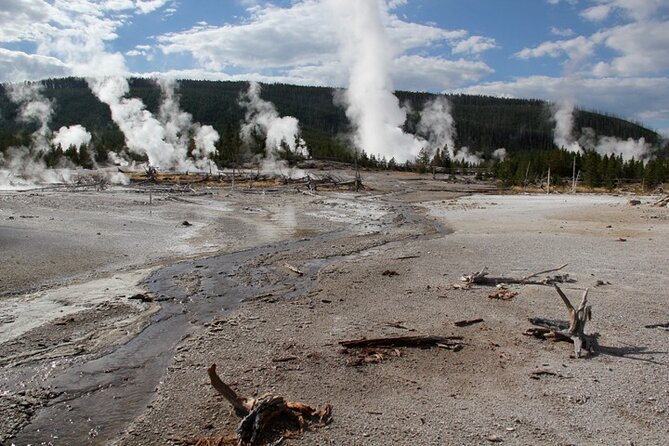
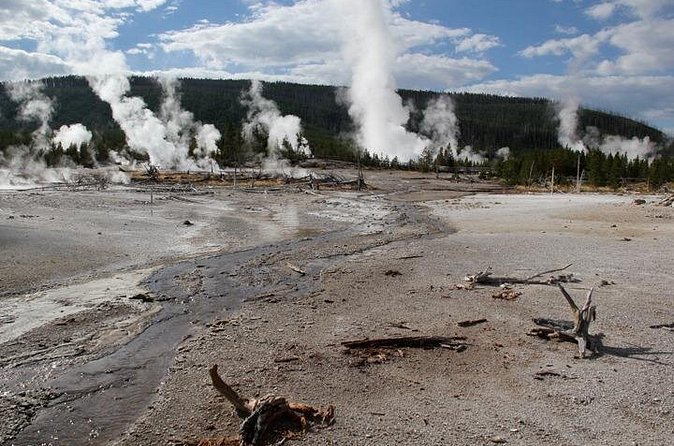
Norris Geyser Basin is one of those places where Yellowstone feels extreme. It is the hottest and most changeable thermal area in the park, which is a fancy way of saying things can look different during different visits. You will walk the trails at a pace that matches the group, covering about what you would see on the park’s 2 1/4 miles of trails.
This is also where the story gets fun. Norris is tied to the world’s tallest active geyser, and you will see colorful hot springs and even talk about microscopic life in a harsh environment. That mix matters because it helps you stop thinking of geysers as just fireworks. You start seeing them as part of a living system.
Practical tip: Norris can feel busy, but it is also easy to rush past details. With a guide holding the day together, you get help choosing what to photograph and what to watch for while the steam drifts and the thermal colors shift.
Gibbon Falls: The Photo Stop That Teaches You the Park’s Age
Gibbon Falls is a quick 15-minute stop, but it packs in good context. The falls drop 84 feet over part of a remnant from the Yellowstone caldera rim. That caldera was created by a massive volcanic eruption around 640,000 years ago.
Why it works as a stop on a Lower Loop tour: waterfalls are easy for everyone to enjoy, even if some in your group are tired from driving. Also, it gives you a geology anchor. After you see Norris and other thermal areas later, the falls start to feel like part of the same long timeline.
If you are the kind of traveler who loves “one strong photo and move on,” this is your moment.
Old Faithful: Easy Viewing, Ranger Forecasts, and the Best Sort of Waiting
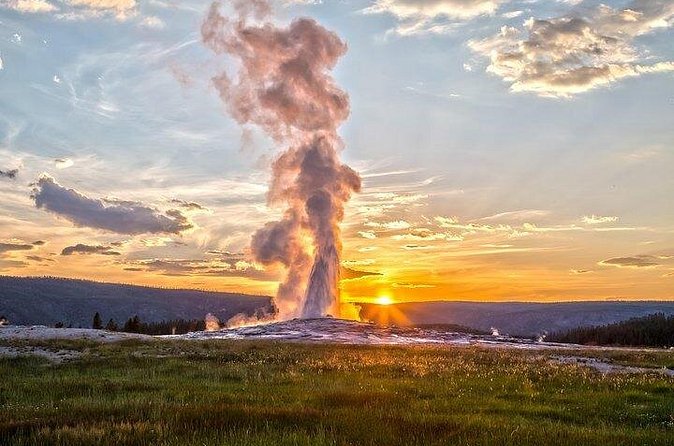
Old Faithful is located in Yellowstone’s Upper Geyser Basin in the southwest section of the park. It is one of the most accessible geothermal stops, and that accessibility is exactly why it works well on a day tour.
The viewing area is visitor-friendly, with bench seating, a large parking lot, and a ranger station that tracks eruption time, height, and length to predict the next eruption.
Here is the value for you: instead of guessing when to return to a viewpoint, you can time your listening and looking around the prediction. And with a guide, you are not just watching for a single eruption. You are learning what makes this geyser act the way it does, and you can compare the surrounding features as steam rises and fades.
Potential drawback: Old Faithful is popular, so it is not a quiet solitude stop. The upside is that it is set up so well that you can enjoy it without spending half your day navigating.
Fountain Paint Pot and Grand Prismatic Spring: Color, Texture, and Why No Two Features Match
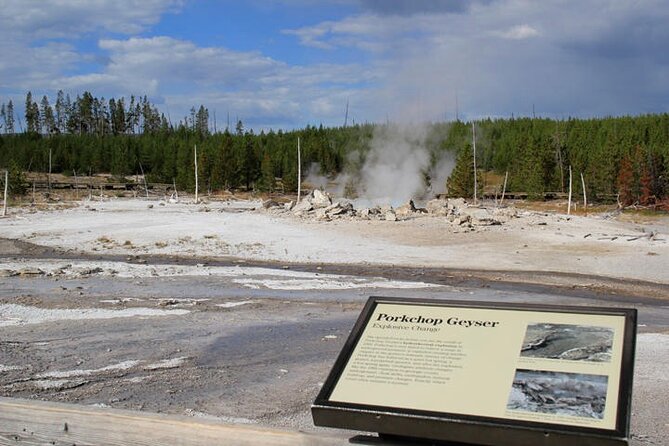
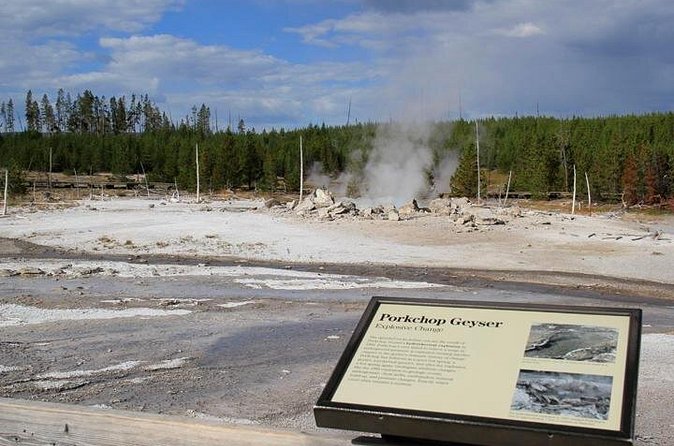
Fountain Paint Pot is on a trail where hydrothermal features show off Yellowstone’s active volcanic system. You will see features that fall into two broad categories: those with a great deal of water (hot springs and geysers) and those with limited water (mudpots and fumaroles). The details matter because your guide can point out why two “similar-looking” spots may behave differently.
The time here is about 45 minutes. That is long enough to slow down and actually notice patterns in the colors and textures, without turning into a long hike day.
Then comes Grand Prismatic Spring, the park’s largest hot spring. It is roughly 370 feet (112.8 m) in diameter and over 121 feet (37 m) deep. You also get an interesting historical thread: fur trapper Osborne Russell described it in 1839, which is tied to the earliest described thermal feature in Yellowstone that is definitely identifiable.
This is where the photo fever hits, so do not forget the simple rule: look for what is happening in the edges and not just the center. Steam drift and mineral color bands can shift how the whole scene reads from one minute to the next.
Yellowstone Lake Break: Cold Water Facts and View-First Stops
The day includes a pause connected to Yellowstone Lake. This is a high-elevation lake at 7,733 feet (2,357 m), and it is the largest high elevation lake in North America above 7,000 feet. It stretches about 20 miles long and 14 miles wide, with 141 miles of shoreline.
A few facts are worth remembering here because they affect how you experience the area. The lake freezes completely every winter in late December or early January. Even in warmer months, the water stays cold year-round, with an average temperature of about 41°F (5°C). Swimming is not recommended, and survival time in that water is estimated at only 20 to 30 minutes.
So think of Yellowstone Lake as a views-and-breathing break, not a swim stop. It is also a nice moment to regroup after several thermal areas, especially if your group includes kids or anyone who wants shorter bursts of walking.
Mud Volcano Area and the Caldera Story You Can See
Mud Volcano gives you a different Yellowstone vibe than the classic bright springs. Here you are close to resurgent domes, including Sour Creek Dome to the east. Resurgent domes are active areas of ground deformation, where the land moves up or down with magma chamber fluctuation. Scientists monitor these areas closely for clues about ongoing volcanic activity.
This stop helps you connect the dots between everything you have seen. Yellowstone is a volcano, and the caldera formed after a major eruption about 640,000 years ago. Over long periods, lava flows filled in and helped create the plateau you see across central Yellowstone.
At Mud Volcano, you are not just looking at heat. You are looking at movement and potential. The guide’s explanation turns random steam and muddy ground into a coherent story, so the stop feels more meaningful than a quick “walk past some steam.”
The time here is about 1 hour, which is a good balance between getting close enough to understand what you are seeing and keeping the day moving toward the canyon.
Grand Canyon of the Yellowstone: Upper and Lower Falls in Bright Geologic Colors
Next up is the Grand Canyon of the Yellowstone. This canyon is where you really notice Yellowstone’s complex geologic history in color and shape. In the canyon walls, puffs of steam mark hydrothermal features, so the canyon is not just rock and water. It also has thermal activity visible along the edges.
The Upper and Lower Falls are the stars. The Upper Falls and Lower Falls give you two different viewpoints on the same river system, and that contrast makes the canyon stop feel like more than one photo location.
Plan for about 45 minutes here. The viewing experience is time-efficient but still dramatic, and it is a strong peak moment for the day.
One note: the canyon stop is listed as admission not included. That means you should budget for any additional ticketed area fees tied to the viewpoint you are using.
Hayden Valley Wildlife: When Yellowstone Turns Into a Safari
If you want the animal side of Yellowstone, the Lower Loop is designed with Hayden Valley in mind. Hayden Valley is a large sub-alpine valley along the Yellowstone River between Yellowstone Falls and Yellowstone Lake. The valley floor is an ancient lake bed, from when Yellowstone Lake was much larger.
This matters because Hayden Valley is open enough for spotting from good pull-offs and overlooks. It also means wildlife can move across the area in ways that are easier to see than in deeper forest corridors.
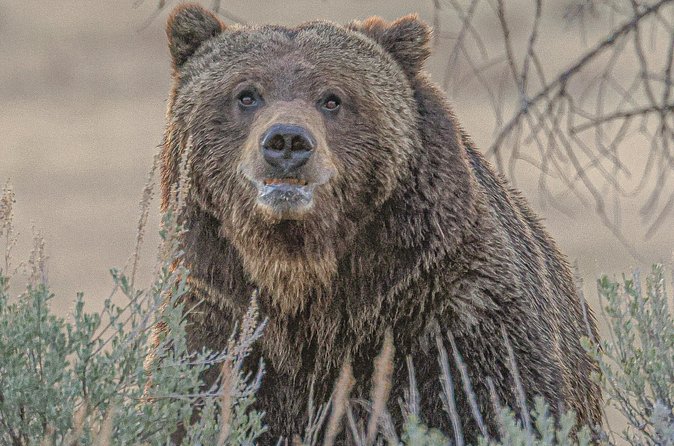
With binoculars and spotting scopes included, you can treat wildlife watching like a game instead of a frantic scan. If you see steam, color, and rock for hours, you start noticing that animals often appear in big open stretches right when you least expect it. Hayden Valley is built to reward that mindset.
A realistic expectation: wildlife viewing is never guaranteed. But this tour’s structure is aimed at giving you time at the right place in the right order, so you are not stuck only chasing geysers all day.
What You Get for $550: Value Beyond the Big Names
$550 per person is a premium price. The question is whether the day earns it. In this case, it comes down to what is included and what you avoid.
You get breakfast, snacks, and lunch, plus a range of drinks like tea, coffee, hot chocolate, cider, bottled water, and soda upon request. You also get bottled comfort in an air-conditioned vehicle, plus private transportation and a certified Adventure Guide.
The binoculars and spotting scopes also matter. They reduce the “we paid for a tour but we still cannot see the animals” problem. You are paying for the combination: access, time management, and a guide who can turn what you see into understanding.
What you pay separately is also clear:
- Yellowstone park entry fees (you are recommended to use the America the Beautiful Pass)
- Guide gratuity (10 to 20% is appreciated if the day goes well)
If you are traveling as a family or a small group where one car and one driver would still be a logistics headache, this private format can start to feel less expensive than it first sounds. When you subtract your own time spent planning, parking stress, and entry friction, the value sharpens.
Who Should Book This Yellowstone Lower Loop VIP Tour
This is a great fit if you want:
- A full day that hits the Lower Loop big geothermal icons plus wildlife odds
- A guide who can explain what you are seeing while you move from stop to stop
- A smoother experience for groups with kids, mixed ages, or anyone who wants a comfortable pace
From the guide style reflected in past experiences, I also think it works well for families who want a day that feels structured but not rigid. A good guide makes a long day feel short by managing timing and adjusting when someone needs to slow down.
If your travel style is pure DIY, you can absolutely do the Lower Loop on your own. But this tour is built for people who would rather spend the day looking out the window and listening than building a route.
Should You Book It
Yes, if your priority is a high-coverage Yellowstone day with a guide, food included, and less time figuring things out. I would especially consider it if you care about seeing wildlife in Hayden Valley and want the gear to actually spot animals instead of hoping for close sightings.
I would think twice if you are trying to minimize costs, since park entry fees and gratuity are extra, and this is priced as a premium private experience. Also, if you need total quiet and zero crowds, remember Old Faithful is a major hub.
If you can handle a full 8-hour day with multiple stops, this tour is a smart way to get a lot of Yellowstone in one go while still keeping it human-scale.
FAQ
How long is the Yellowstone Lower Loop VIP tour?
The tour runs about 8 hours.
Where does the tour start and end?
It starts and ends at the West Yellowstone Visitor Information Center & Chamber of Commerce, 30 Yellowstone Ave, West Yellowstone, MT 59758.
Is this a private tour?
Yes. Only your group participates.
What is included in the price?
The tour includes breakfast, snacks, and lunch, drinks like tea/coffee/hot chocolate/cider, bottled water, soda on request, air-conditioned vehicle, private transportation, a professional and certified Adventure Guide, and binoculars/spotting scopes.
Are Yellowstone park entry fees included?
No. Park entry fees are not included, and the guide suggests using an America the Beautiful Pass.
What are the main stops on the Lower Loop day?
You visit Norris Geyser Basin, Gibbon Falls, Old Faithful, Fountain Paint Pot, Grand Prismatic Spring, the Yellowstone Lake area for a stop, the Mud Volcano area, the Grand Canyon of the Yellowstone (Upper and Lower Falls), and a Hayden Valley wildlife-focused stop.
What is the tour language?
The tour is offered in English.
Is pickup available?
Pickup is offered for stays inside Yellowstone for an additional fee. Otherwise, you meet at the West Yellowstone Visitor Information Center.
Are tips included for the guide?
No. Gratuity is not included. If you had a great day, a 10–20% tip for guides is appreciated.
What is the cancellation and weather rule?
You can cancel for a full refund up to 24 hours before the experience. The tour requires good weather, and if it is canceled due to poor weather, you are offered another date or a full refund.