REVIEW · TOKYO
Exclusive Sumo Morning Practice in Tokyo with Photo Opportunity
Book on Viator →Operated by MagicalTrip Inc. · Bookable on Viator
Sumo starts early, and it is unforgettable. This small-group Tokyo experience lets you see a sumo stable’s morning practice in person, right around the Skytree area, and it’s timed so you still have most of the day free. You’ll watch the wrestlers warm up and spar as part of their routine, with chances to photograph the action and the athletes themselves.
What I like most is how close you get to real practice, not staged pageantry. I also love that you get clear explanations in English from your guide, with names you may run into like Hana, Kentake, or Yuki, so you understand why everything matters before you’re standing there watching it happen.
One thing to plan for: seating is first come, first served, so if you arrive late you may end up a few rows back from the front.
In This Review
- Key things to know before you go
- Sumo Morning Practice Near Skytree: The Real Value
- Your Start Time and Where to Meet at Oshiage Station
- What Happens During the Sumo Stable Visit (And What You Can Expect)
- Photo Opportunity: How to Get Great Shots Without Causing Chaos
- Seating Is First Come, First Served: Plan for the Best View
- Stable Rules: Only Tatami Areas Are Open to Visitors
- Heat and Comfort Tips for Summer Tokyo
- The Guide Experience: Clear Explanations Make a Difference
- How Long It Takes and What the Rest of Your Day Looks Like
- Price and Value: Why $99.10 Can Be Worth It
- Who This Tour Fits Best
- Should You Book This Tokyo Sumo Morning Practice?
- FAQ
- What time does the tour start?
- Where do I meet the guide?
- How long is the experience?
- Is seating guaranteed in the front?
- Can I take photos during the tour?
- What areas can visitors access inside the stable?
Key things to know before you go
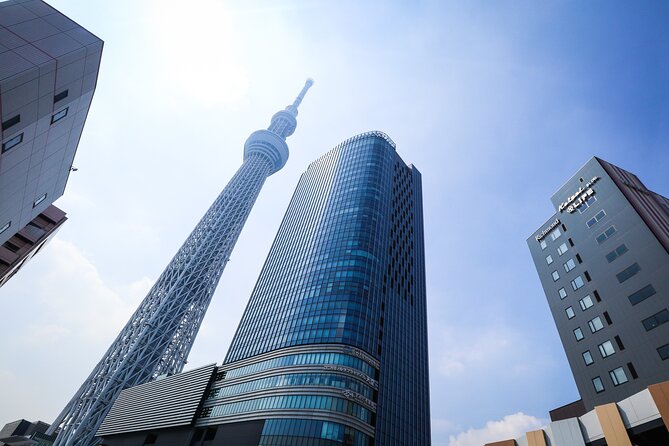
- Small group (max 10): you’ll get more attention and less crowd energy than big tours.
- Morning practice access: you’ll see warmups and sparring in a stable setting, not just a museum-style recap.
- Photo opportunity: you’ll get time for photos and also have a chance to pose with the wrestlers.
- Off-limits areas: only tatami areas are allowed; everything else is restricted.
- Meeting at Oshiage Station taxi stand: it’s inside the station rotary area, so it’s easier if you show up a few minutes early.
- Heat plan for summer: Tokyo can be hot and humid early, so bring water and a hat.
Sumo Morning Practice Near Skytree: The Real Value
This tour is short, but it gives you something that most Tokyo itineraries simply can’t: an authentic look at how sumo training actually feels in the morning. It’s not about checking a box. It’s about watching athletes in focus, repeating drills and sparring with real intensity while your guide explains what you’re seeing and what it represents in the culture.
The best part is the balance. You get access and visuals, but you also get context. That’s where the experience becomes more than photos. When you understand the pacing of warmups, the seriousness of training, and the idea behind sparring, your brain stops treating it like a performance and starts treating it like sport.
And because the group is capped at 10 people, the vibe is usually respectful and calm. You’re close enough to feel the atmosphere, but not packed in so tight that everyone’s just craning their necks.
You can also read our reviews of more tours and experiences in Tokyo.

Your Start Time and Where to Meet at Oshiage Station
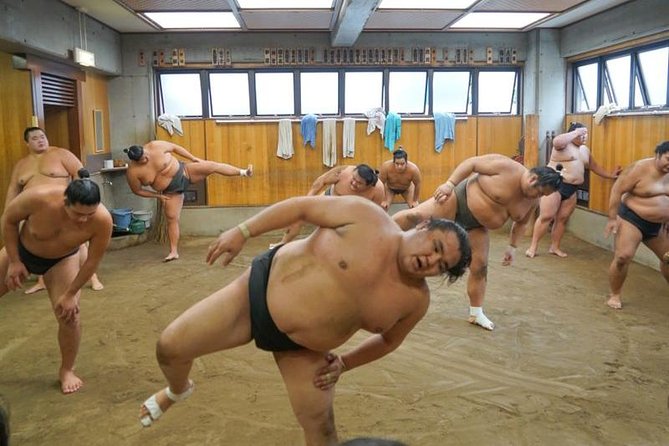
You meet at 8:00 am at the Taxi Stand inside the station rotary at Oshiage Station. The address is in Sumida City, near Oshiage (inside the station area), which matters because the meeting point is specific. If you’re using transit apps, double-check you’re heading to the taxi stand area rather than just the station entrance.
Why this timing and location matter: sumo stable schedules run on their own clock. The earlier start helps you catch the training when the wrestlers are actually in motion. It also means you’ll spend less of your day on logistics and more on the experience.
Practical tip: arrive a few minutes early, even if you think you’re on time. The morning meet-up point can be confusing at first, and the best tours go smoothly when you’re not rushing at the last second.
What Happens During the Sumo Stable Visit (And What You Can Expect)
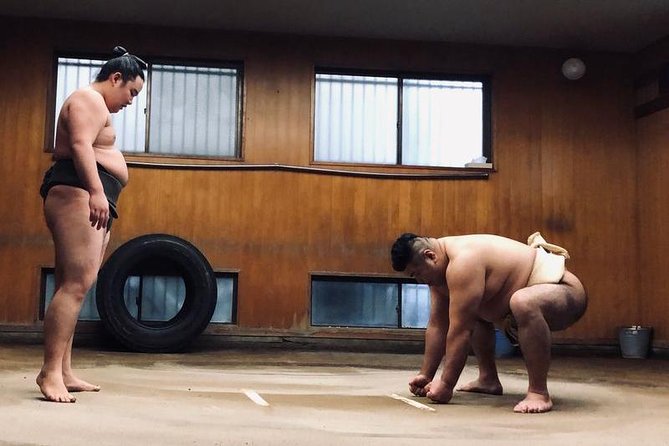
The core of your tour is the stop at a sumo stable around Tokyo Skytree. You’ll watch the wrestlers warm up and spar with each other as part of their morning practice. The session is intense in a way that surprises a lot of first-timers. It’s not loud theatrics; it’s concentration, discipline, and physical work.
You should also expect a bit of structure. Usually the guide leads you through what’s happening at each stage, and you’ll have guided moments for photography. Since the practice is ongoing and the space is active, you’ll likely be asked to stay where you’re allowed and move only when you’re guided to do so.
You’ll hear explanations that connect what you see to sumo’s traditions and the wrestlers’ approach to training. The guides who lead these groups often speak fluent English, so you’re not stuck guessing what the drills mean.
Photo Opportunity: How to Get Great Shots Without Causing Chaos
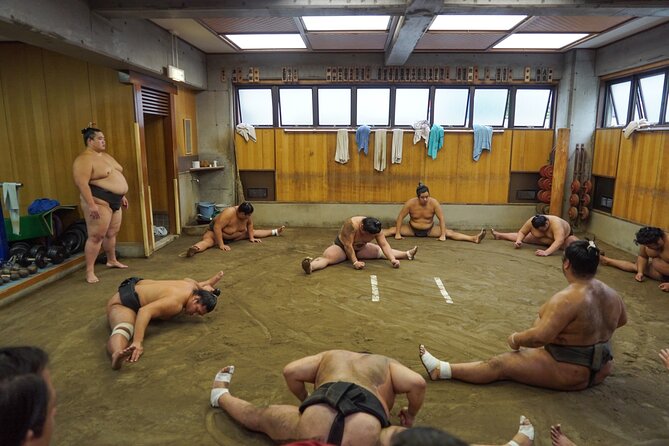
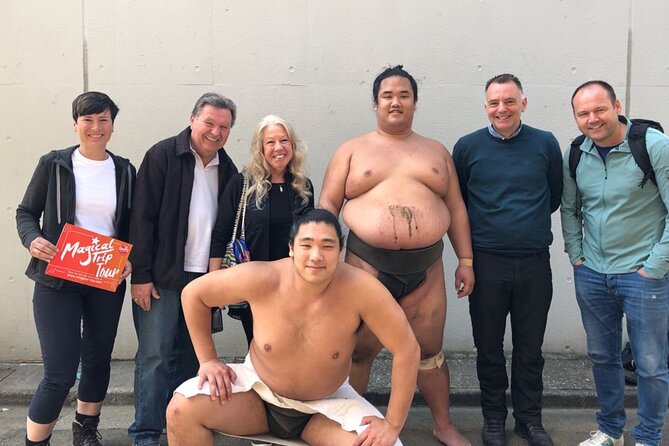
The tour includes a photo opportunity, and that’s a big reason it’s worth considering even if you already plan to visit a few cultural sites. You’ll get time to photograph the wrestlers during practice, and you may also get a chance to pose for photos with the wrestlers or your group alongside the stable.
A few practical notes so your photos come out well:
- Use the time you’re given. Don’t wait for the perfect moment if your photo window is short; the guide will help coordinate timing.
- Be ready for restricted movement. Since not every area is open to visitors, your photo angles will depend on where you’re standing.
- Respect the moment. The whole point is to watch training. If you treat it like a concert crowd, it will feel less special for everyone.
In the best tours like this, you end up with images that look like you were really there—because you were. Close-ups of athletes mid-action, plus a personal photo moment, is a rare combo for Tokyo.
Seating Is First Come, First Served: Plan for the Best View
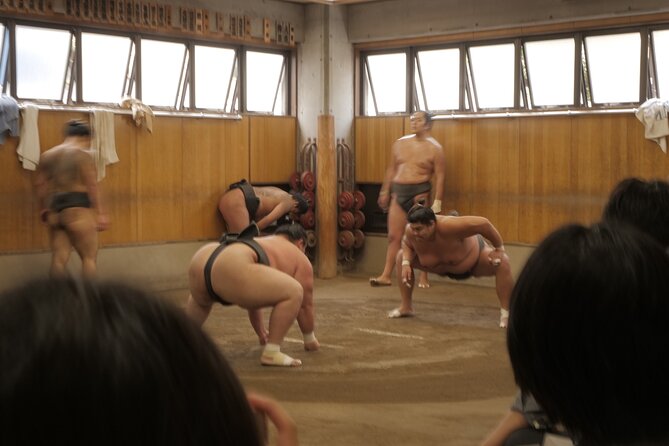
This is one of the few downsides worth taking seriously. The sumo stable you visit is often used by multiple tour companies, and there is no reserved seating for this experience. Seating is first come, first served.
The practical impact is simple: if you arrive later than you should, you may end up 2–3 rows from the front. That doesn’t mean you won’t enjoy it. You can still see the practice and still get photos. But if you’re the kind of person who cares about the cleanest sightlines, arriving early at the meeting point is your best lever.
If you want a calmer plan, treat the morning like a small performance: show up on time, follow the guide’s instructions quickly, and you’ll get the best chance at a strong view without stress.





Stable Rules: Only Tatami Areas Are Open to Visitors
Inside the sumo stable, you’ll follow a strict rule set: all areas are off-limits except the tatami (straw flooring) areas. That means you should watch for signage or the guide’s instructions and avoid wandering.
This matters because it protects the space and keeps the experience respectful. It also affects your mobility and your angles for photos. If you’re a photographer, mentally switch from searching for the best vantage point to working with the space you’re allowed in.
Think of it like an etiquette test, not just a rule. You’ll probably feel the difference immediately. The room becomes quieter, more controlled, and that lets you focus on the training itself.
Heat and Comfort Tips for Summer Tokyo
This is a morning activity, but Tokyo summer can still hit hard. The tour info specifically flags that it’s hot and humid, with a recommendation to bring water and wear a hat to help prevent heat stroke.
Here’s how I’d handle it so you don’t end up uncomfortable halfway through:
- Bring water even if you think you’ll buy it later.
- Wear a hat that shades your face and neck.
- Dress light and breathable so you can focus instead of sweating.
You’ll get the most out of the experience if you’re not distracted by overheating. Sumo training looks dramatic and fast, and you don’t want your brain stuck on feeling overheated.
The Guide Experience: Clear Explanations Make a Difference
One of the strongest reasons this tour gets such high praise is the guide. Explanations tend to be clear and connected to what you’re seeing in real time. And because English is available, you’re not forced to piece things together from guesswork.
You might meet guides like Hana, Kentake, or Yuki. Regardless of the name on the day, the key is the same: the guide helps you understand sumo as a sport with rituals and meaning, not just a physical spectacle.
For you, that means two wins at once:
- You’ll recognize what’s happening during warmups and sparring.
- You’ll leave with a better sense of why these routines are structured the way they are.
That’s how a two-hour tour turns into a real memory, not just a quick photo stop.
How Long It Takes and What the Rest of Your Day Looks Like
The duration is about 2 hours and it ends back at the meeting point. That’s a great structure for Tokyo. You can slot it into a morning plan without wrecking your whole schedule.
Because you’re starting at 8:00 am, you’ll likely still have energy for other sights later. You also avoid the worst heat of the day in many months, though summer humidity is still something to respect.
Price and Value: Why $99.10 Can Be Worth It
At $99.10 per person, this isn’t a budget bargain. But it also isn’t priced like a generic sightseeing add-on. The value comes from three things you don’t get elsewhere in Tokyo:
- Exclusive access to a sumo stable’s morning practice environment
- Time for photography, including personal photo moments
- Small-group attention plus explanations that make the experience understandable
If you compare it to paying for admission to more tourist-heavy attractions, the difference is that this tour gives you a live, culturally grounded sports experience at close range. For people who love sports, culture, or both, the price is easier to justify because you’re buying access and context, not just a view.
If you’re mostly after a quick photo and you don’t care about learning what you’re seeing, you might find it pricey. But if you want to leave with understanding, this is one of the more direct ways to do it.
Who This Tour Fits Best
This experience is a strong match if:
- You like sports and want to see training up close.
- You enjoy cultural experiences that are practical, not just ceremonial.
- You want small-group attention and guidance.
- You care about taking photos, but also want the context behind the sport.
It’s also a good option if you think you might never get another chance to visit a sumo stable during practice hours. Tournament days are limited, and this gives you the next best slice of real sumo intensity.
Should You Book This Tokyo Sumo Morning Practice?
I’d book it if you want an authentic, close-up morning sports moment and you’re willing to follow stable rules about tatami areas and restricted zones. The guide support in English, the photo time, and the small-group setup are the main reasons I think it’s worth it.
Skip it or adjust expectations if front-row seating is your top priority, because seats are first come, first served. Also go in with realistic comfort planning for summer heat. Bring water, wear a hat, and treat the morning meeting as something you should prepare for.
If you fit the vibe—sports curiosity plus culture respect—this is one of those Tokyo activities that feels like it belongs in your trip, not just on your schedule.
FAQ
What time does the tour start?
The tour starts at 8:00 am.
Where do I meet the guide?
Meet at the Taxi Stand inside Oshiage Station’s rotary in Sumida City (Oshiage, 1-chōme).
How long is the experience?
It runs for about 2 hours and ends back at the meeting point.
Is seating guaranteed in the front?
No. Seating is first come, first served, and if you arrive later you may be seated 2–3 rows from the front.
Can I take photos during the tour?
Yes. There’s a built-in photo opportunity, including photographing wrestlers and a chance to pose for pictures with them.
What areas can visitors access inside the stable?
Visitors are restricted to tatami (straw flooring) areas; other parts of the stable are off-limits.