REVIEW · MARRAKECH
Luxury VIP Half-Day of Marrakech into History & Culture.
Book on Viator →Operated by Jemaa el-Fnaa · Bookable on Viator
Marrakech turns intense fast. This half-day private walking tour lines up the medina highlights so you understand what you’re seeing, from the Koutoubia Mosque to the sights around Jemaa el-Fnaa. Guides like Abdel (and others such as Hussein or Mustafa) tend to keep the pace friendly while explaining what makes each place matter.
I love the way you get a guided route that makes the architecture click. You’ll see Hispano-Moorish carvings and the 16th-century royal crypts at the Saadian Tombs, then move to the 19th-century royal splendor of Bahia Palace, with painted ceilings and gardens that look carefully planned even after all these years.
One consideration: the medina energy can be a lot at Jemaa el-Fnaa. The square draws crowds, pushy sellers, and even animal-related attention—so if you don’t want that, you’ll need to be firm and choose where you stand and what you avoid.
In This Review
- Key moments worth your time
- From Koutoubia Mosque to Saadian Tombs: where the tour starts strong
- Bahia Palace: the royal home that reads like a house full of details
- Souks after monuments: turning overwhelm into a plan
- Place des Ferblantiers: a quieter look at district life
- Jemaa el-Fnaa: performances, crowds, and how to avoid the worst pressure
- Logistics that actually matter: private time, real walking, and tickets
- Price and value: does $31.36 make sense?
- Who this VIP half-day suits best
- Should you book this Marrakech history and culture walk?
- FAQ
- How long is the Marrakech Luxury VIP half-day tour?
- Is this a private tour or a shared group tour?
- Where does the tour start and end?
- Does the price include entrance tickets?
- Is hotel pickup and drop-off included?
- Are food and drinks included?
- What are the main stops on the route?
- Is Jemaa el-Fnaa a long stop?
- Do I need to worry about the weather?
- What’s the cancellation window?
Key moments worth your time
- A tight private route that covers Koutoubia, Saadian Tombs, Bahia Palace, and the medina squares in about 3 to 4 hours
- Saadian Tombs storytelling that explains how the site was sealed for centuries and rediscovered in 1917
- Bahia Palace details like elaborately painted ceilings, stucco patterns, and fruit-tree gardens
- Place des Ferblantiers (Mellah/Berrima district) gives you a local, district-level feel for about 30 minutes
- Jemaa el-Fnaa performances and people-watching with storytellers and acrobats
- Practical help with shopping including bargaining guidance and tips for buying genuine products like argan oil
From Koutoubia Mosque to Saadian Tombs: where the tour starts strong
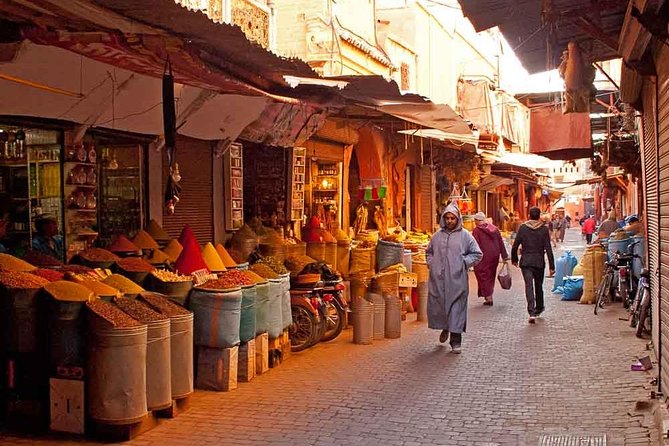
Your tour meeting point is right at Koutoubia Mosque, a 12th-century landmark that served as the main mosque of the al Kasbah. Even before you step into the deeper medina, you get a sense of how Marrakech has long treated religion, power, and city identity as the same conversation.
From there, you head toward the Saadian Tombs. This stop is a major reason the tour feels worth doing, because it’s not just “pretty doors and carvings.” The tombs were sealed for centuries, then rediscovered in 1917, which makes the whole place feel like a story that stopped and restarted. When you look at the ornate decorations, you’ll notice the Hispano-Moorish style—framing the crypts of a 16th-century royal family. That framing detail matters. It’s not random decoration; it’s design language saying who mattered, and how they wanted to be remembered.
What I like here is that your guide keeps you from turning monuments into a checklist. You’re watching details with meaning: where things are placed, what styles signal, and why the tombs became a rediscovered anchor point for Marrakech’s identity.
You can also read our reviews of more tours and experiences in Marrakech.



Bahia Palace: the royal home that reads like a house full of details
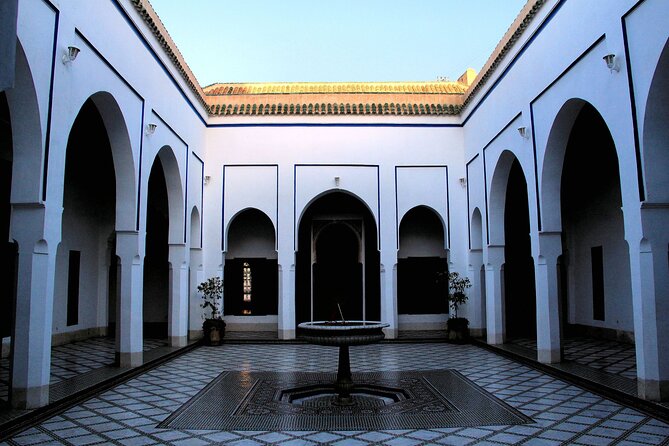
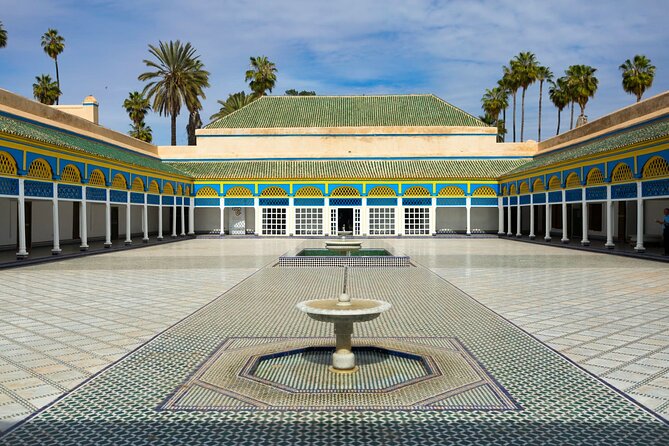
After the tombs, the tour shifts to Bahia Palace, a 19th-century royal dwelling meant to be the most splendid palace of its time. This is the kind of place where you can get lost in the visuals fast—unless someone points out what you’re seeing.
Inside, you’ll find elaborately painted ceilings, stucco patterns on nearly every surface, and gardens laid out with fruit trees. The gardens are an underrated part of the visit. They help you understand the palace as a lived-in setting, not just a formal “look and leave” monument.
A key value of going with a guide is that you get language for the visuals. Your guide can explain what the craftsmanship is doing—how the painted and carved surfaces create a mood of ceremony and control. Then the gardens soften that mood, which is why the palace doesn’t feel like a single block of decoration.
If you’re the type who loves texture—paint, plaster, carved edges—this stop is a highlight. If you’re more into sweeping scenery, you’ll still enjoy it, but you might need to slow down and focus on smaller things.
Souks after monuments: turning overwhelm into a plan
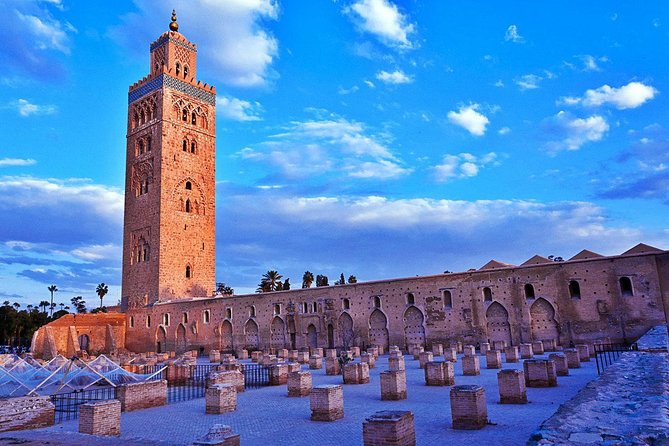
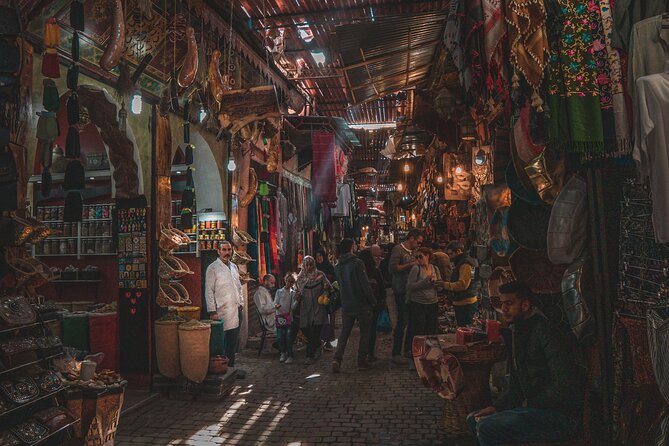
Once you’ve seen palace-level details, you move into the souks. This is where the walking tour earns its VIP label. Without guidance, you can easily spend your time dodging traffic, getting pulled into the wrong lane, and forgetting why you came.
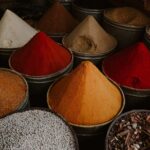
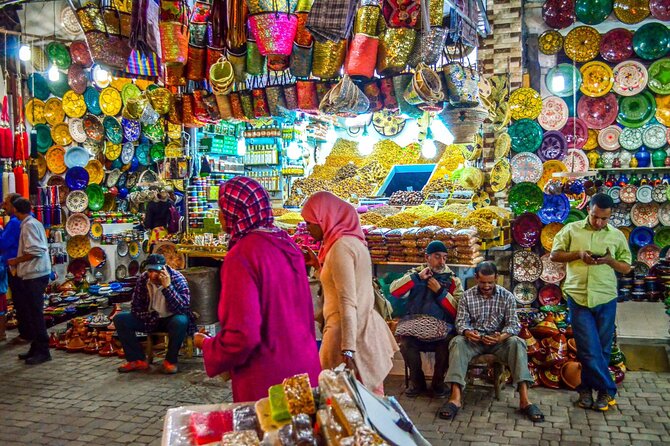
With a guide, the souk walk becomes a learning walk. You get tips for where to shop, what categories make sense to look for, and how to spot the difference between a sales pitch and a fair offer. One of the most useful bits you can pick up is shopping advice related to authenticity—especially for items like argan oil. The point isn’t that every shop is a scam. It’s that you’ll be better prepared to ask the right questions and avoid obviously overpriced or questionable product claims.
You also get practical bargaining help. That matters because “bargain” in a guidebook is vague. Here, you get real-life coaching on how to negotiate at a human pace, not a frantic sprint.
One drawback to keep in mind: the souks and main squares can bring out intense selling energy. If you hate pressure, set your expectations before you arrive. Your guide can help you time your browsing and steer you away from the worst moments.
Place des Ferblantiers: a quieter look at district life
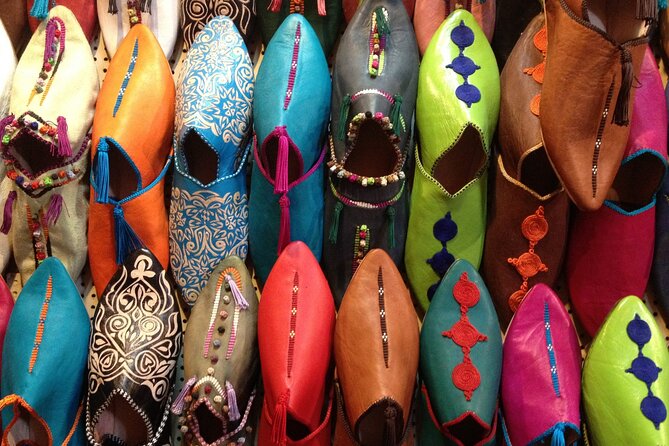
Then you shift to Place des Ferblantiers, a main attraction in the Mellah and Berrima district. This stop is shorter—about 30 minutes—but it’s a smart break in the tour. It gives you district context rather than only landmark viewing.
Because it’s tied to a specific neighborhood identity, you’ll feel the vibe change. Instead of palace details, you’re watching everyday life around a craft district. You’ll likely notice how the area supports artisans and small-scale trade, which helps you connect what you saw in the souks to where the work comes from.
This is also a good moment to reset your senses. The medina can feel like sensory overload by the afternoon. A district stop like this helps you move with more control.
Jemaa el-Fnaa: performances, crowds, and how to avoid the worst pressure
No Marrakech medina experience feels complete without Jemaa el-Fnaa. You’ll spend around 30 minutes here, and it’s exactly what people mean when they call the square theatrical. You’ll see performers doing their skills—storytellers, acrobats, and more—plus constant motion from vendors and visitors.
If you can, try timing your visit for later in the day. Some guides and experiences are simply better as the light changes, and this square is often at its best when the energy levels rise and the scene becomes more dramatic. You’ll also get a chance to people-watch in a way that feels central, not forced.
Now the balance part. Jemaa el-Fnaa can also feel like a tourist trap. You may encounter aggressive vendors, and you should treat anyone who tries to force an interaction quickly as a red flag. One of the clearest pieces of advice you can follow is simple: if someone is insisting or pressuring, you don’t owe them your attention. Move on.
Animal-related attention is another consideration. There are people offering animal photo moments, and some visitors are uncomfortable with the treatment and exploitation they see. If that’s a concern for you, plan to keep distance from the animal-taming setup and focus on performances and food stalls instead.
One more practical note: the exit route can matter. Some exits expose you to horse smell from nearby animal use. If you’re sensitive to smells or you’re wearing light clothing, you may want to ask your guide which way to go when you leave the square.



Logistics that actually matter: private time, real walking, and tickets
This is a private experience, meaning only your group joins you. That’s a real advantage in the medina, where the “wrong” crowd can make everything feel harder. Having a guide also helps you avoid wasting time searching for the next landmark through confusing lanes.
The tour runs about 3 to 4 hours, which is long enough to feel like you got a full story, but short enough to fit into most Marrakech schedules. Still, it’s a walking tour. Wear shoes you can trust, because you’ll be moving through medina streets where footing may vary.
Pickup and drop-off are available if you choose that option. That can be a big deal in Marrakech, where getting in and out efficiently reduces stress before you even start walking. The tour ends back at the meeting point, so you don’t have to guess your way home after you’re tired.
Tickets are also a key detail. Entrance tickets aren’t included, and monument entry fees can be around $7 for many of the sights. Your guide helps you with the flow, and having a guide often makes the visit smoother when you’re dealing with access and entry procedures.
Price and value: does $31.36 make sense?
At about $31.36 per person, the big value here is not the monuments by themselves. It’s the ordering of stops and the context you get while walking between them.
You’re paying for:
- A professional guide who can explain what you’re seeing at Koutoubia, Saadian Tombs, and Bahia Palace
- A private format so you don’t get stuck following a rushed pack
- Time savings in the medina, where finding the right turns and entry points can burn hours
And you’ll spend extra on entrance tickets. But that’s still part of the deal you’re choosing: you’re not buying a “sit on a bus” day. You’re buying guided access plus meaning for a route that includes multiple major sights plus Jemaa el-Fnaa.
So the real question isn’t just the base price. It’s whether you want your visit interpreted and simplified. If you want to wander on your own, you can. But if you want to understand why Saadian Tombs were sealed and then rediscovered in 1917, or why Bahia Palace has such attention to surfaces and gardens, then the value lands.
Also remember: food and drinks aren’t included. If you plan to eat at Jemaa el-Fnaa, keep a little budget aside for that.
Who this VIP half-day suits best
This tour is a strong match if you want to see several big Marrakech landmarks without losing time to navigation or confusion. It’s also ideal if you like shopping but don’t want the process to feel like an endless negotiation battle.
I’d especially recommend it for:
- First-time visitors who want a guided introduction before they freestyle in the medina
- People who care about architecture and want explanations beyond photos
- Shoppers who want help bargaining and avoiding questionable purchases—like guidance tied to authenticity checks for items such as argan oil
If you hate crowds, keep in mind that Jemaa el-Fnaa is inherently busy. And if you’re strongly opposed to any animal exploitation scenes, you’ll need to plan your behavior around the square and stick to your comfort zone.
Should you book this Marrakech history and culture walk?
Yes, I’d book it if you’re the type who wants your time in Marrakech to feel organized and meaningful. The combo of Koutoubia, Saadian Tombs, Bahia Palace, and the medina squares is exactly the mix that turns a short stay into a story you remember.
Skip it only if you know you want a fully independent wander. This tour is built around guidance, walking, and guided navigation. Also go in with your eyes open about Jemaa el-Fnaa pressure and the presence of animal-related setups—your best experience comes from choosing performance viewing and moving through the crowd with calm.
If you book, do yourself a favor: wear comfortable shoes, bring small cash for any entries you need, and set a firm rule for shopping pressure. Then you’ll get the best part—Marrakech’s sights and street energy, without losing your footing (or your patience) in the chaos.
FAQ
How long is the Marrakech Luxury VIP half-day tour?
It runs about 3 to 4 hours.
Is this a private tour or a shared group tour?
It’s private. Only your group participates.
Where does the tour start and end?
It starts at Koutoubia Marrakesh 40000, Morocco, and ends back at the same meeting point.
Does the price include entrance tickets?
No. Entrance tickets are not included. Monument entry fees are often around $7.
Is hotel pickup and drop-off included?
Pickup and drop-off are included if you select that option.
Are food and drinks included?
No. Food and drinks are not included.
What are the main stops on the route?
You’ll cover Koutoubia Mosque, Saadian Tombs, Bahia Palace, the souks, Place des Ferblantiers, and Jemaa el-Fnaa.
Is Jemaa el-Fnaa a long stop?
It’s about 30 minutes.
Do I need to worry about the weather?
The experience requires good weather. If it’s canceled due to poor weather, you’ll be offered a different date or a full refund.
What’s the cancellation window?
You can cancel for a full refund up to 24 hours before the start time.