REVIEW · MARRAKECH
private VIP half journey of Marrakesh : History & Culture.
Book on Viator →Operated by Palacio da Bahia · Bookable on Viator
In This Review
- A private guided sprint through the Medina
- Key highlights to expect
- Why this half-day private Medina walk works
- Koutoubia Mosque: start with Marrakech’s 11th-century anchor
- Bab Agnaou and the Mellah: boundaries you can feel
- Bahia Palace: Moorish architecture, and one cost to remember
- Jemaa el-Fnaa: souks, performers, and the Medina’s loud center
- The real value: guidance that saves time and stress
- Price and booking sense: is $31.40 worth it?
- Logistics you can plan around in Marrakech
- Who this tour fits best
- Should you book this private VIP half-journey?
- FAQ
- How long is the Marrakesh private half-day walking tour?
- Is this tour private or shared?
- Where does the tour start and end?
- Does the tour include pickup and drop-off?
- Which major sights are included in the walk?
- Are entrance tickets included?
- Are food and drinks included?
- Is the price per person?
- Is there anything to know about booking or weather?
A private guided sprint through the Medina
Marrakech’s Medina can feel like a puzzle made of alleys. This private half-day walking tour is built to solve it fast, with history you can actually see and a guide who helps you move with confidence. I love the private pace (no waiting for a big group) and the way the route connects key sites with real street-life stops like the souks and Jemaa el-Fnaa. One thing to plan for: Bahia Palace entrance isn’t included, so you’ll want a little extra cash ready.
You start near Koutoubia Mosque and walk toward the Jewish quarter (Mellah) through Bab Agnaou, then finish back around the same meeting area. Along the way, you get practical help on navigating the Medina and where to eat—exactly the kind of guidance that matters when you’re trying to enjoy the city instead of just surviving it.
Key highlights to expect
- A private guide for a half-day Medina route so you can ask questions and adjust on the fly
- Koutoubia Mosque (11th century) to start your history thread in the right place
- Bab Agnaou and the Mellah to understand the Jewish quarter with clear direction
- Bahia Palace’s Moorish architecture even if the ticket is on you
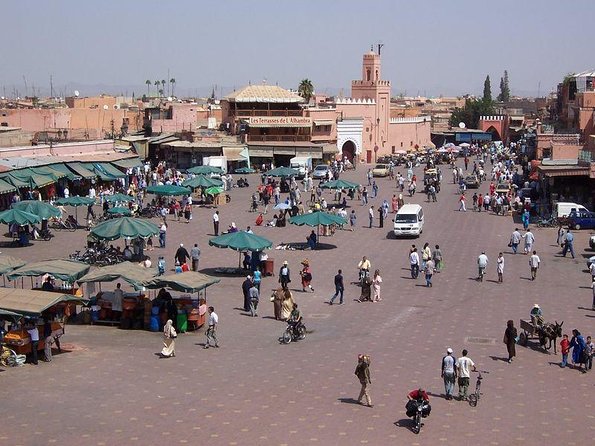
- Jemaa el-Fnaa for the street performers, henna artists, and orange juice sellers
You can also read our reviews of more tours and experiences in Marrakech.



Why this half-day private Medina walk works
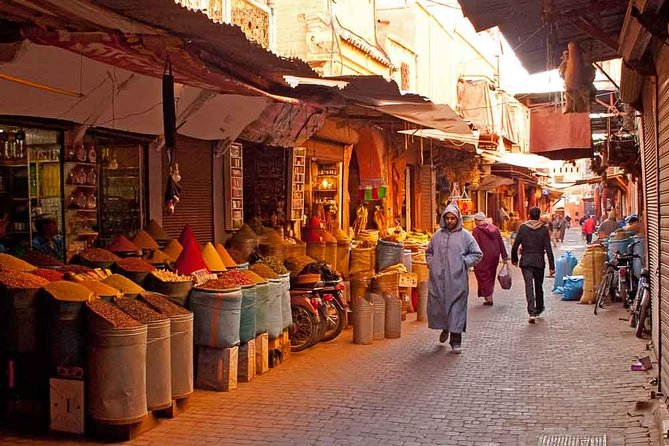
Marrakech’s Medina is famous for good reasons. It’s full of layers—religious landmarks, neighborhood boundaries, craft lanes, and that kinetic main square where the city seems to take a breath and then perform. The tricky part is that the maze can swallow your time and energy.
That’s where a private half-day shines. In about four hours, you’re not trying to do everything alone. You’re walking with a plan: start at Koutoubia, pass through Bab Agnaou, see the Mellah, move to Bahia Palace, and finish at Jemaa el-Fnaa. It’s a tight route that helps you understand what you’re looking at instead of just snapping photos and hoping it all adds up.
Also, the tour is explicitly focused on how to navigate. You’ll get tips on where to eat and how to move through the Medina. That matters because the best meals often come from knowing which streets to trust and which to avoid.
Finally, you can control your pace. This is your group only, so there’s no big-clump scheduling. If you like to linger at a doorway or ask for a quick explanation of what something is, you can.
Koutoubia Mosque: start with Marrakech’s 11th-century anchor
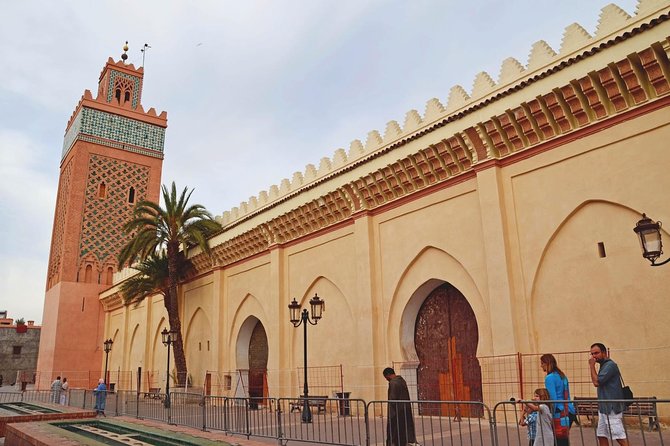
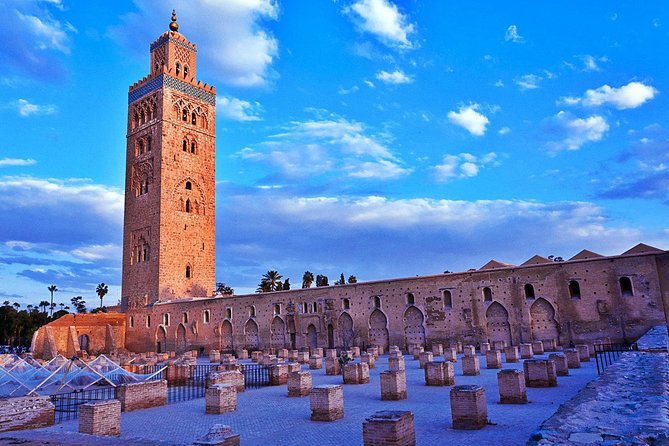
You begin at Koutoubia, described as the oldest mosque in Marrakech, founded in the 11th century. It’s one of those landmarks that gives you instant context. Before you head into alley turns and market lanes, you’re starting with a place that helps frame how old the city’s core really is.
This stop is short—around 15 minutes—and that’s a good thing for a half-day tour. You get the big-picture view without blowing the schedule. Since the admission here is listed as free, you won’t be hit with an extra ticket just to stand and look.
Practical tip: bring shoes you can trust. Even if the stops are timed, the Medina requires constant micro-walking—curbs, narrow passages, and uneven ground.
What I like about starting here is psychological. It turns the day from random wandering into a guided story: this is where Marrakech’s older identity begins, then you move outward into neighborhoods and daily street life.
Bab Agnaou and the Mellah: boundaries you can feel
Next you pass through Bab Agnaou, noted as the oldest gate to the Jewish quarter and the kasbah quarter. Even if you’re not a history buff, gates are powerful. They mark transitions. They tell you that the city wasn’t one flat space—it was organized, separated, and connected.
This stop is listed at about 10 minutes and free admission. It’s brief, but gates like this work best when you understand why they’re there. A good private guide can point out the significance without turning it into a lecture.
Then comes the Mellah, described as the capital of the Jewish quarter. You spend about 20 minutes here. This is the kind of stop that helps you see the Medina as more than scenery. You start recognizing neighborhood structure: where one community was centered and how that center was reached.
What makes this section valuable is the way it bridges landmark history with street orientation. When you can connect what you’re seeing to where you are, navigating later feels easier.
One consideration: the Mellah area is part of the Medina’s dense fabric. If you dislike crowds or tight lanes, let your guide know your comfort level early. A private setup makes it easier to adjust.
Bahia Palace: Moorish architecture, and one cost to remember
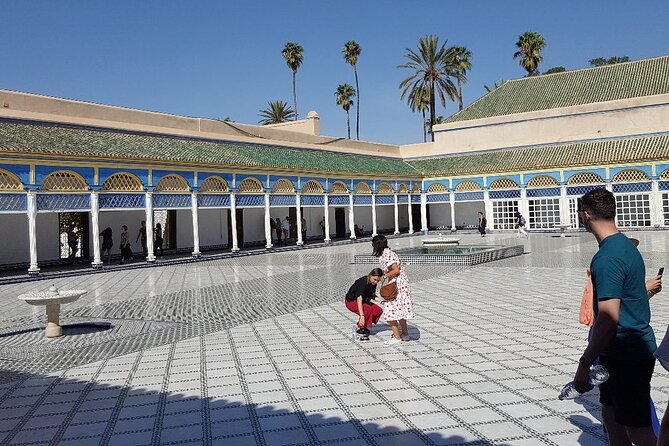
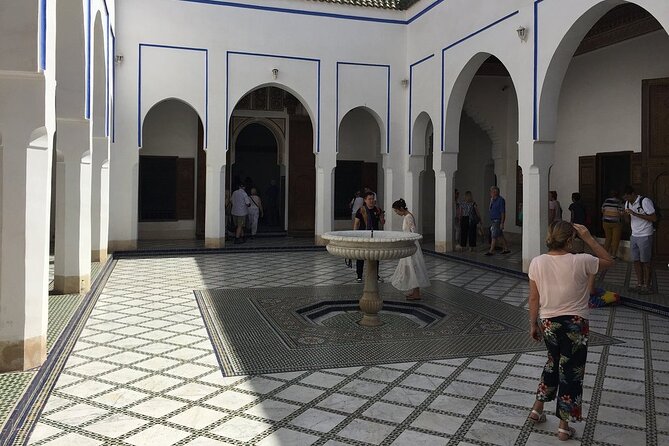
Your next major stop is Bahia Palace, a place where you find Moorish architecture. You’re given about 30 minutes, and this is the one place where admission is explicitly not included.
That’s the drawback to note upfront: if you budget only for the tour price, you might get surprised here. But on the flip side, it’s also a sign that the tour is honest about what you’re paying for. The guide and route are included; entrances are not. So you get clarity, not confusion.
Why Bahia Palace is a strong mid-tour anchor: it gives your walk a different texture. Up to this point, you’ve been moving through neighborhood history and gates. Here, the focus becomes design—how architecture expresses style, power, and everyday beauty.
Practical advice: if you’re the type who wants photos, this is where you’ll probably slow down. Interiors and courtyards can be visually dense. With only 30 minutes, you’ll want to pick what you care about most—details versus wide views.


Jemaa el-Fnaa: souks, performers, and the Medina’s loud center
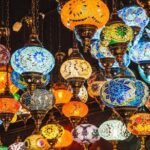
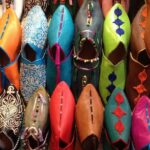
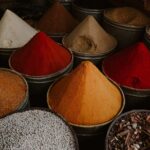
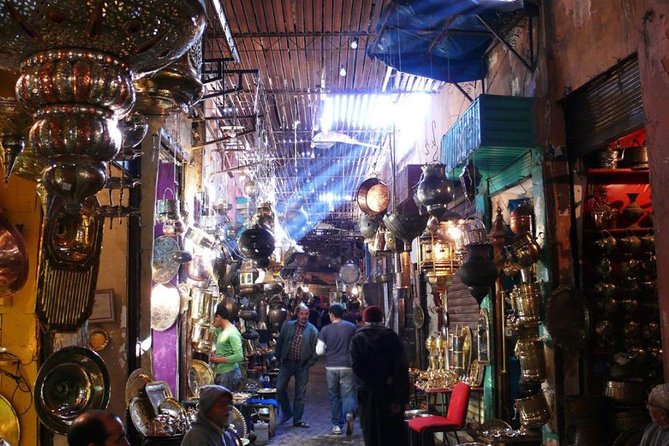
You finish at Jemaa el-Fnaa, and the route hits it in two segments. The first time, you’re there for about 40 minutes in the context of the old markets and souks—places where items are described as hand made. Then you return for about 15 minutes for the famous square atmosphere: musicians, snake charmers, henna artists, and sellers of orange juice.
That structure matters. If you go only once, you might miss the thread between crafts and performance. By spreading the time, you get both parts of the square’s identity: shopping culture and street spectacle.
What you’ll feel here is the Medina’s rhythm. It’s not just a place to look; it’s a place where people work, sell, sing, and decorate hands with henna. Even if you’re not buying anything, watching how the square operates gives you a clearer read on the city.
Practical tip: keep your wallet and phone situation simple. You’ll see plenty of sellers and performers, and it’s easy to get pulled into transactions. If you want a calmer experience, set a plan with yourself before you arrive: watch for 10 minutes, then decide if you want to buy or just soak in the energy.
Also, this is where your guide’s navigation tips pay off most. The square is famous, which means it can also be confusing. Having someone help you move where you want to go helps you keep your day enjoyable instead of stressful.
The real value: guidance that saves time and stress
The sites are great, but the best value in a private Medina tour is often invisible. It’s in how you move.
A private guide can help you:
- Understand what each place is without guesswork
- Time your walking so you’re not stuck in the same tight lanes too long
- Get practical advice on where to eat after the big sights
And there’s a personal touch that can make the day feel human, not mechanical. In examples from people who loved their experience, guides have gone beyond the script—like picking up something local for a quick taste (fresh figs showed up as a memorable moment). The point isn’t the specific fruit. The point is the difference between a guide who only checks off stops and one who helps you feel like you’re with someone who cares.
On the other hand, there’s a lesson from the opposite situation: if your guide is distracted or disengaged, the whole tour suffers fast. In a place like the Medina, a guide who wanders off or loses focus can leave you disoriented. So if you book, make sure your guide is actively with you and communicating—especially around crowded transitions like the souks and square.
Price and booking sense: is $31.40 worth it?
The tour price is listed as $31.40 per person for a half-day, private walking experience. For that money, you’re paying for a professional guide and the structure of a smart route: key landmarks plus the Medina’s main-stage square.
Where this becomes good value is in the combination:
- You’re not paying for transport as a separate thing, because pickup and drop-off are available if you select that option
- You get a focused history route that avoids the most common solo problem: running out of context
- You get help with practical navigation and meal advice—small things that can save you time and wrong turns
The only clear financial add-on you should plan for is Bahia Palace admission, which is not included. Food and drinks also aren’t included. But once you plan for those, the base price feels fair for a private half-day.
One extra note: the tour is often booked about 22 days in advance on average. That suggests demand. If you’re traveling in peak season or on a tight schedule, booking earlier is a safer move.
Logistics you can plan around in Marrakech
This tour is designed as a walking experience with stops along the way. You should assume you’ll be on your feet for the full four hours, even though each site has a specific time window.
Here’s what helps you plan smart:
- Meeting point: Koutoubia (Marrakesh 40000, Morocco)
- End point: back at the meeting point
- Duration: about 4 hours
- Private format: only your group participates
You also have flexibility depending on what you choose at booking. Pickup and drop-off are included only if you select the pickup option. If you prefer to meet directly, you can still use Koutoubia as your anchor point.
Weather matters too. The experience requires good weather, and you’ll be offered another date or a full refund if it’s canceled due to poor conditions.
Who this tour fits best
I’d put this tour in your shortlist if:
- You want a guided route through the Medina but still like walking
- You care about understanding what you’re seeing at key cultural landmarks
- You want help with navigating and choosing where to eat
- You prefer private pacing over big-group touring
It also works well as an efficient first or middle-day activity. You get oriented fast, then you can return to the Medina on your own with clearer direction.
If you dislike crowds, the square can be intense. But since this is private, you can still manage your time inside Jemaa el-Fnaa better than on a fixed group schedule.
Should you book this private VIP half-journey?
Book it if you want a structured, private way to experience Marrakech’s Medina in about half a day. The route hits major anchors—Koutoubia, Bab Agnaou, the Mellah, Bahia Palace, and Jemaa el-Fnaa—without turning your trip into a checklist marathon. The best reason to book is the mix of history you can point to and practical help that makes the streets easier to handle.
Skip or reconsider if you’re not comfortable paying a separate entrance for Bahia Palace, or if you know you need a very low-communication, no-interruption style of touring. In a place like this, you’ll get the most from an engaged guide who stays focused with your group.
If you can handle walking for roughly four hours and you’re okay with entrance fees for at least one site, this is a solid value way to understand Marrakech beyond the first photo.
FAQ
How long is the Marrakesh private half-day walking tour?
It lasts about 4 hours.
Is this tour private or shared?
It’s private. Only your group participates.
Where does the tour start and end?
The tour starts at Koutoubia in Marrakesh and ends back at the meeting point.
Does the tour include pickup and drop-off?
Pickup and drop-off are included if you select the pickup option.
Which major sights are included in the walk?
You’ll visit Koutoubia, Bab Agnaou, the Mellah, Bahia Palace, and Jemaa el-Fnaa.
Are entrance tickets included?
Admission ticket for Koutoubia, Bab Agnaou, Mellah, and Jemaa el-Fnaa is listed as free. Bahia Palace admission is not included.
Are food and drinks included?
No. Food and drinks are not included.
Is the price per person?
Yes, the price is listed as $31.40 per person.
Is there anything to know about booking or weather?
The experience requires good weather. If it’s canceled due to poor weather, you’ll be offered a different date or a full refund. Free cancellation is available up to 24 hours in advance.