REVIEW · CAIRO
VIP Giza Pyramids, Sphinx, Lunch,Camel Ride & inside 3rd pyramid
Book on Viator →Operated by Hesham Egypt tour guide · Bookable on Viator
Four hours at Giza feels like magic. This VIP-style private tour stitches together the pyramids, Valley Temple, and the Sphinx, plus lunch and a camel ride—so you don’t just see monuments, you get the whole rhythm of the Giza plateau in one go. Guides such as Ehab and Kyrllos are repeatedly praised for keeping things calm, answering questions in plain English, and letting you photograph without rushing your group.
I especially like the practical extras. You get a koshary lunch (Egypt’s street-food comfort pick), bottled water, and a short camel ride where photos are part of the point. One consideration: the itinerary notes that admission tickets aren’t automatically included, so if you want the most access—like inside the 3rd pyramid—you’ll want to confirm entrance fees or choose the upgrade option.
In This Review
- Key things to know before you go
- How the VIP Giza half-day really plays out (and why 4 hours works)
- Getting to the plateau: private pickup that saves energy
- Stop-by-stop: what you’ll see at Giza (and what to expect)
- Pyramids of Giza site overview (the ground you’re standing on)
- Great Pyramid of Khufu: the scale lesson
- Khafre’s Pyramid: the “looks taller” illusion
- Menkaure’s Pyramid: the smallest, with the most detailed access potential
- Panoramic view: short, useful, and timed well
- Great Sphinx: iconic, but also strangely human
- Valley Temple and the Sphinx zone: where the story slows down
- The camel ride: fun photos, realistic expectations
- Koshary lunch: the part people remember after the photos
- The best time to go: crowds, heat, and that early-start trick
- Price and value: why $14 can be a good deal, with one catch
- Upgrades worth considering: guide, entrance fees, and longer camel time
- Who this tour suits best (and who should choose something else)
- Should you book VIP Giza Pyramids, Sphinx, Lunch, Camel Ride & inside 3rd pyramid?
- FAQ
- Is this tour private?
- How long is the VIP Giza tour?
- Does it include hotel pickup?
- What’s included in the lunch?
- Is the camel ride included?
- Are entrance fees included?
- Is the Sphinx admission free?
- What’s the cancellation policy?
Key things to know before you go
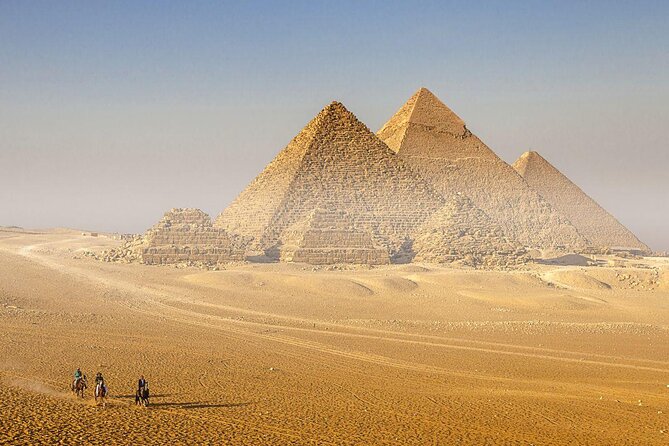
- Door-to-door private pickup saves you from timing hassles and gets you to the plateau faster
- Great Pyramid, Khafre, and Menkaure are covered in a logical order with photo stops
- Sphinx + Valley Temple time gives you both icon views and the quieter context nearby
- Lunch plus camel ride turns the tour into a real half-day, not just a sightseeing sprint
- Entrance fees may need an upgrade (admission isn’t listed as included, so check what’s covered for inside access)
- Departure times are flexible so you can aim for earlier light and thinner crowds
How the VIP Giza half-day really plays out (and why 4 hours works)
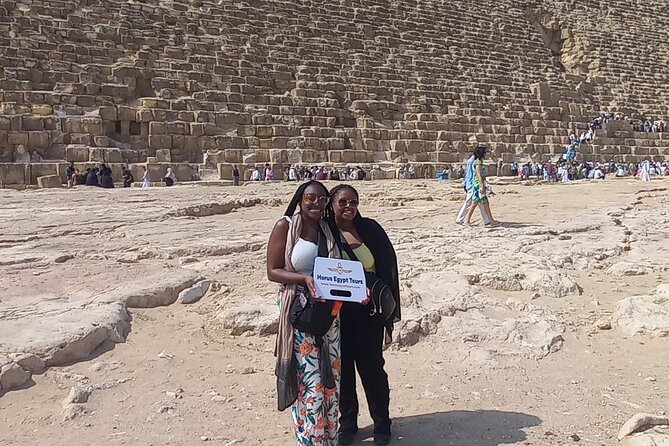
A good pyramids day is mostly about pacing. Giza can feel like a blur: heat, crowds, noise, and nonstop vendors. This tour is built as a half-day, private, door-to-door circuit, so you can focus on the monuments instead of logistics.
In about four hours, you’ll move through the core sights: the Giza plateau, the Great Pyramid area, Khafre’s Pyramid, Menkaure’s Pyramid, then a panoramic look, and finally the Great Sphinx. It ends back at your hotel, which matters in Cairo, where travel time can eat half your day if you’re not careful.
The VIP part is less about fancy extras and more about reducing friction. You’ll travel by private vehicle, get bottled water, and have a guide who can help you keep your bearings. That adds up when you’re dealing with crowds and lots of people trying to get your attention.
You can also read our reviews of more tours and experiences in Cairo.

Getting to the plateau: private pickup that saves energy
You’re picked up from your hotel in Cairo or Giza, and transported by private vehicle. For many people, this is the best “upgrade” of all, because you don’t have to negotiate taxis, wait around, or figure out where to meet once you arrive near the plateau.
The tour is described as private, meaning only your group participates. That matters if you’re traveling with kids, you want a slower photo pace, or you just don’t want the stress of matching your speed to strangers.
Also keep location in mind. The tour notes that it doesn’t include airport and hotels in NASR City, 6th Oct City, and New Settlement area. If you’re staying outside the pickup zones, you might need to confirm options in advance.
Stop-by-stop: what you’ll see at Giza (and what to expect)
This is the heart of the day: a compact walk-and-look route across the Giza plateau. Each stop is timed, which helps you avoid the trap of wandering without a plan.
Pyramids of Giza site overview (the ground you’re standing on)
Your tour starts with a general visit around the pyramids’ site area. Here’s what’s valuable: you get context fast. Instead of treating each pyramid like a separate postcard, you learn how they relate to each other—built in Egypt’s 4th Dynasty era (circa 2550 B.C.) as royal tombs, and later generations adding their own legends and afterlife architecture.
Even if you’ve read about pyramids before, seeing the plateau as a whole makes the story click. You also start spotting the angles and alignments you’ll notice later up close.
Great Pyramid of Khufu: the scale lesson
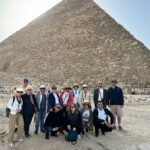
Then you’re at the Great Pyramid of Khufu (Cheops), the largest and best-known of the three main pyramids on the plateau. It’s described as being built entirely of limestone and packed with huge numbers: around 1.3 million blocks, with weights ranging from about 2.5 tons up to 15 tons.
It’s also a reminder of how long it dominated the world. For about 4300 years, it was the tallest structure on Earth until the Eiffel Tower was built in 1889.
The practical value here: you’ll understand what you’re looking at before you start chasing perfect angles for photos. If your guide helps you interpret the size and placement, you’ll feel less like you’re just standing under something enormous and more like you’re actually reading it.

Khafre’s Pyramid: the “looks taller” illusion
Next is Khafre’s Pyramid. You’ll notice that it still has some original casing stones near the summit. That’s part of why people often think it’s taller than the Great Pyramid—an optical illusion tied to its placement on the plateau and the condition of the stone facing.
It’s listed at about 136 meters tall, and it sits on a higher part of the plateau than Khufu. Over time it lost height compared to its original form (the tour info notes it was once taller).
When I think of this stop, I think of a simple takeaway: you’re not just visiting monuments, you’re learning how the plateau location shapes what your eyes perceive.
Menkaure’s Pyramid: the smallest, with the most detailed access potential
Then you reach Menkaure’s Pyramid, the smallest of the three main pyramids. The info given is specific, including its current height (about 62 meters), and discussion of how it may have been altered during construction.
This is also the part linked to the tour’s title: inside 3rd pyramid access is part of the advertised experience. One important reality check: the itinerary states admission tickets aren’t included for pyramid stops, and entrance fees can be added via an upgrade. So if inside access is a top priority for you, confirm what exactly is included in your booking before you show up.
Panoramic view: short, useful, and timed well
After the close-up pyramid time, you get a panoramic view segment. It sounds basic, but it’s actually a smart pause. Your brain needs a reset between intense details (walls, entrances, stonework) and the wider mental picture (how everything sits together).
If you came hoping for skyline-style photos, this is where you’ll want to be ready—phones charged, sunglasses on, and tripod-free if you’re traveling light.
Great Sphinx: iconic, but also strangely human
Finally: the Great Sphinx. It’s carved from soft sandstone, and the tour info emphasizes how long it survived largely because it was buried in sand for long periods.
The dimensions are worth noting: about 60 meters long and 20 meters tall, with a face roughly 4 meters wide. The Sphinx is also tied to the rising sun in ancient belief, and there was a temple built in front of it.
Practical note: the itinerary says the Sphinx admission ticket is free, which is one reason it’s such a good payoff stop.
Valley Temple and the Sphinx zone: where the story slows down
The overview includes the Valley Temple, which is a key piece because it helps you connect the Sphinx area to the broader burial complex rather than treating the Sphinx as a standalone icon.
This zone tends to feel a bit more atmospheric than some of the other high-traffic spots. You’re still in the Giza spotlight, but the layout gives you a better sense of why these structures were built where they were.
If you’re a photo person, give yourself a little breathing room here. The best photos often come when you stop forcing the perfect angle and instead frame the Sphinx within the larger plateau space.
The camel ride: fun photos, realistic expectations
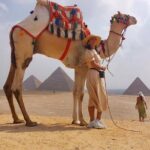
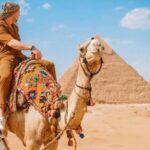
You get a short camel ride included, and the tour highlights that it’s a chance to capture photos on horseback-like views. Several guides in the orbit of this company are praised for making the experience comfortable and for helping guests feel safe.
Keep expectations sensible: it’s short. The value is the vibe—doing a classic Giza activity in the same half-day plan—rather than treating it like a long adventure excursion.
If you want more time, the tour offers an upgrade to extend the camel ride. That’s the right lever to pull if you’re the type who will wish you had stayed on longer.
Koshary lunch: the part people remember after the photos
Lunch is included, and it’s koshary, Egypt’s famous street-food mix of noodles, lentils, chickpeas, and sauces (served in that warm, hearty way that’s perfect after walking).
The biggest reason I like this lunch inclusion: it makes the day feel Egyptian, not museum-only. You’re not just consuming monuments; you’re eating like a local after you’ve sweated through the plateau.
From what’s described, the lunch is also fairly straightforward. That’s not a downside—it means you’re getting an authentic staple instead of waiting for a fussy sit-down meal with slower service.
If you’re picky about spicy sauces, you might want to pay attention when your plate lands and adjust as needed. Otherwise, treat it as comfort food and hydrate afterward.
The best time to go: crowds, heat, and that early-start trick
One theme that comes up for successful pyramid days is simple: go earlier. Earlier light is easier for photos, and the crowd feel can be less intense.
This tour’s scheduling flexibility is helpful here, because it says you have a wide choice of departure times. If you can pick, I’d choose a slot that gets you on the plateau sooner rather than later, especially if you hate standing in hot sun while people shuffle around.
Also, remember that Cairo heat is real. Even with bottled water included, plan to wear breathable clothing and bring a hat or sunglasses. You’ll enjoy the monuments more when you’re not focused on sweating through your shirt.
Price and value: why $14 can be a good deal, with one catch
On paper, $14 per person for a private half-day sounds almost too cheap for Giza. The value comes from what’s bundled: private transport, bottled water, a guided route through the core sights, plus koshary lunch and a camel ride.
In other words, you’re not only paying for entry-level sightseeing. You’re paying for the day to be organized end-to-end.
The catch is entrance fees. The itinerary notes that admission tickets aren’t included for multiple pyramid stops. And the experience title points to inside 3rd pyramid access, which may depend on whether entrance fees are covered in your chosen option.
So the smart way to think about it is this: the base price buys the guided structure and included meal/camel. If you want full “inside access,” confirm what’s included or upgrade so you don’t get stuck at the ticket point.
Upgrades worth considering: guide, entrance fees, and longer camel time
This tour offers upgrades in three areas:
- add your own Egyptologist guide
- include entrance fees
- extend the camel ride
Here’s how I’d choose:
- If you want deeper interpretation—myths, dynasties, and the why behind the architecture—upgrading to an Egyptologist can be worth it.
- If inside access is important to you, entrance-fee coverage matters because you don’t want to arrive ready for one experience and learn it’s partially out of reach without extra payment.
- If you really want the camel ride as the main event rather than a short activity, extend it. That’s the upgrade that usually feels most instantly satisfying.
Who this tour suits best (and who should choose something else)
This is a strong fit if you want:
- a private tour with hotel pickup and a set half-day plan
- included lunch that actually feels local
- a short camel ride and the big Giza hits without spending your whole day on transport
It’s also a good choice if you’re not trying to climb into every possible chamber. Your time is structured around the most famous elements plus a panoramic reset.
Where you might want a different option:
- If inside access across multiple pyramids is your top priority, you’ll likely want a tour that clearly bundles the entrances you want.
- If you hate any stop that feels like shopping-or-exhibits on the way, be aware that the route may include optional stops such as a papyrus museum for context. That isn’t guaranteed for every schedule, but it’s something to ask about before you commit.
Should you book VIP Giza Pyramids, Sphinx, Lunch, Camel Ride & inside 3rd pyramid?
I’d book it if you want a well-paced, low-stress way to see Giza in one half day, with koshary lunch and a camel ride that makes the trip feel lived-in. The door-to-door pickup and private vehicle are real value in Cairo, and the Sphinx stop is a high payoff.
Before you finalize, do one quick sanity check: confirm how entrance fees work for inside access (especially for the 3rd pyramid). If you align that detail with your expectations, this tour hits the sweet spot between classic sights and practical convenience.
If your heart is set on maximum pyramid interior time, you might compare higher-inclusion tours. But if your goal is the core monuments plus an enjoyable lunch-and-camel break, this one is a smart choice.
FAQ
Is this tour private?
Yes. It’s listed as a private tour/activity, so only your group participates.
How long is the VIP Giza tour?
The duration is listed as about 4 hours.
Does it include hotel pickup?
Pickup is offered, and the tour is described as a door-to-door private tour from Cairo or Giza hotels.
What’s included in the lunch?
Lunch included is Egypt’s street food koshary.
Is the camel ride included?
Yes, the short camel ride is included. You can upgrade to extend it.
Are entrance fees included?
The itinerary notes admission tickets are not included for several pyramid stops. Entrance fees can be added as an upgrade.
Is the Sphinx admission free?
The itinerary states the Great Sphinx admission ticket is free.
What’s the cancellation policy?
Free cancellation is available up to 24 hours in advance for a full refund. If you cancel within 24 hours of the start time, the amount paid isn’t refunded.