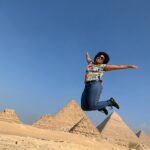
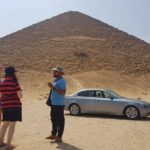
Ancient Egypt feels more personal when it’s private and well-paced. I like the door-to-door pickup that cuts the stress, and I like having an Egyptologist guide to connect what you’re seeing to how it all fit together. You’ll get three pyramid zones in one day, plus the Sphinx area, Valley Temple, and even a desert camel moment.
One thing to watch: admission tickets aren’t included, and the schedule can feel “go-go” depending on crowds and your start time.
In This Review
- Key Points You’ll Care About
- Why This One-Day Pyramids Route Works
- Door-to-Door Pickup and a Private Driver You Can Trust
- Giza Plateau: Great Pyramid Views, Sphinx Area, and Valley Temple
- Saqqara (Sakkara): First Pyramid-Era Energy and Tombs for Nobles
- The Pyramid of Teti: Short Stop, Big Payoff for Pyramid Texts
- Dahshur: Senefru’s Bent and Red Pyramids (A Story in Stone)
- Lunch and the Desert Camel Moment: Keep Your Day Comfortable
- Price and Value: The Real Cost Picture
- Who This Tour Is Best For
- Tips That Make the Day Easier (Not Just Better)
- Should You Book This VIP Private Tour?
- FAQ
- What’s included in the VIP private tour?
- Are admission tickets included?
- How long is the tour?
- Is this tour private or shared with other groups?
- Where do you pick up and drop off?
- Does the tour include camel riding and lunch?
- What’s the cancellation policy?
Key Points You’ll Care About
- Private vehicle pickup: you get round-trip transfers, not a long hunt for the bus.
- Egyptologist explanations: you’re not just taking photos; you’re learning what you’re looking at.
- Big sweep, smart stops: Giza Plateau, Saqqara necropolis, then Dahshur.
- Dahshur’s Senefru pyramids: Bent Pyramid and Red Pyramid are built around a key dynastic story.
- Pace is flexible but can be quick: one past guest noted it can feel like a shorter, fast-moving day on-site.
- Departure time may be adjustable: one review mentioned coordinating timing via WhatsApp in advance.
Why This One-Day Pyramids Route Works
If you want the pyramids without the circus, this is the style of day you’re after. The whole point is a private setup, so you spend less time negotiating with hawkers and more time actually looking. You’re also covering three major sites, which is the hard part in Cairo—getting the logistics right so the day doesn’t turn into wasted time.
I also like that the tour is built for understanding, not just sightseeing. With a qualified Egyptologist, you’re hearing why certain structures matter and how different pyramid fields connect across time. That’s especially helpful at Saqqara, where the story starts to move from legend into a more organized “how the Egyptians built” timeline.
The route also has a practical rhythm. You start at Giza for the iconic wow factor, then move to Saqqara for the early pyramid era, and finish at Dahshur for the turning point style experiments. It’s a logical arc: from the Fourth Dynasty monuments you already know, to earlier innovations, then back to Senefru’s standout pyramid breakthroughs.
You can also read our reviews of more tours and experiences in Cairo.

Door-to-Door Pickup and a Private Driver You Can Trust
This is a private tour, so you’re not crammed into a mixed group schedule. The big value here is simple: pickup and drop-off. You get transported by a private vehicle, and you return to your hotel when the day ends. That matters a lot in Cairo, where traffic and distance can easily eat up your energy.
One nice detail from guest experiences: the car quality and cleanliness has been praised. If you care about comfort during transfers, that’s not a small thing. You’re going to be in the vehicle a fair bit, and being able to relax between sites makes the whole day easier to enjoy.
Timing can also be flexible. One past guest noted you can adjust departure time with the operator by contacting them via WhatsApp in advance. So if you have a museum slot, a late breakfast plan, or you’re trying to avoid the worst heat at a specific moment, you have some room to work with.
Just remember the “full-day” label includes travel time. The tour duration is listed as about 8 hours, but at least one guest felt the on-site portion moved quickly—so you’ll want to be ready for a packed itinerary and a brisk pace once you’re actually at the monuments.
Giza Plateau: Great Pyramid Views, Sphinx Area, and Valley Temple
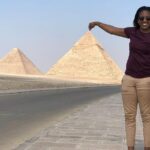
Giza is the headline, and you’ll start there at the Pyramids of Giza. The first stop is the Great Pyramid of King Cheops, noted as the only remaining wonder of the Seven Wonders of the Ancient World. Even if you’ve seen photos before, the scale hits you differently in person. It’s one of those places where the best part is the feeling of standing next to something that still dominates the skyline.
From there, you move to the pyramid of Chephren and the pyramid of Mycerinus. This trio works well because you don’t just see one monument—you get a sense of how the complex reads as a whole. Then you get a panoramic view where you can see multiple pyramids at once and take pictures with a clearer “map in your head.”
The Sphinx and Valley Temple round out the Giza experience. The Sphinx area is often where people lose patience to crowds and constant offers, so doing this with a private guide helps. You’re more likely to keep your attention on what you’re seeing instead of just reacting to the environment around you. The Valley Temple adds context for the setting, not just the famous faces.
Practical note: admission is not included, so you should budget separately for entry tickets at this stop. If you’re traveling with kids, note that children must be accompanied by an adult.
Saqqara (Sakkara): First Pyramid-Era Energy and Tombs for Nobles
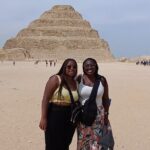
After Giza, you head to Saqqara, also spelled Sakkara. This is where the day turns from iconic to instructional. Saqqara is presented as the first pyramid in history, which makes it a strong contrast to Giza’s more familiar grandeur. Instead of just bigger-and-bigger, you’re seeing an earlier chapter.
You’ll explore the Saqqara necropolis, built by Imohtep (spelled in your tour info as Imohtep), described as the genius engineer. That name matters because it gives you a human anchor. You’re not only looking at ancient stone; you’re hearing about the people tied to the design era and the engineering mindset.
You’ll also see tombs for nobles. That’s important for making the site feel lived-in rather than purely ceremonial. Tombs help you imagine what was happening around these pyramids—politics, status, belief, and the daily systems that supported the elite world the pyramids were built for.
One consideration: Saqqara is spread out more than you might expect from a quick glance at photos. You’ll want comfortable shoes and a plan to pace yourself. This is a good place to lean on the guide’s explanations, because without that context, parts of the necropolis can feel like “more ruins” instead of a connected story.
And again, admission tickets aren’t included, so you’ll want to check what you’re buying and how it applies to each specific site you visit.
The Pyramid of Teti: Short Stop, Big Payoff for Pyramid Texts
Then the schedule includes a stop at the Pyramid of Teti, a smoother-sided pyramid in the Saqqara pyramid field. What makes this stop stand out is the note that it’s the second known pyramid containing pyramid texts.
That matters for you if you care about why the pyramids mattered beyond architecture. Pyramid texts are a key clue to beliefs and funerary planning, and it’s the kind of detail that transforms a quick visit into something you can carry home. The tour also references discoveries that include a satellite pyramid, two pyramids of queens, and cult structures, plus a funerary temple.
This stop is listed as about 20 minutes, so it’s not an hour-long deep study. Instead, think of it like a focused “anchor point” to keep your brain oriented while you move through the bigger Saqqara landscape.
If you like short stops that still give you something memorable, this is a good use of time. If you prefer slow, extended exploration, you’ll likely want to keep your expectations realistic.


Dahshur: Senefru’s Bent and Red Pyramids (A Story in Stone)
Finishing at Dahshur is a smart choice because it’s not just another pyramid field. It’s tied to a turning point story: your tour notes that it’s where the first true pyramid was built by King Senefru, founder of the Fourth Dynasty. That’s your payoff for the earlier morning chapters—you’re arriving at a place connected to experimentation and evolution in pyramid design.
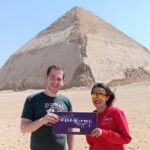
In Dahshur, you’ll visit the Bent Pyramid and the Red Pyramid. The Bent Pyramid is famous for how its angles change, and that’s exactly the kind of feature your guide will help you interpret. The Red Pyramid completes the set by showing another outcome of Senefru-era construction thinking, so you can compare design decisions rather than just ticking off sites.
This segment is described as about 45 minutes on-site. Again, that’s not a long time, but it’s enough to get the key visuals and the main explanations you came for. If you’re the type who wants to read every inscription and walk every path, you might feel rushed. If you’re the type who wants big picture understanding without losing the whole day, this fits well.
Lunch and the Desert Camel Moment: Keep Your Day Comfortable
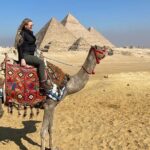
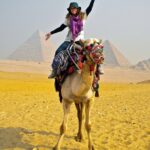
Your tour includes lunch, and it also mentions riding camel-back through the desert area. The exact timing of lunch isn’t pinned down in the info you shared, so I suggest you treat it as a comfort anchor. Plan to eat like you’re in the sun all day, because you are.
Camel riding can be a highlight, but it’s also the kind of activity where your comfort matters. If you’re sensitive to bumpy rides, or you want more control over how long you’re on the camel, you’ll want to ask your guide at the moment it’s offered. Since this is a private tour, you should have more say than on a mass-group schedule.
Heat and hydration matter here. You’ll be moving between three major sites, so bring water, sun protection, and something light for shade. Even if you normally travel with minimal stuff, this is a day where basic comfort gear can change the experience from tiring to enjoyable.
Price and Value: The Real Cost Picture
The listed price is $20 per person, which is strikingly low for a private, Egyptologist-guided full-day plan. The value comes from what’s included: hotel pickup and drop-off, transport by a private vehicle, and a private tour setup. It also includes all taxes, fees, and handling charges.
But the big “do the math” point is this: admission tickets aren’t included. That means your true day cost depends on what you pay for entries at Giza, Saqqara, and Dahshur. If you’re comparing prices with other tours, always add admissions to the total. A low headline price can become average quickly once tickets are added.
Also, if you’re staying in NASR City, 6th October City, or the New Settlement area, there’s an additional $30 charge mentioned for airport and hotels in those areas. If that applies to you, factor it in before deciding.
When the day runs smoothly—especially with a clean car, good timing, and a guide who explains what matters—this route can feel like a lot of history for the money. When admissions and extra transport costs are higher than expected, you’ll need to reassess value. Still, for many people, the private format is the real upgrade.
Who This Tour Is Best For
This tour fits best if you want a lot of iconic ancient sites without the stress of organizing yourself. It’s also a good match if you prefer learning from a guide rather than wandering and hoping you’ll understand everything from signage.
I’d especially recommend it if:
- You want Giza plus Saqqara plus Dahshur in one day.
- You’d rather pay for a private guide than spend hours planning routes and entry timing.
- You like explanations tied to specific monuments, not generic “Egypt is amazing” talk.
It may feel too fast if you’re the type who wants to linger for hours in one place. One guest specifically noted the pacing can be quick, and at least part of the day can feel like it moves in a compact window once you’re on-site.
Tips That Make the Day Easier (Not Just Better)
A few practical moves will help you enjoy the day more:
- Wear shoes you can walk in for uneven ground around the pyramids and necropolis areas.
- Bring sun protection; this itinerary is long and exposed.
- Build a mental checklist before you arrive: Great Pyramid, Sphinx/Valley Temple, Saqqara necropolis and nobles’ tombs, Teti’s pyramid texts connection, then Bent and Red Pyramids.
- If souvenir stops come up, you can refuse them. One past guest noted the operator may recommend shopping, but you can say no.
Finally, use the fact that it’s private. Ask your guide to focus on what you care about most—architecture, religious meaning, or the dynastic story. When you steer the conversation, you get more out of every stop.
Should You Book This VIP Private Tour?
Book it if you want maximum Egypt in one day with less hassle. The private transfers and Egyptologist-guided approach make a real difference when you’re juggling multiple pyramid zones. It’s also a strong deal if admissions won’t shock you, and you like learning alongside the photos.
Pass or consider another option if you want a slow pace, long time in one site, or you prefer to control your own entry tickets without coordination. Also, if you’re traveling from outside the standard pickup areas (NASR City, 6th Oct City, New Settlement area), the extra $30 should be part of your decision.
If you do book, you’re choosing a route that helps you see how pyramid-building ideas evolved across time—starting at Giza’s giants, moving to Saqqara’s early era, and ending with Senefru’s Bent and Red pyramids in Dahshur.
FAQ
What’s included in the VIP private tour?
The tour includes hotel pickup and drop-off, private transportation, a private tour, and all taxes, fees, and handling charges. Lunch is included, but admission tickets are not.
Are admission tickets included?
No. Admission tickets for the sites are not included, so you’ll need to budget for them separately.
How long is the tour?
The duration is listed as about 8 hours.
Is this tour private or shared with other groups?
It’s private. Only your group participates.
Where do you pick up and drop off?
Pickup and drop-off are offered from your Cairo or Giza hotel. There’s an additional $30 charge for airport & hotels within NASR City, 6th Oct City, and New Settlement area.
Does the tour include camel riding and lunch?
Yes. The tour overview mentions camel-back riding and includes lunch.
What’s the cancellation policy?
Cancellation is free up to 24 hours in advance for a full refund. If you cancel less than 24 hours before the start time, the amount paid is not refunded.